After a winter again filled with boat jobs, me and my brother Thomas cast off from Lagos, Portugal 23 March, with the aim to reach A Coruna, relatively quickly before the Portuguese North wind sets in. The main objective for this season is to visit Lofoten.
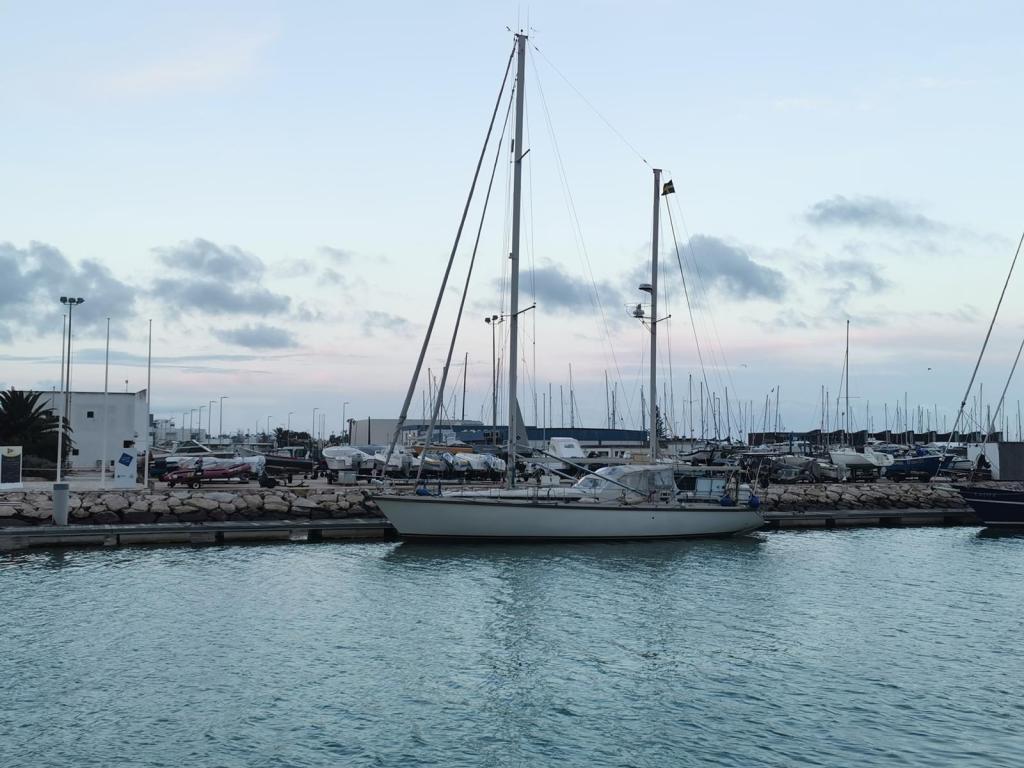
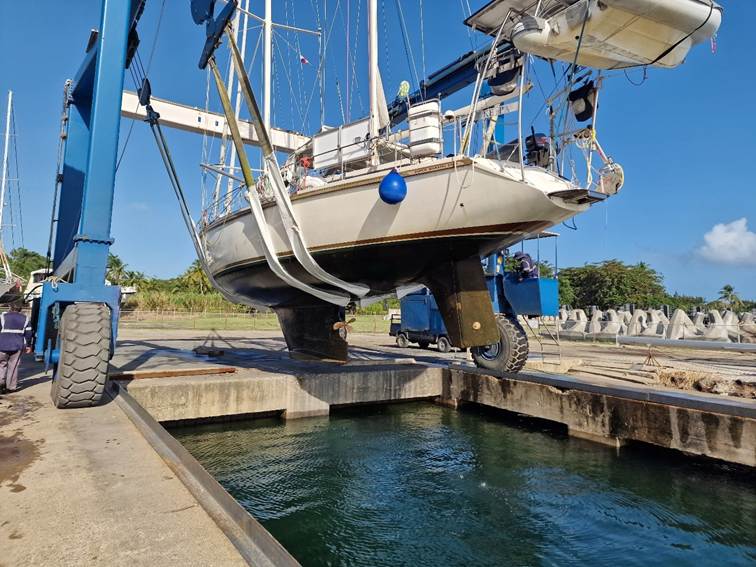
Kerpa was launched the day before departure.
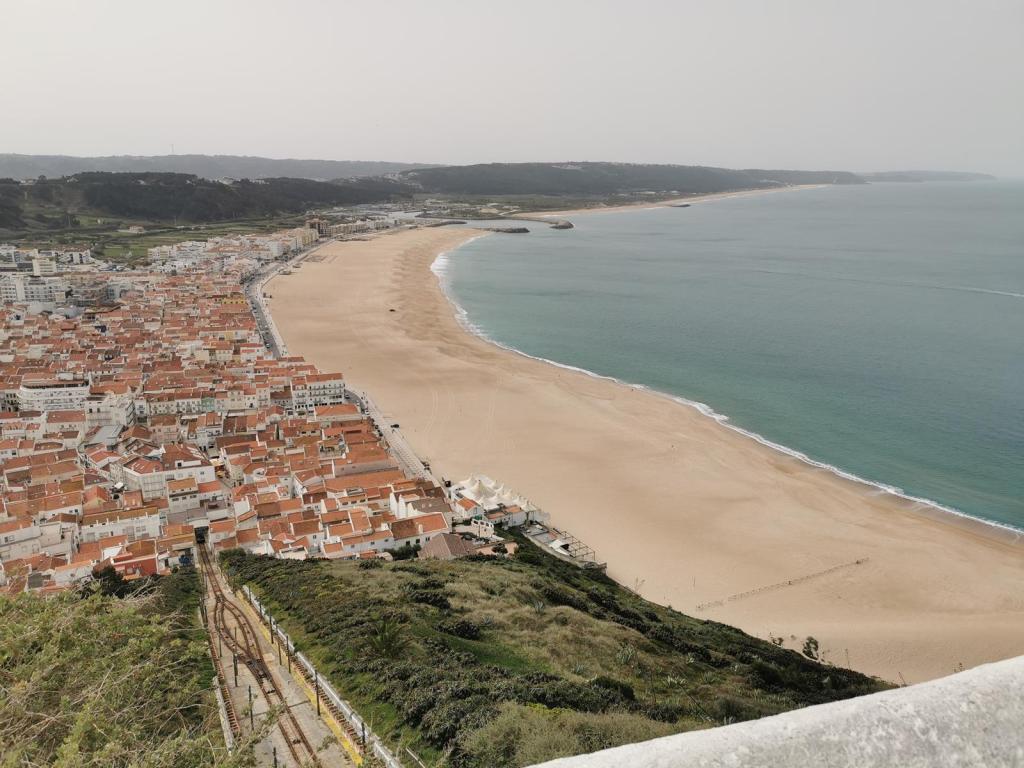
After one night in Cascais we reached Nazare, which is known among surfers, the highest wave ever been surfed was in Nazare. I attached a YouTube link about it https://youtu.be/zOYL15QOvWE
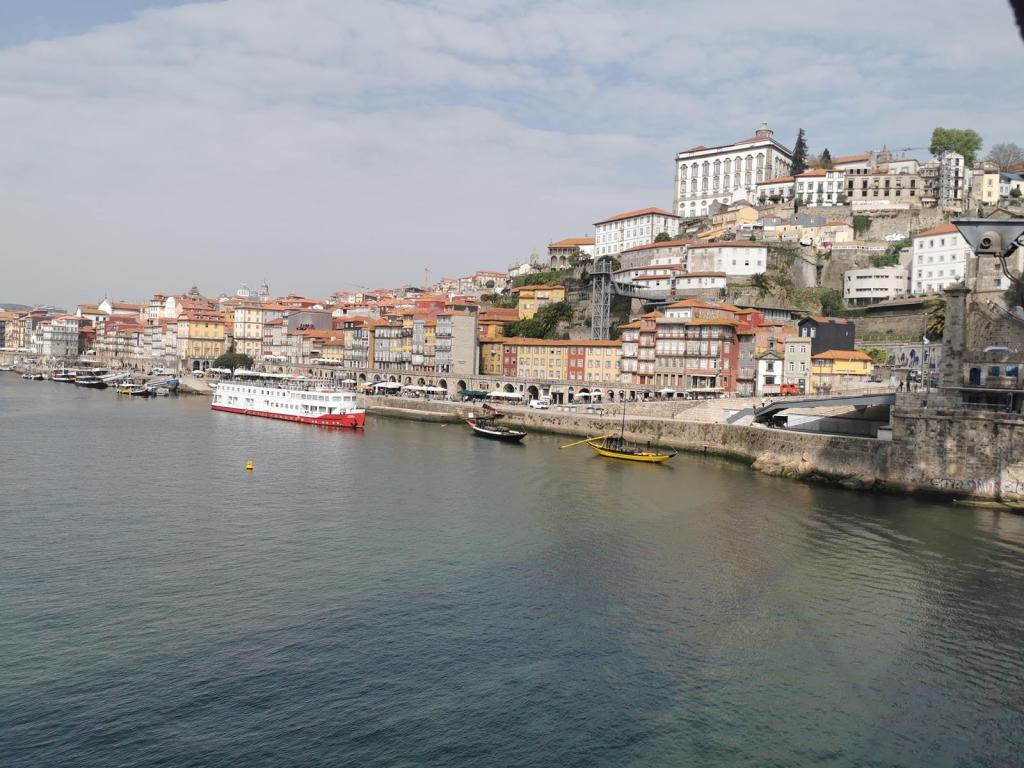
Next stop was Porto, where Kerstin arrived after being in Stockholm helping our oldest daughter when she gave birth to a daughter, now they have boy and a girl, perfect.
April 6 we arrived to A Coruna not without Problems
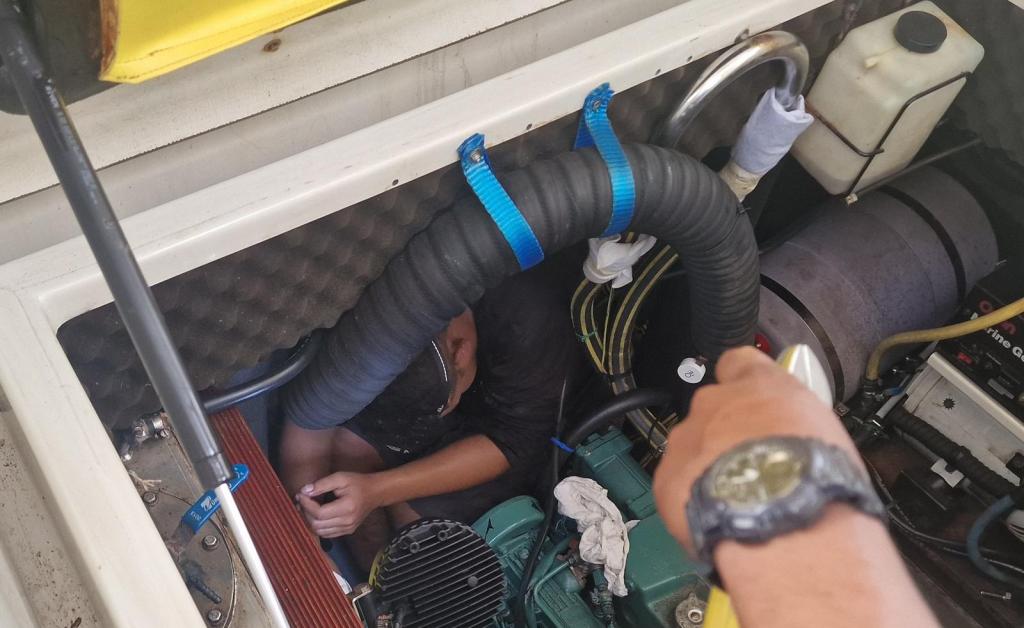
On our way and no wind the engine temperature went up, luckily we found out before the high temp alarm went off, I have a Bluetooth temp probe on the exhaust hose, that together with smell of exhaust gases made us suspicious. I went down the hatch to the engine checked the impeller, but nothing wrong with that. Open the lid to the cooling water strainer and found some minor debris in there, cleaned it away and the problem was gone (we thought) but a few hours later the problem was back! Of with the lid to the strainer, no debris, I took a long rod and pushed it through the cooling water inlet and that solved the issue.
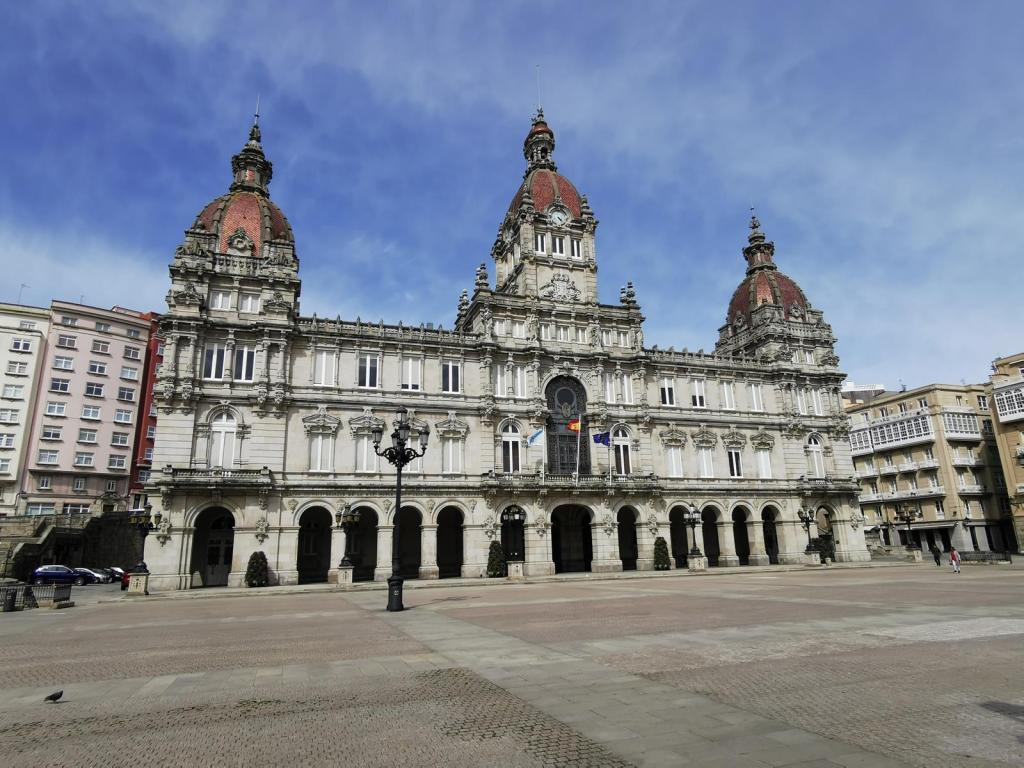
Coruna is a nice historical town offering besides historical sites also very good Galician food.
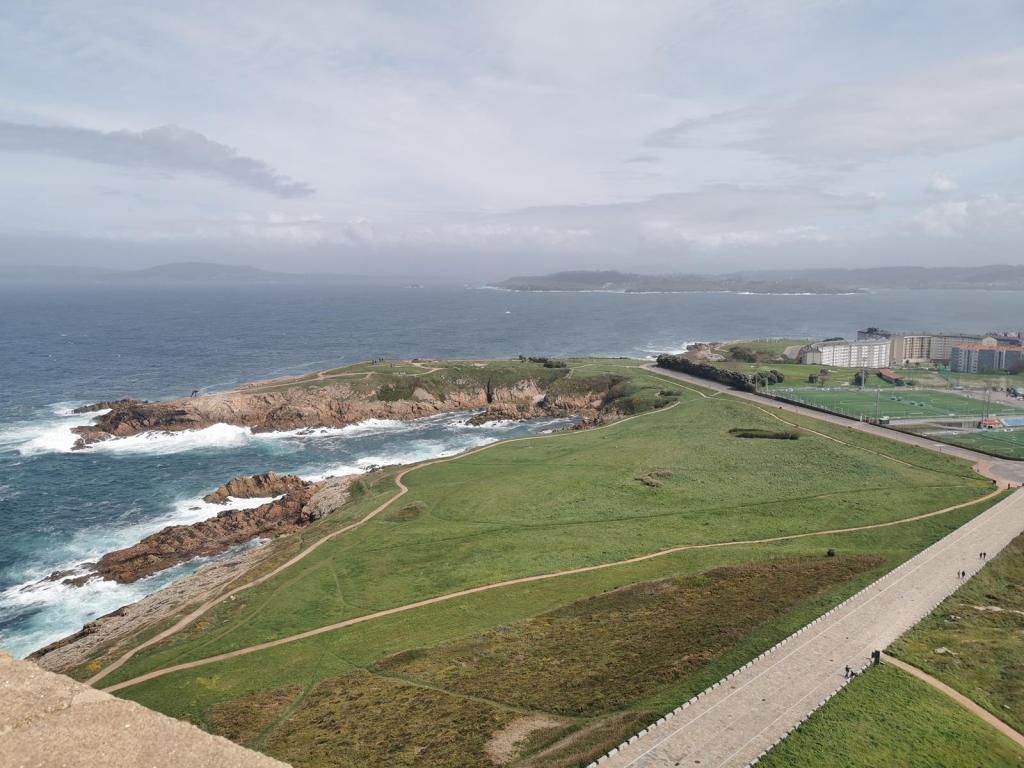
Hercules tower a very old lighthouse from the Roman time built during 2nd century AD.
Several old and historical houses in A Coruna.
Again, we had to wait for a suitable weather window for crossing the Bay of Biscay. 12 April the condition was not too bad. +/- 20 knot of wind 3-4 m Swell to start with but the conditions become less rough and all in all we had a good passage to Cork, Ireland, We stayed at the Royal Cork yacht club, established 1720 and claim they are the oldest Yacht club in the world.
Of course first thing to do, try a Guinness at Royal Cork Yacht Club
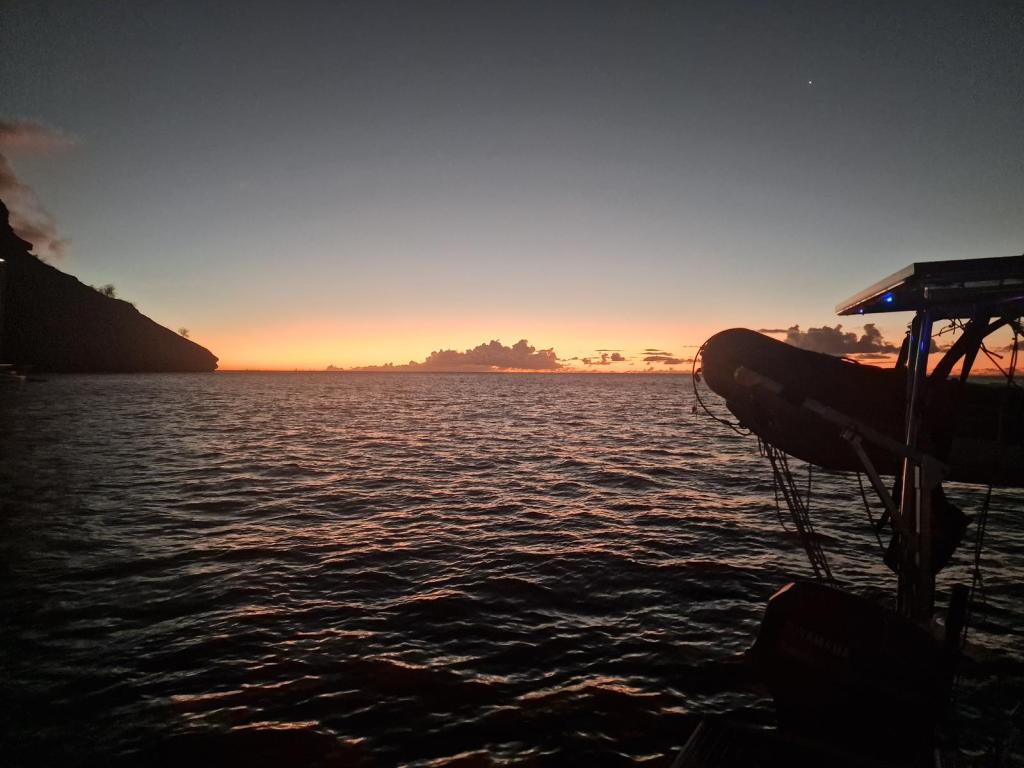
Sunset at the RC yacht club.
Crossing the Bay of Biscay was my brother Thomas main aim, so he was pleased reaching Cork and flew back to Sweden, so from now on it is just me and Kerstin aboard.
Next stop was Dun Laughaire close to Dublin 100 Nm north of Cork
We left Cork in very calm weather
Leaving Cork
After a couple hours we were greeted by many Dolphins that followed us for hours
Just arrived Dun Laughair
Dun Laughaire is a very nice and safe place to leave a boat and go exploring the local area as well as visiting Dublin about 30 minutes away by train.
The Marina
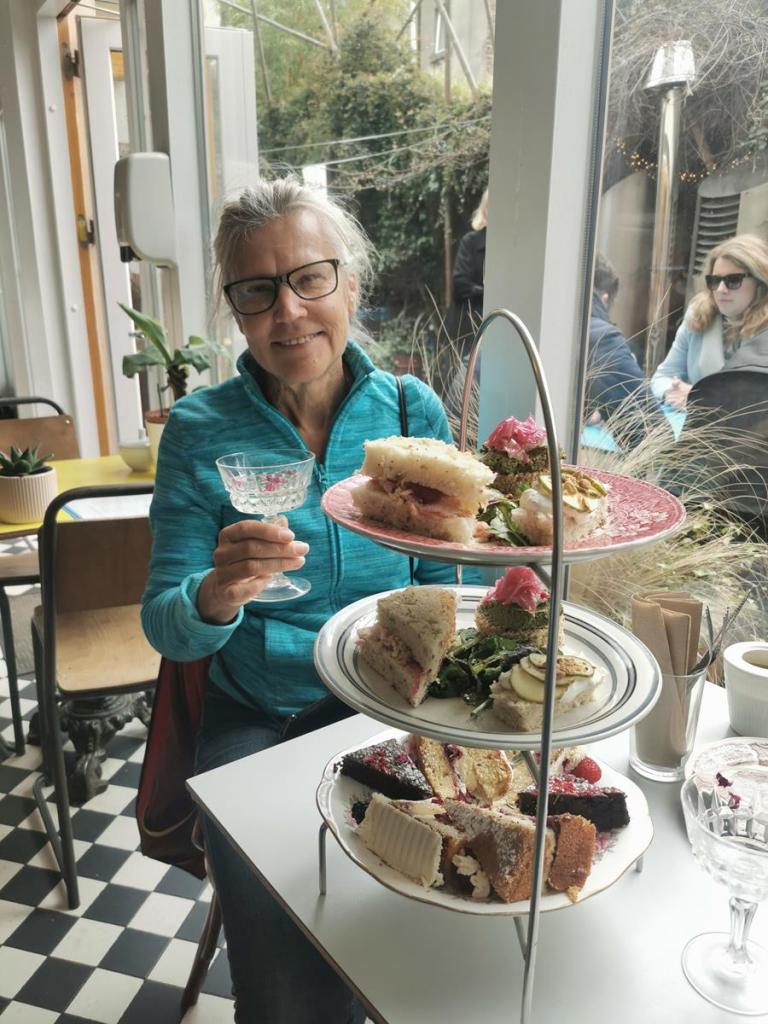
Visited Dublin for Afternoon tea
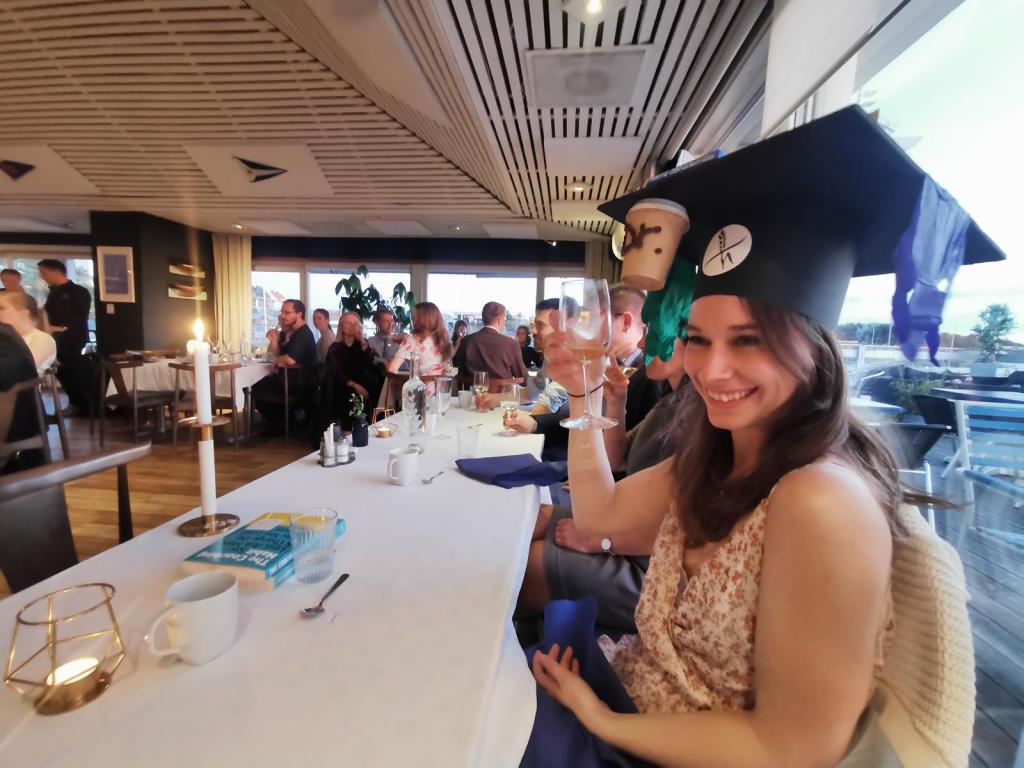
We left Kerpa for a short visit to Sweden, First to celebrate our youngest daughter Linnea who took her PhD in Biotechnology
A very happy daughter, but even more proud father
And of course we wanted to see our latest grandchild Ingrid
Proud and very happy mother
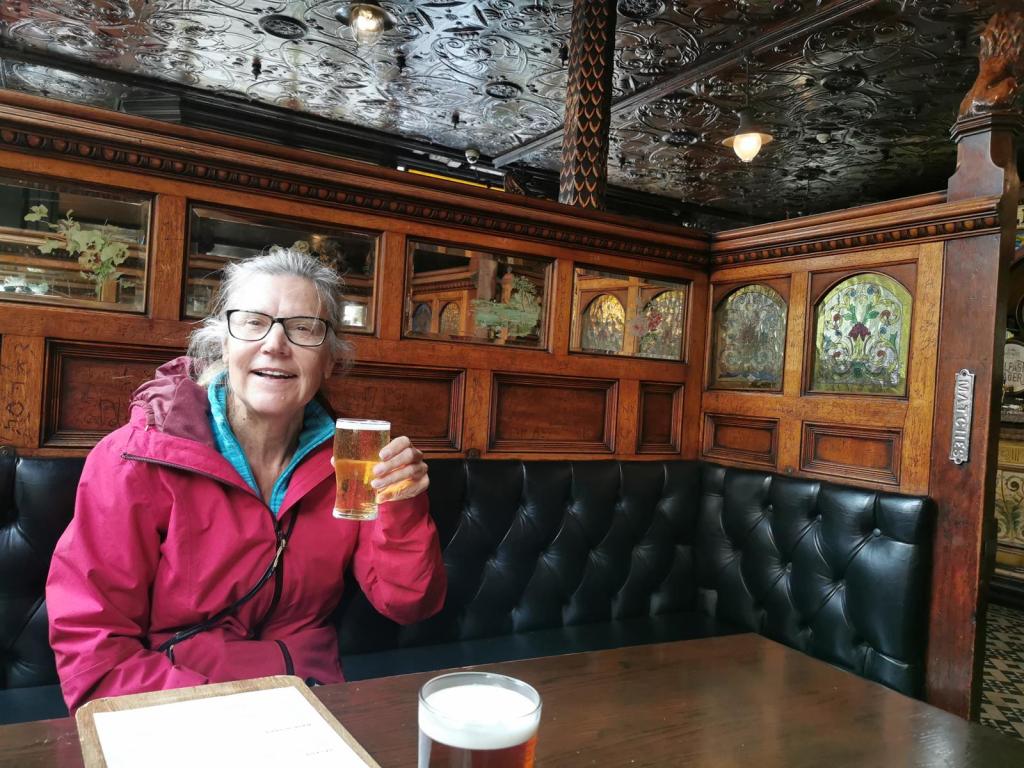
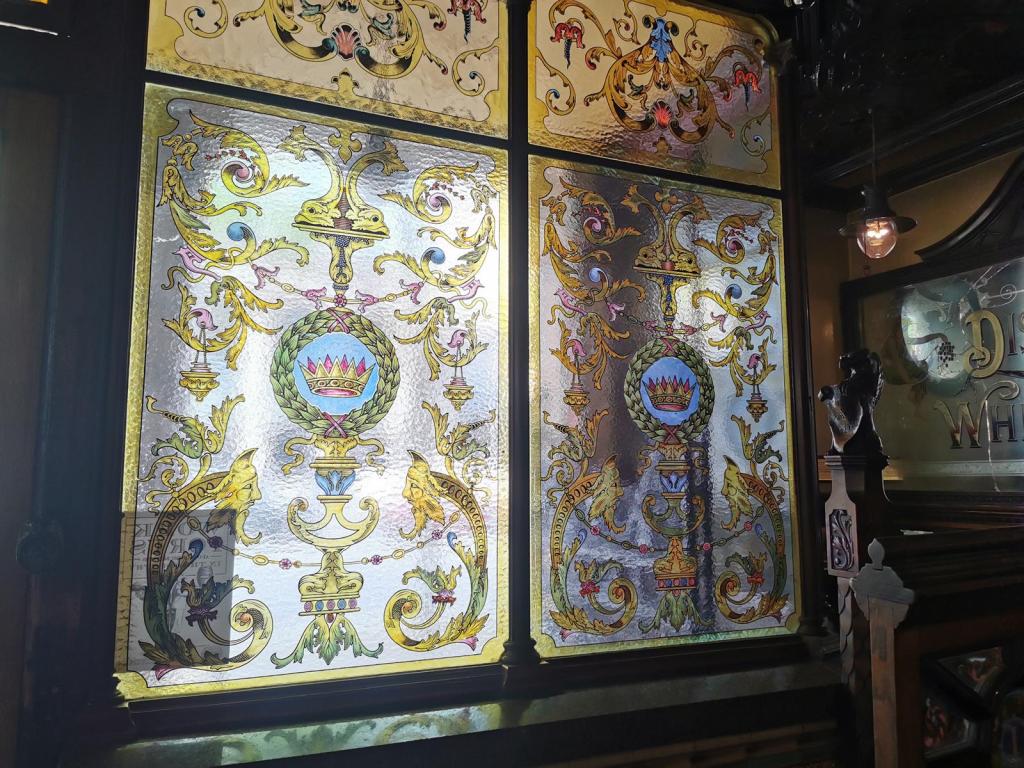
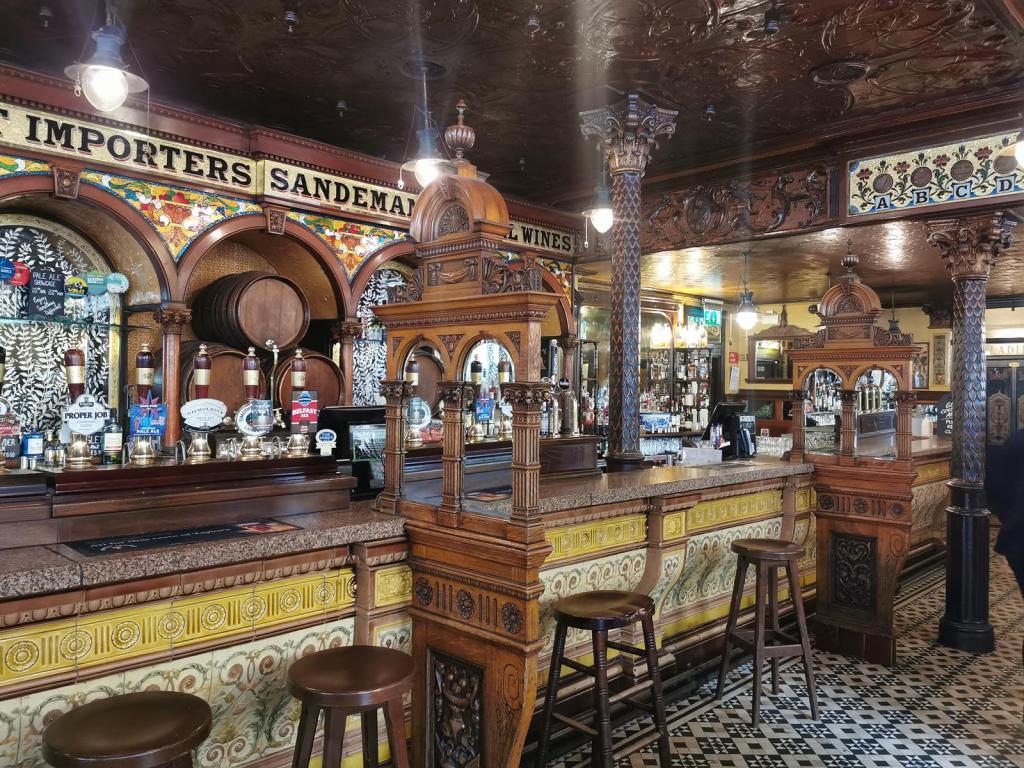
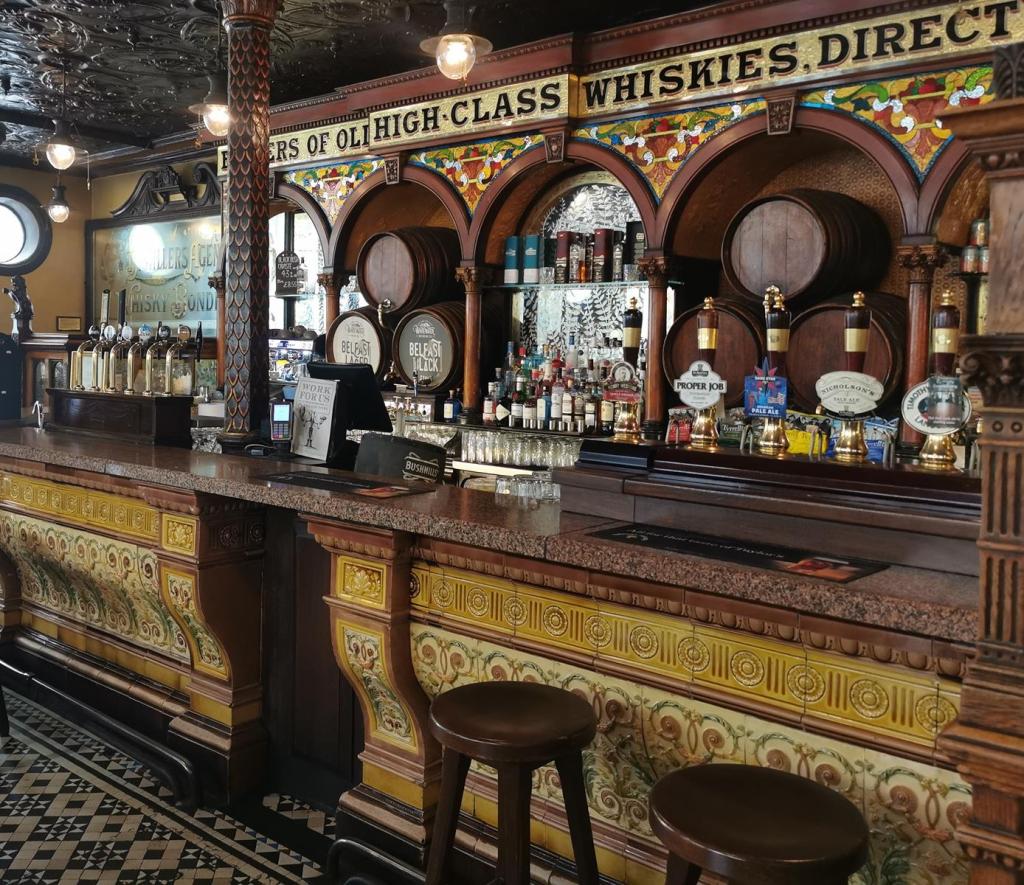
After a week we were back on Kerpa and next stop was Bangor, Northern Ireland, from were one easily take the train into Belfast where we visit the oldest Pub in Belfast The Crown Liquor saloon.
rhdr
hdrpl
Very impressive Pub, beer tasted excellent
Next was a gentle sailing from Bangor to Sandy Island
First Anchorage in Scotland Sandy Island
It has been cold most of the time and we have had our share of rain as well, so our newly installed diesel heater has been very valuable and contributed heavily to the comfort aboard.
The heater in the cockpit locker, note the CO alarm as well as the Bluetooth temp probe, same as I have on the exhaust hose, maximum temp measured is 46 C. The white PVC hose is a plumbing device that connect well to both the combustion ait silencer and the heater, I installed silencer both on air in and out from the heater as well so it operate very silent, on low power one does not hear it at all.
Very pleased with it.
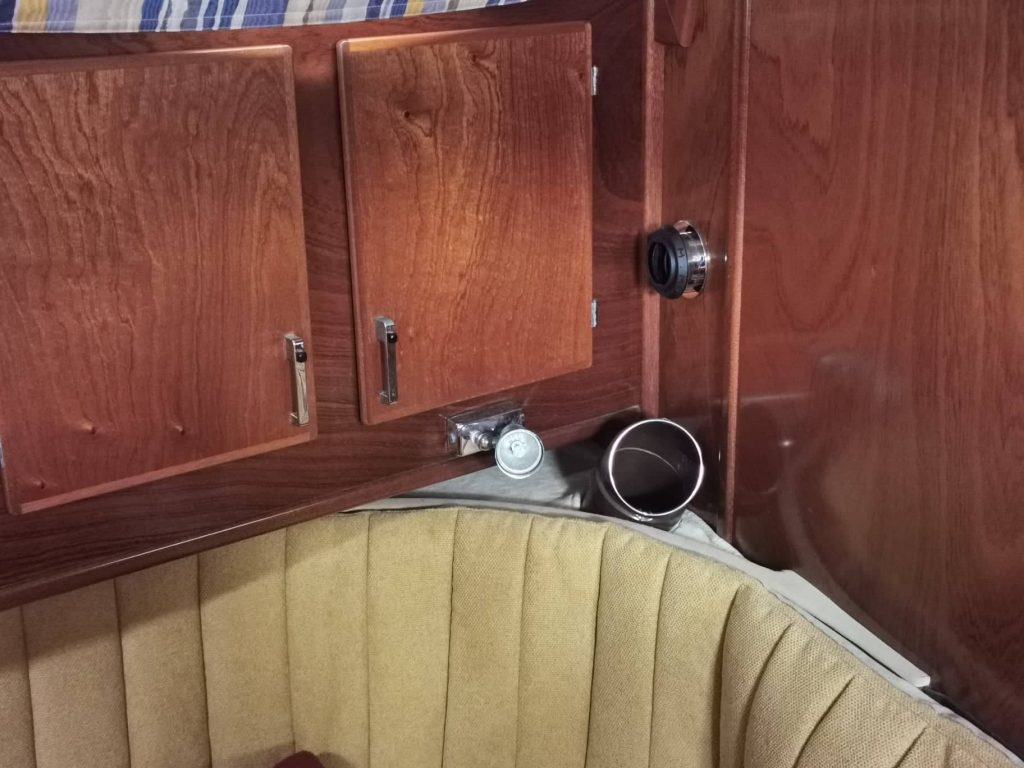
As we have water tight bulkheads drawing duct for hot air is not easy, a stainless tube through the after toilet solved the issue to get warm air to the after cabin. The tube gets rather hot and give warmth to the after toilet too.
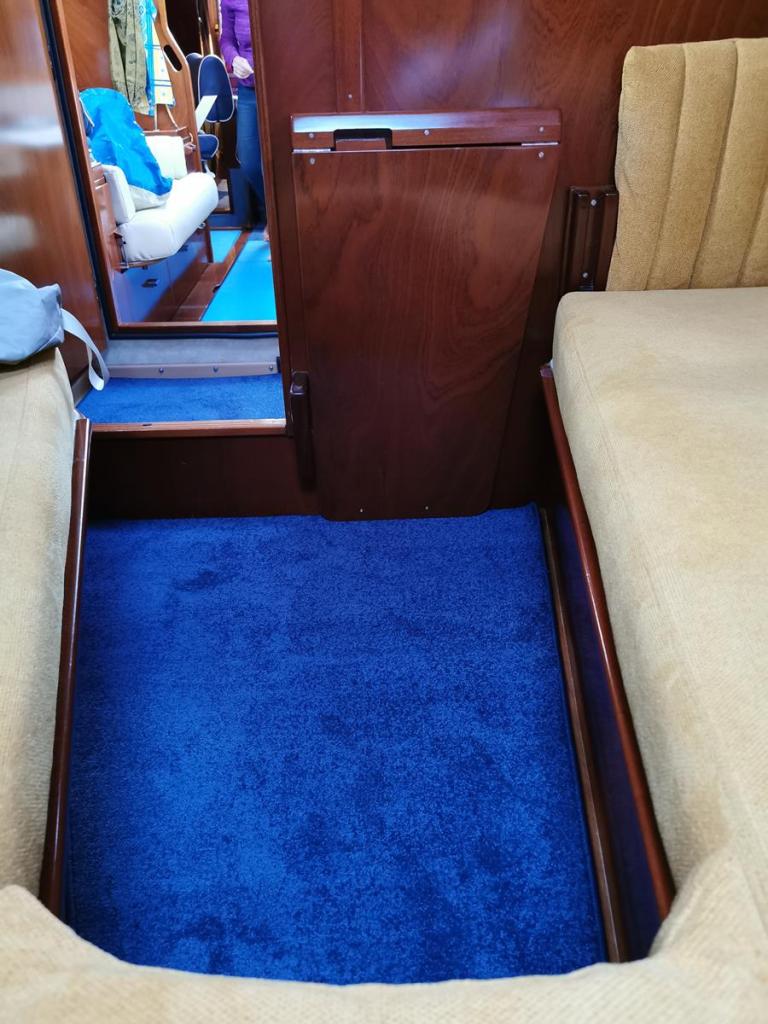
above you see the warm air outlet just above the outlet for the air-conditioner. Amel had already installed a duct from the cockpit locker to the fore cabin so that came in handy. The heater together with new soft carpets make it very cosy aboard
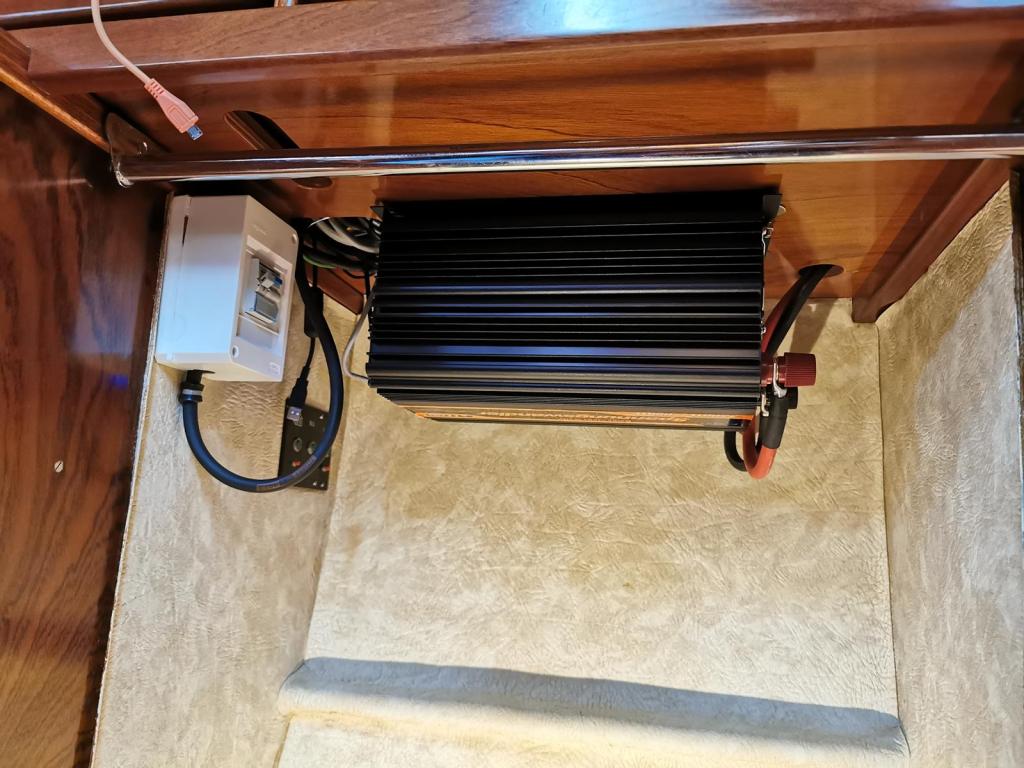
Another improvement we did was to install a 3,5 kW inverter dedicated to the induction hob.
3,5 kw inverter Chinese made, reasonable priced and size.
The inverter fitted nicely under a shelf, It work very silent, some inverters make a lot of noise, I have had the inverter to run at full blast for up to ½ an hour without any issues, when it gets hot the fan starts but its relatively silent, and the fan does shut down after a minute or so when it has cooled down the unit.
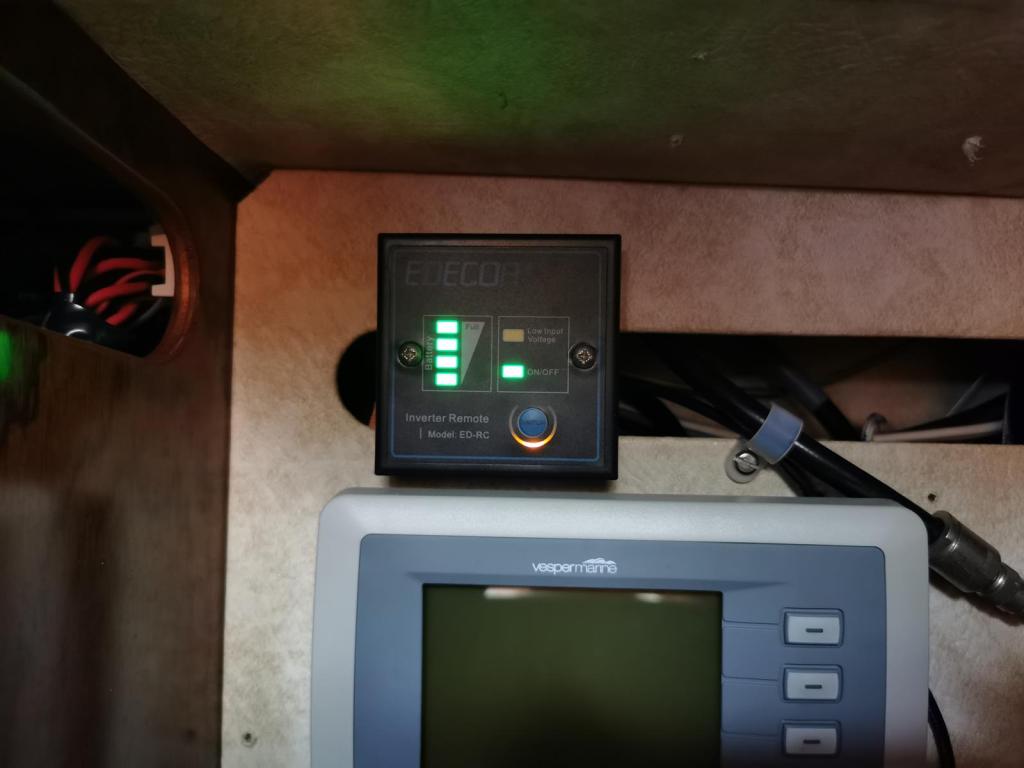
The remote control just above the shelf, very handy
The induction hob with the dedicated 220 v socket. Gives redundancy and the MultiPlus inverter can be used at the same time for other purposes.
Kerstin’s new favourite gadget in the galley is an air fryer, a small hot air oven, it works great. Now we do not need to use gas anymore, In the Air fryer one can make Lasagne, French fries, Chicken wings, even bake bread etc etc. very happy with it.
How much electricity does it takes?
During15 days (10-25 may) on average
18 Ah/day for the Inverter for the Induction hob
23 Ah/day for the MultiPlus inverter (used for boiling water on the kettle, the air fryer etc)
Front opening fridge (ca 7 C) 14 Ah/day
Freezer 11 Aha7day (-8C)
Cooling chest 14 Ah/day (2 C)
Total 80Ah/day n.b. 24 v system.
Despite the grey and rainy weather we have had, we have only used our diesel generator for ca 4 hours since we left Lagos over two month ago, else power fom our 1160w Solar panels
That was some technical stuff
Next we had a short sail 33 Nm to Port Ellen where we stayed at anchor for two days in grey and windy weather. When we left, we were very surprised to have four Dolphins doing acrobats around Kerpa when we were at anchor, and they followed us after we left the anchorage for ca ½h on our
Furher we were at Jura, Tobemory, and Uist.
It is important to time the tide right
If timing the tide right, speed can be very high, if wrong progress can be slow and dangerous if one ending up in falls, races and tide against heavy sea, so fare we have succeeded rather well, but we feel as rookies when coming to plan and time the tides.
Tobemory
At Jura Loch Skipport, we had wind exceeding 30 kn during nights so sleeping was not great.
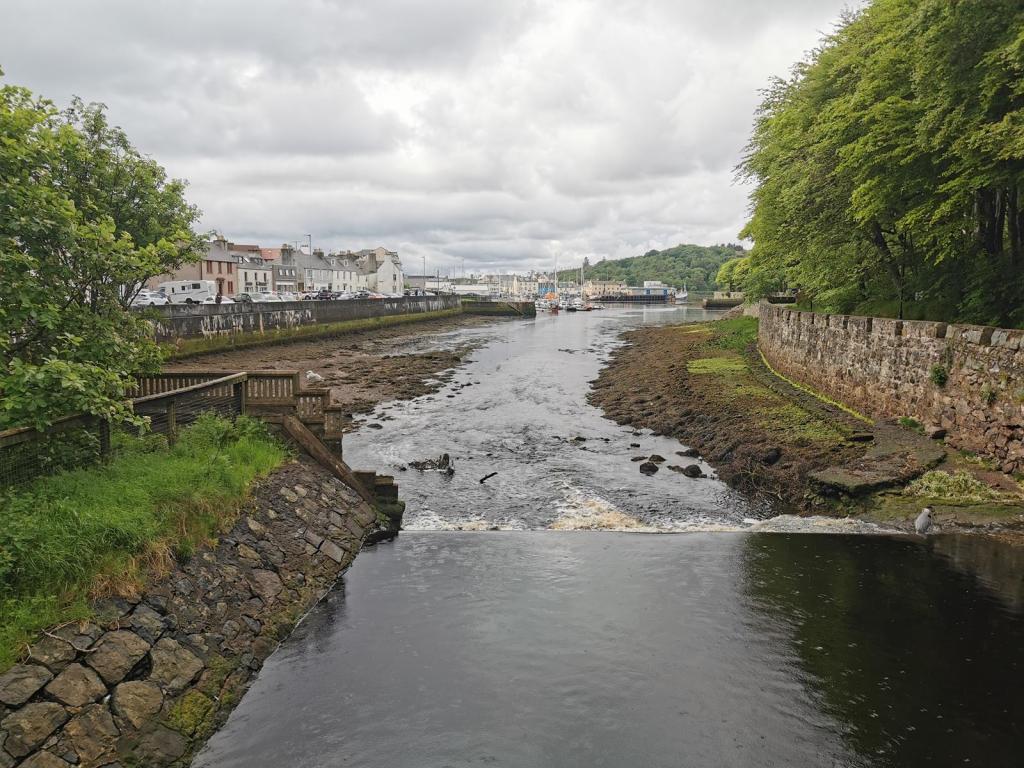
Stornoway
Finally, we came to Stornoway, Outer Hebrides has for long time been on our list for places we wanted to se.
Stornoway
We rented a car, and for ones the weather cooperated occasionally with us and we had a great trip around Harris.
Narrow roads and clouds, The speed limit on this road is 60Miles/h, close 100 km/h, I thought 30 km/h was enough.
When sun is shining the landscape is amazingly beautiful
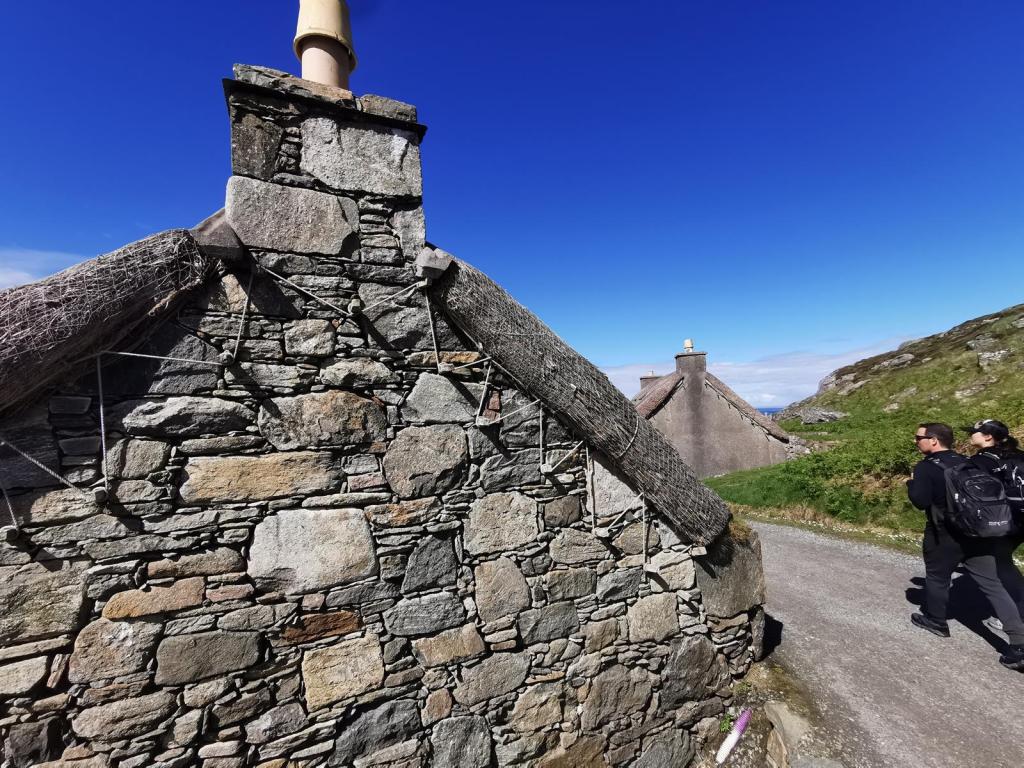
This is how people could live in the old days and until the last person moved 1970.
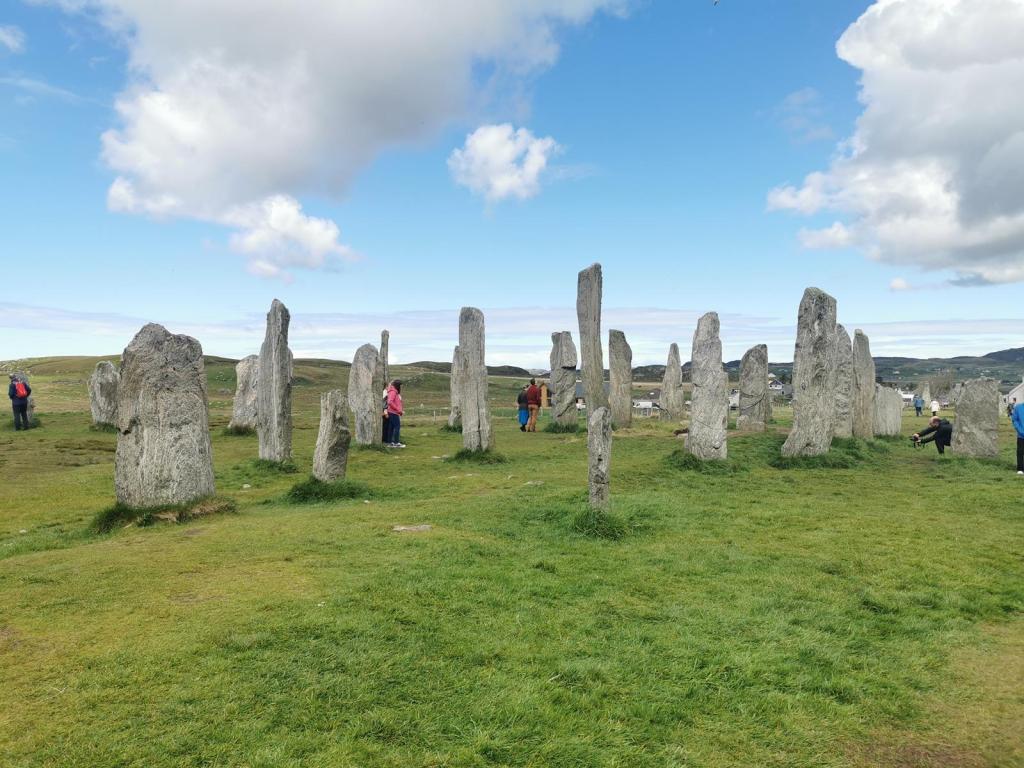
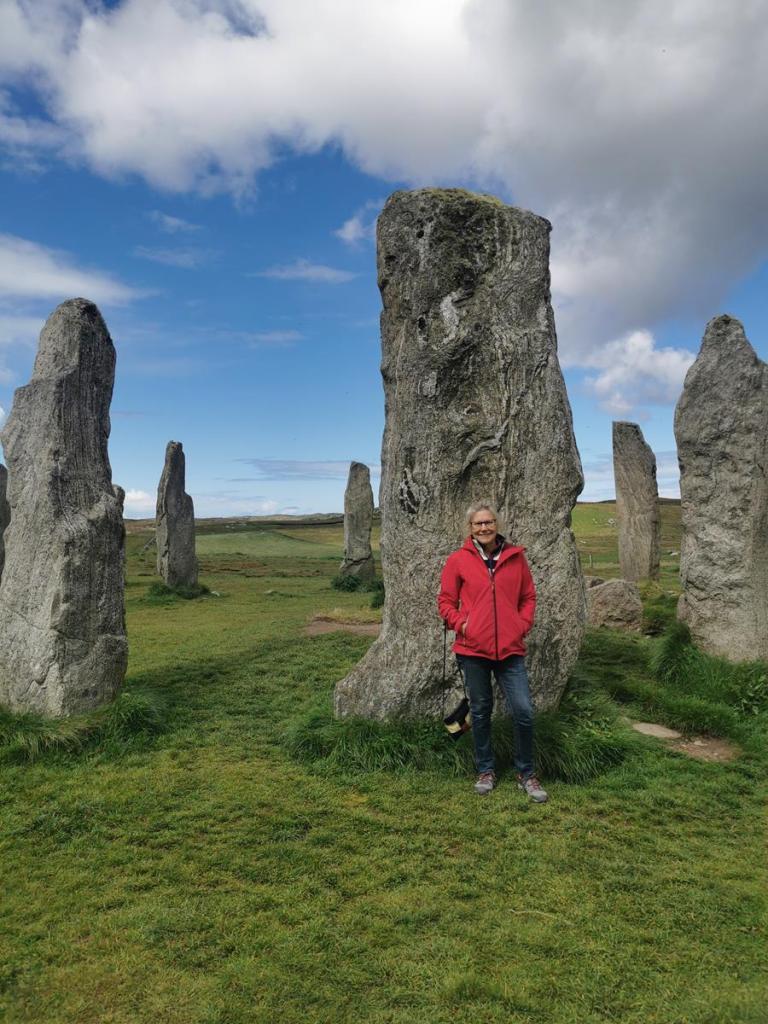
There is a “Stonehenge” on Harris as well, believed to be ca 4000 year old.
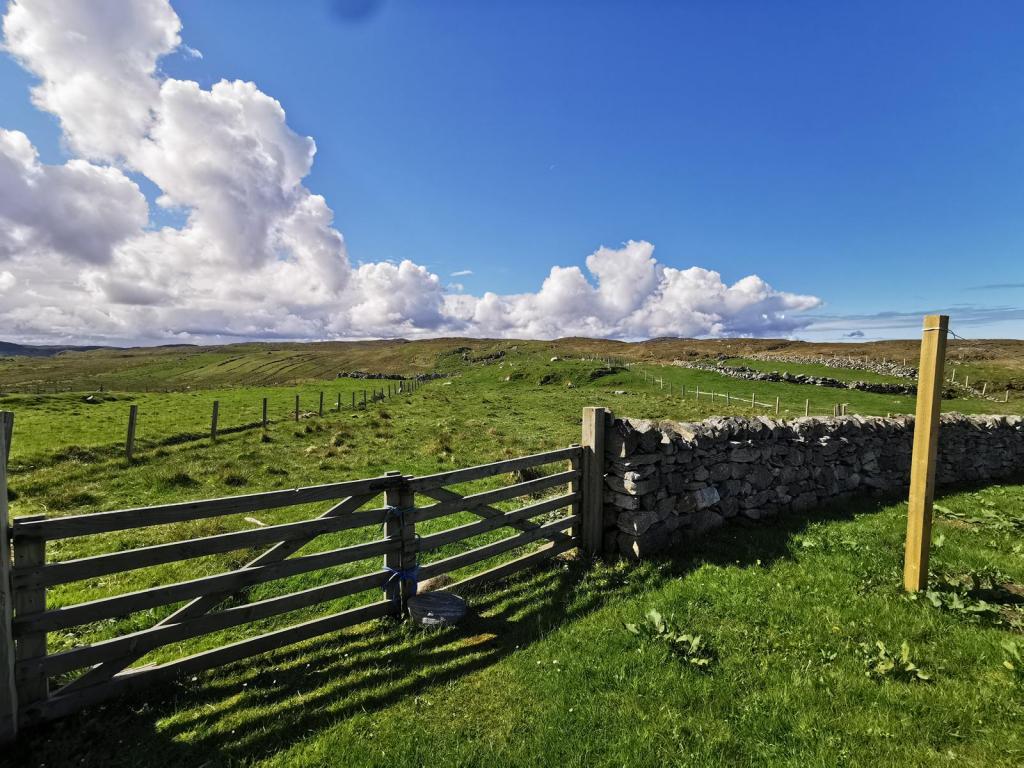
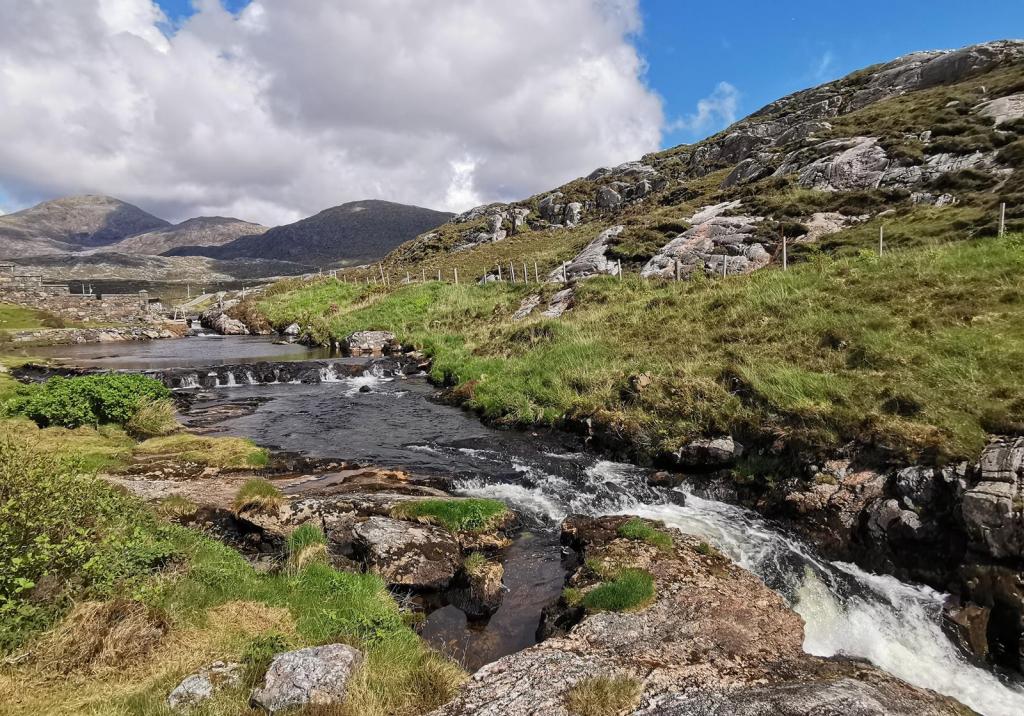
Below follow some more beautiful scenery from Harris.
Now in Stornoway we have gale wind gusting + 35 kn, hopefully tomorrow we can set sail towards Orkney Islands
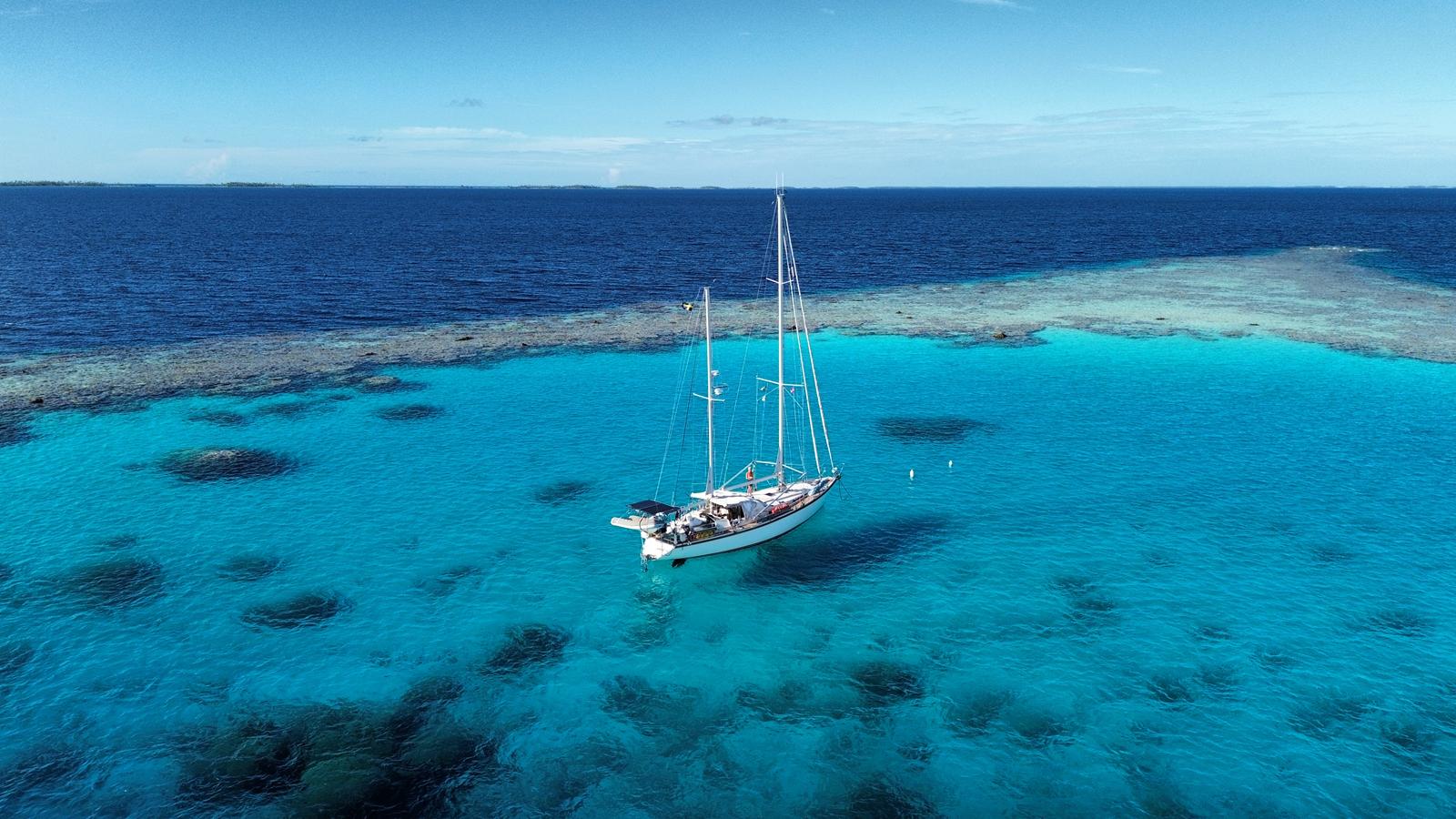
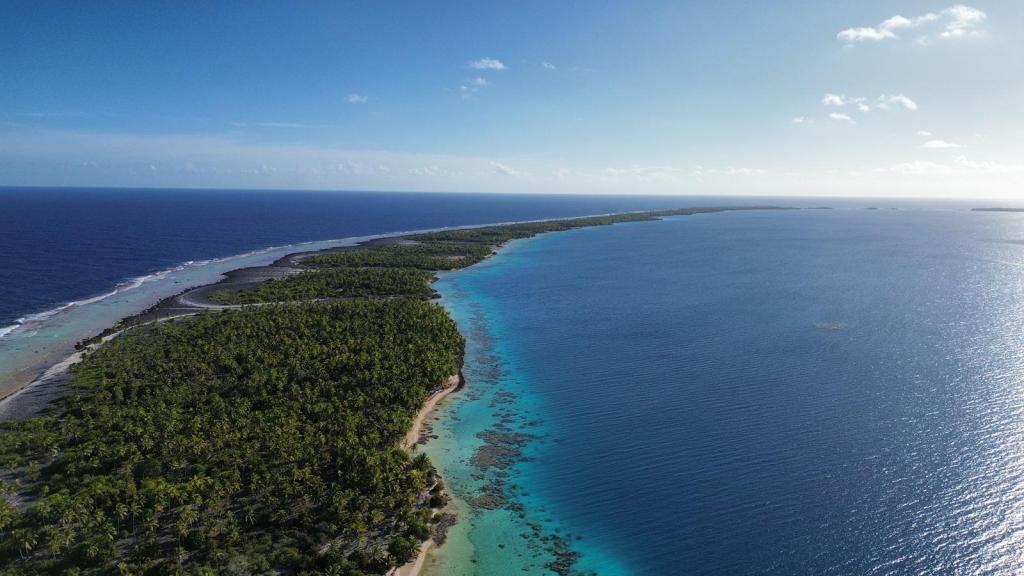
Last blog we were at Makemo, from there we left for an over the night trip of ca 80 Nm trip to Tahanea, it was not much wind, So we had to motor most of the time. We arrived early morning at slack water so no issue to enter the cut, and we anchored close to the cut.
This is the cut we came into
The only living soul we found on Tahnea was fisherman else only cruisers. We meet a South African couple on Umoya. They took us to a cut for drift snorkelling holding a line from our dingy, which we had not done before. It was very nice with healthy corals and many fishes, and it was not as daring as we first had thought, safer during incoming tide.
Look at the clip and you can hear how the Parrot fish eating on the corals.
The cut we drift snorkelled in
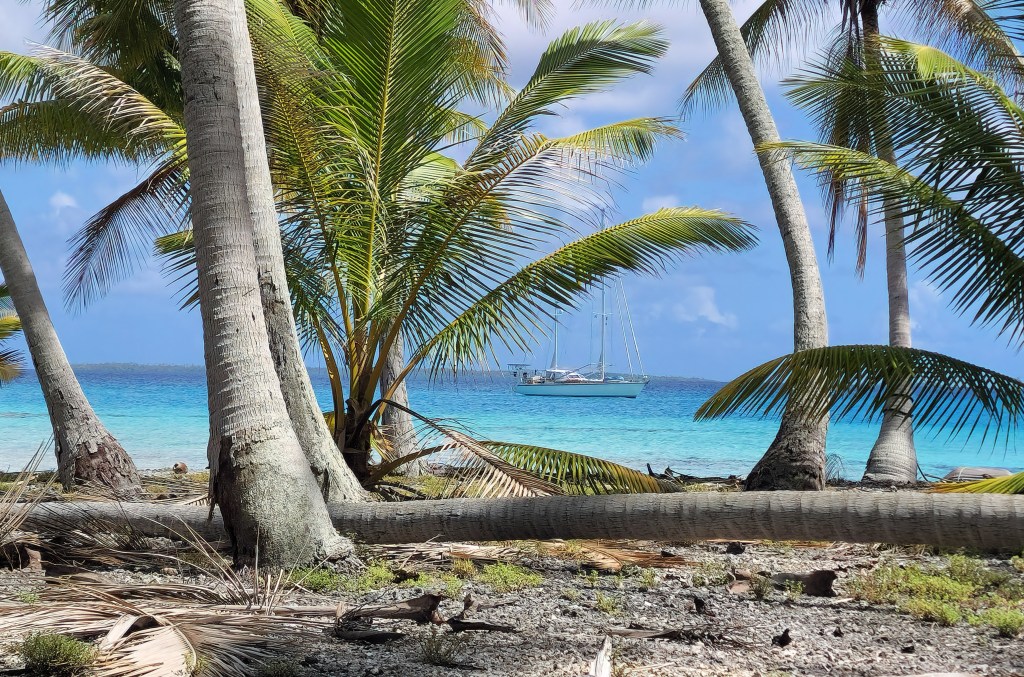
The anchorage
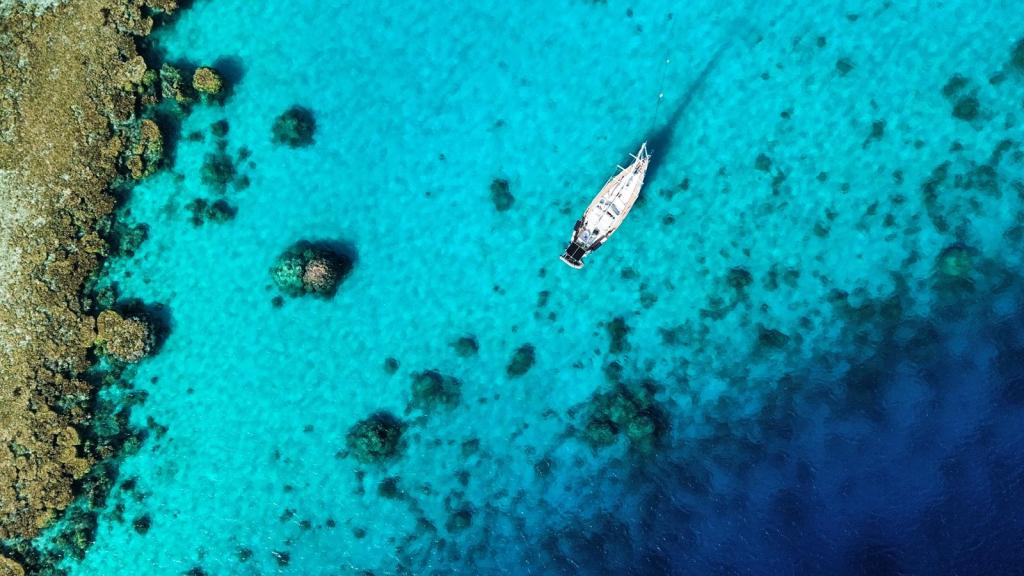
A few days later we moved further south in the Atoll and had some really nice snorkelling among sharks colourful fishes and healthy corals, the sharks was a bit scary in the beginning, but if we not bother them, they do not bother us.
Amazing snorkeling
We also had some bad weather with rain and strong wind, which we appreciated as our water maker was not working, we had ordered a new pump and motor, but we will not get it before we arrive in Papeete so we collect rainwater when possible.
A few days later Blue arrived, and they were making water for us as well, nice with a buddy boat.
They took this nice photo on Kerpa
Fakarava
Next destination was Fakarava which we have heard so much good about, supposed to be the most beautiful atoll.
To get there we had to make a slow overnight sailing of ca 60 Nm, to be able to pass the south cut a slack water. We left in the afternoon from Tahanea
And arrived 0630 the morning after and the timing was good we anchored a few miles from the cut.
We went ashore together with Peter and Catta on Blue and walked around and found a closed restaurant, the lady came out and asked if we wanted lunch and we said yes.
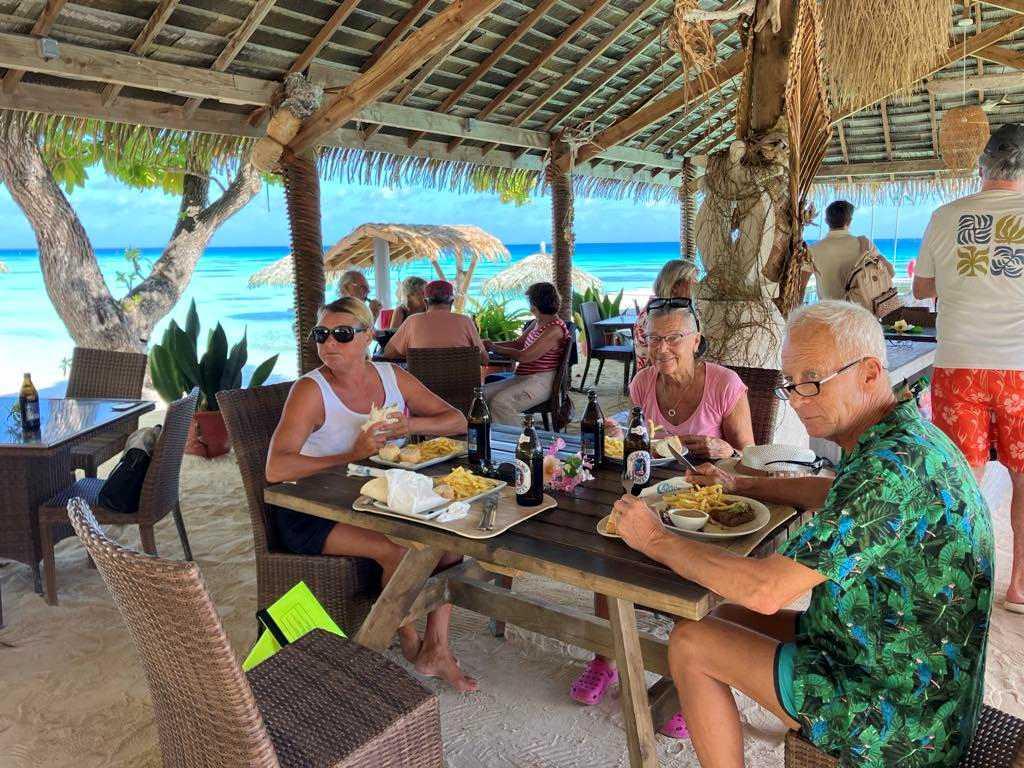
She opened the kitchen and started to prepare food, we ordered a bottle of wine and enjoyed both the wine and later a very delicious lunch, the fish was excellent.
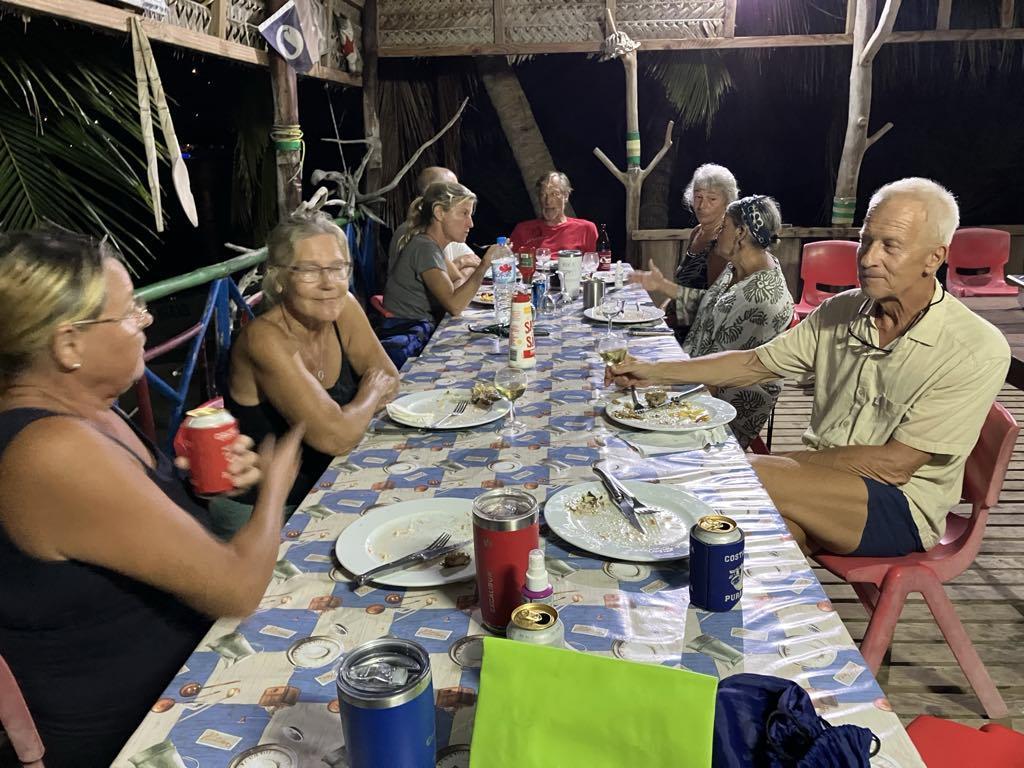
Later in the evening we went for dinner at one of the dive centres that was recommended on a few sites, but the food there was not close as good as the lunch.
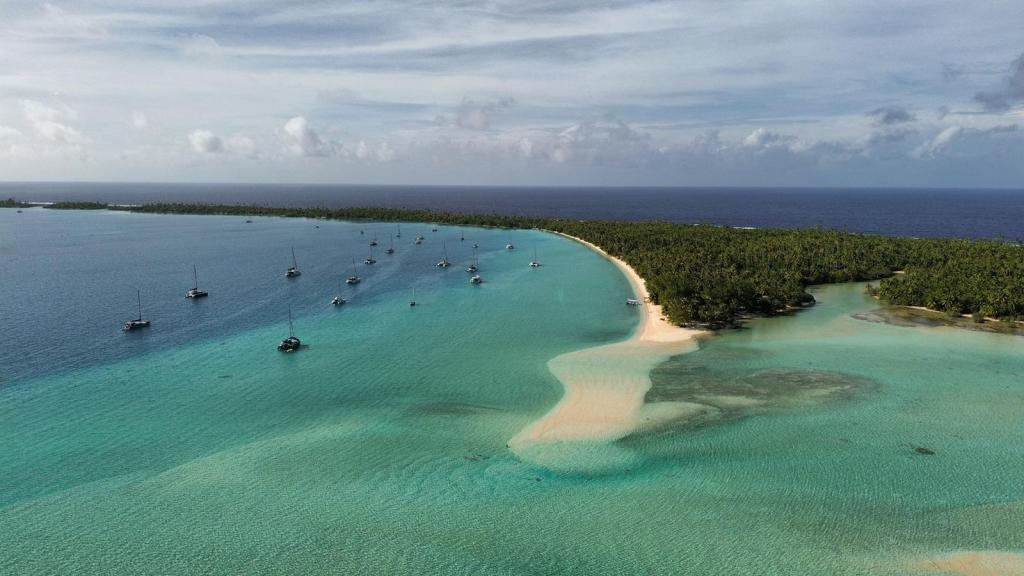
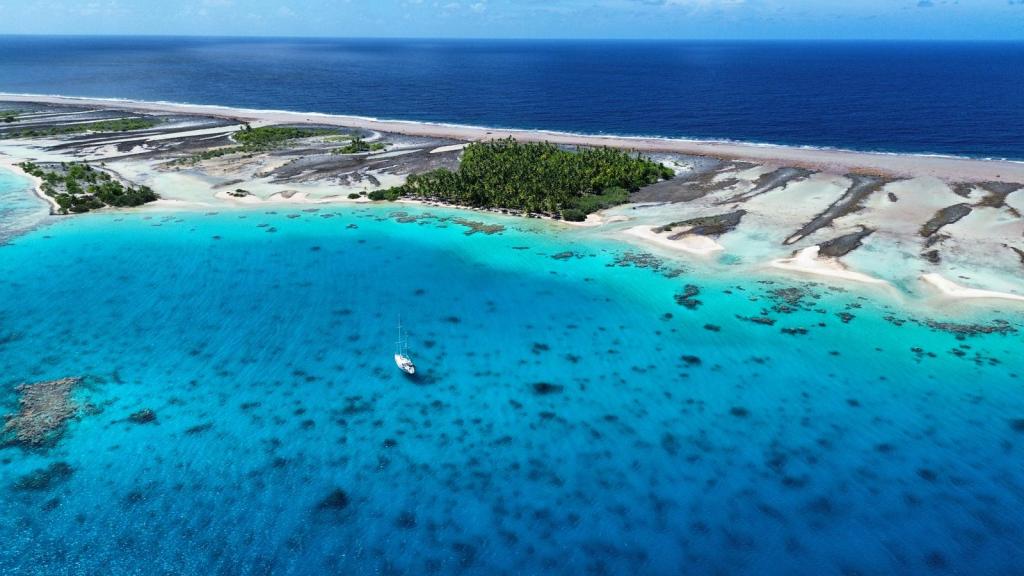
It was rather windy on the anchorage so a few days later we took a short trip to another anchorage called Hirifa.
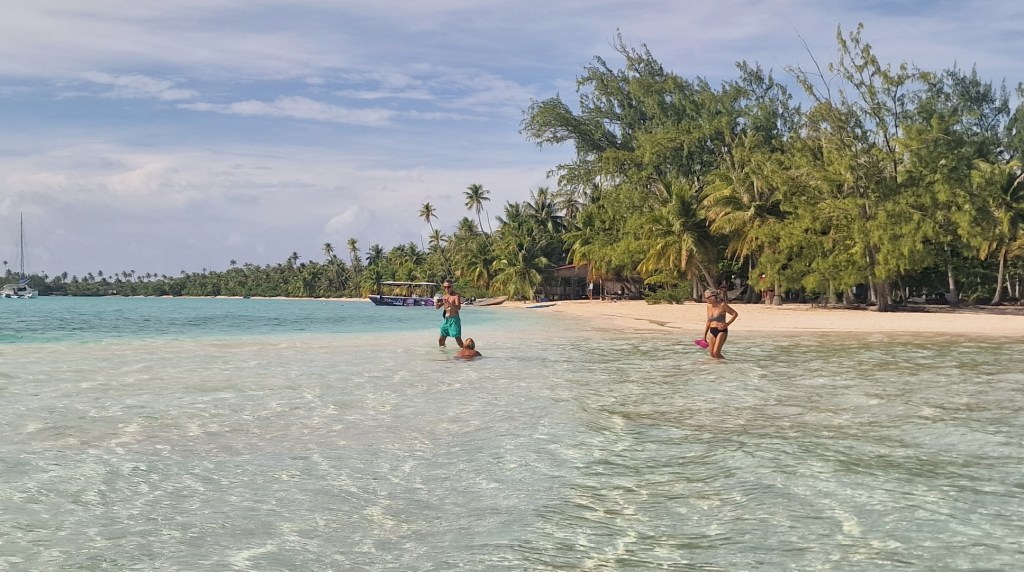
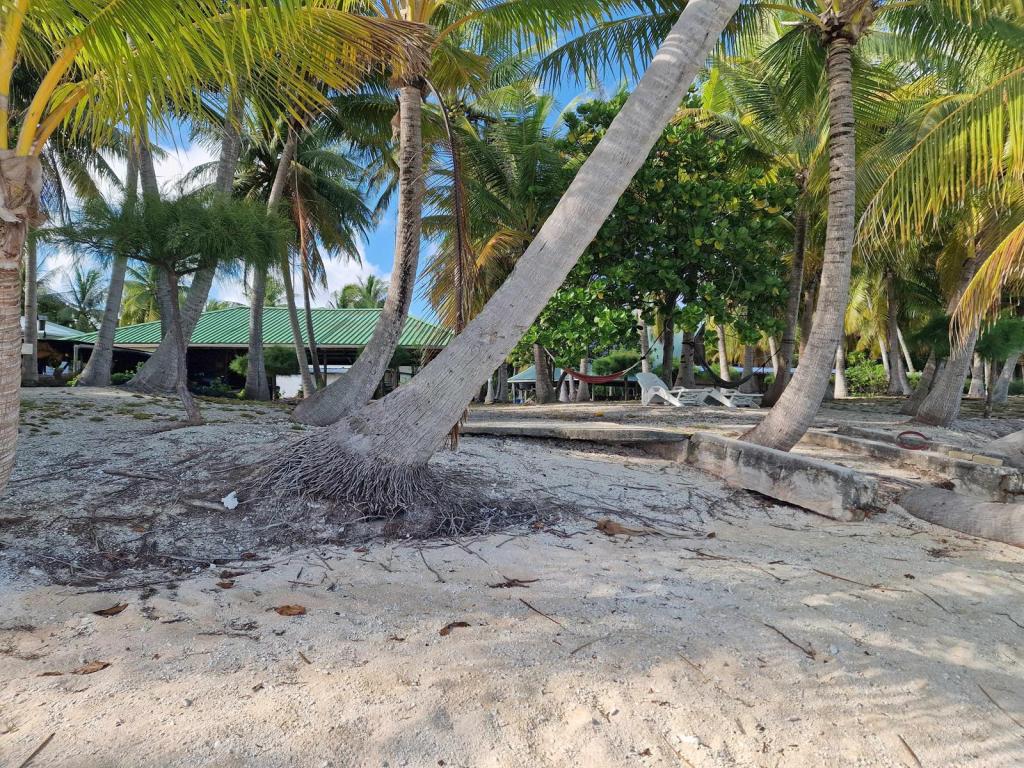
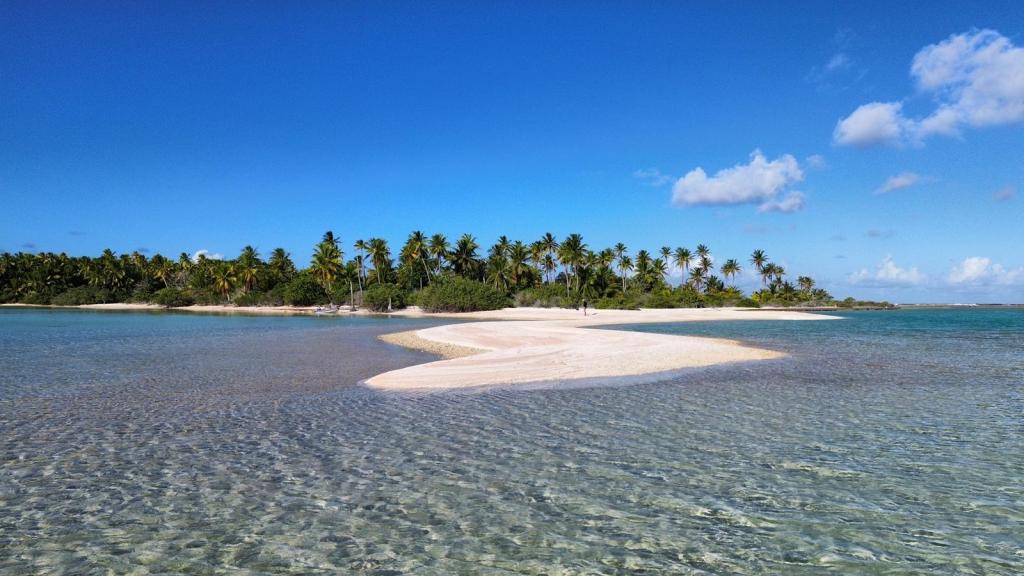
Very nice place with really nice sandy beaches.
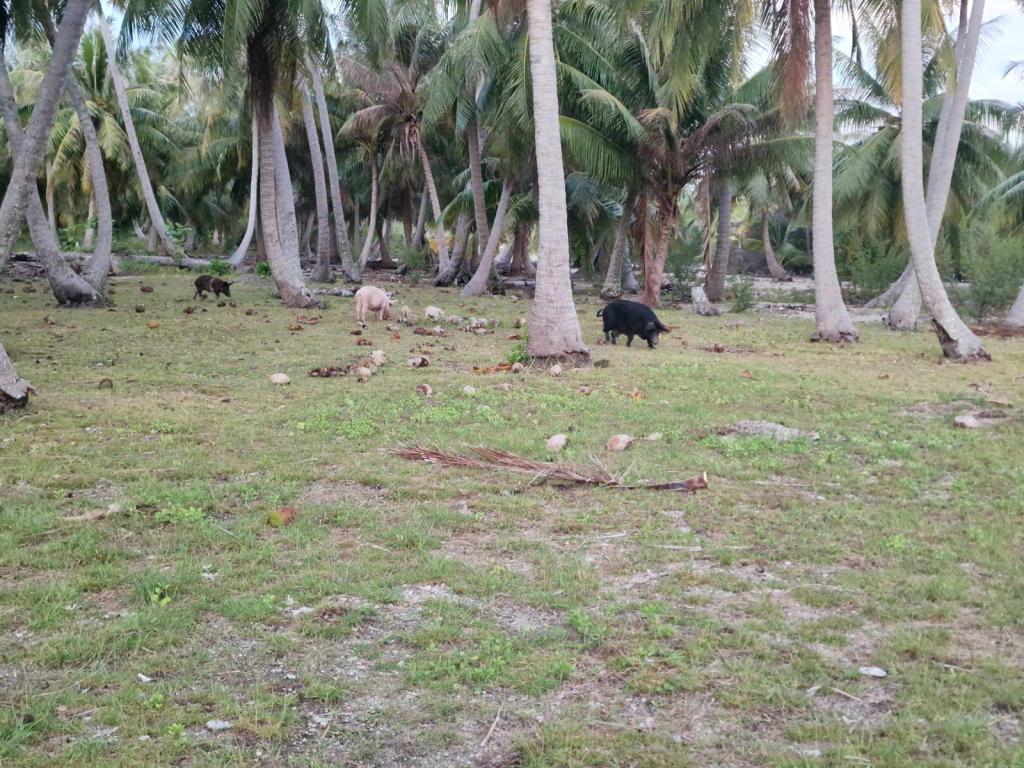
It was nice to walk around among the pigs and hens that walked around by them self.
Also here it was a restaurant with buffe style dinner, the ladies were tiered of cocking so of course we book a place at the table. Unfortunately, the food was not good at all, so we had no desire to go there again
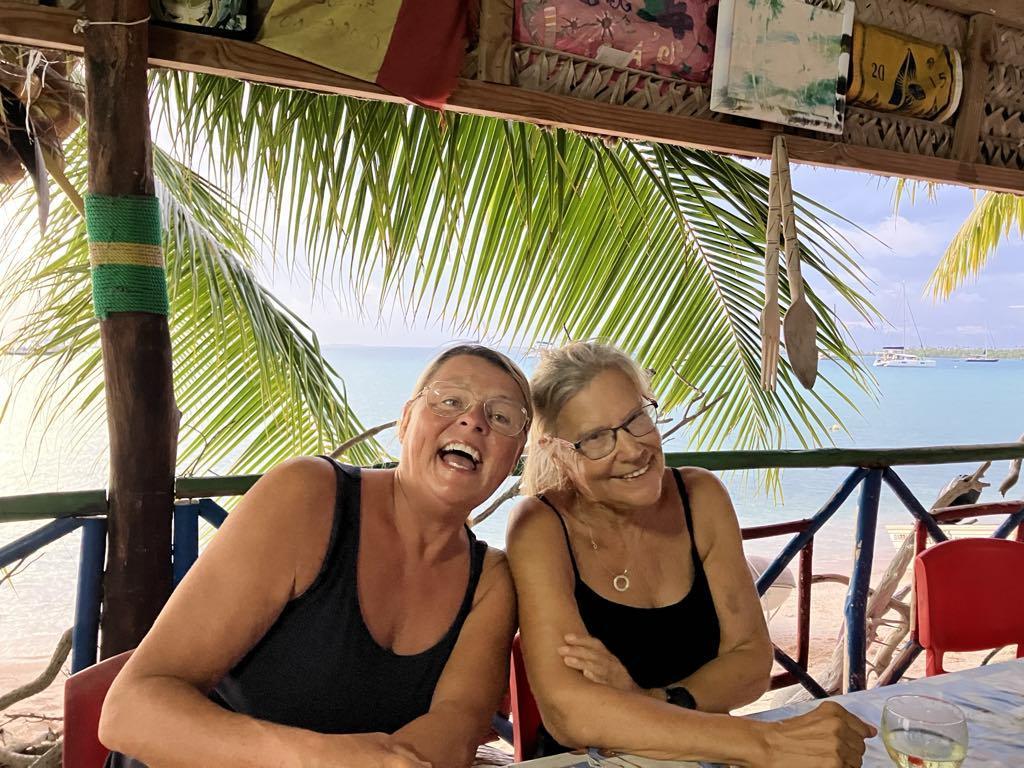
Happy Ladies.
They do not served any alcohol, but no problem just bring what you like to drink.
The next day we meet up with Traveler IV, they “insisted” to have dinner ashore, this time we were the only gest that evening and to our surprise, The dinner was excellent.
Time to move again this time to Rotoava the main village in Fakarava. And again we were eating ashore, can strongly recommend the Shark bar.
There is an obvious reason for the name Shark bar, you can if you like have your lunch sitting in the water surrounded by sharks.
But we and most others chose a safer place
And the food was both good and reasonable priced.
Tohau
Time to move again, this time to Tohau only 25 Nm away, Blue and Traveler IV stays in Fakarava, so now we are alone again.
There we get some bad weather again, but this time no need for collecting rainwater as Blue has helped us keeping our tank almost full.
Despite the gloomy weather we took a short trip to the outer part of the atoll
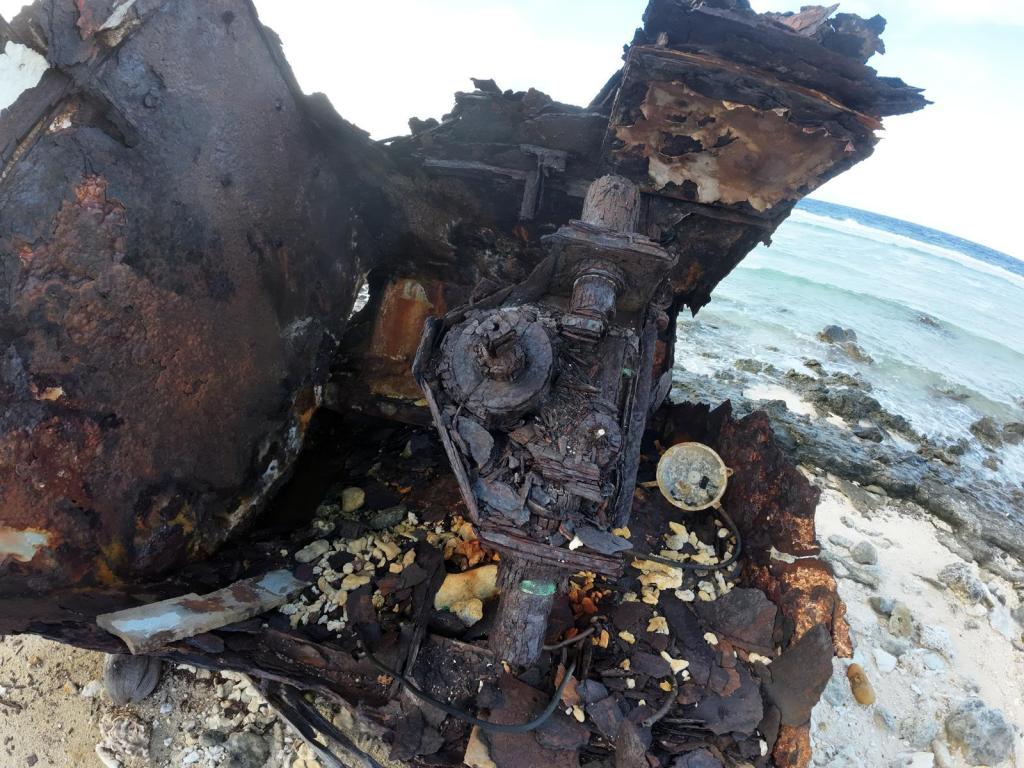
Guess this remains had been there for a long time, not much remains of the old boat. In general we have seen less rubbish on the shoreline than expected, it was far worse in San Blas.
We were not alone on the beach, plenty of eremites
The next day the weather becomes much better so we decided to celebrate a bit so the sun downer this time was cava
Tikehau
Next stop Tikehau, a 170 Nm overnight trip, We had good wind and a bit gloomy weather again, and the sea was rather large.
When we approached the western side of Tikehau the wind picked up so did the waves. The waves crashed violently against the reef and It was very spectacular; waves came from two directions both from the north and south due to wind from east the waves bends when reaching the shore.
It was like on a disaster movie. Unfortunately I have no video or photo on it, but when we saw crashing waves we were totally convinced that no way we can pass the cut in these conditions.
We mentally prepared ourselves to continue to Papeete another 170 Nm away. Anyhow we decided to at least sail up and have a look at the cut, and to our surprise it was rather sheltered, and not much current so it was an easy passage.
It was rather windy and our first anchorage was rather exposed. So the next day after resting we went to an anchorage more north, at the “Garden of Edin”.
It’s a Christian “settlement” of two families. They are homesteader and grow fruits, vegetables, vanilla etc, they also farm pearls which they sell to visitors.
It was nice to be able to stock up with some fresh vegetables direct taken from the place they were growing
The anchorage
A lot of boulders on the anchorage so important to float the chain.
Look close on the picture below ans you can see the chain with floats and our anchor, despite depth of ca 10 meters
It was large fishes chasing small fishes, and that caught the attentions from birds that came in a large number to feast on the remains, Just around our boat
Remind me about the movie The Birds by Alfred Hitchcock. so almost a bit scary.
Mantas The highlight of Tikihau
There is a particular place called the Manta feeding station and conveniently there is a rather protective anchorage there, and now was time to meet up with Blue and Traveller IV again.
Blue, Traveler IV and Kerpa at the Manta anchorage. Nice with a sundowner with friends again.
We had heard that about 08:30 is a good time to spot the mantas, so were there just before to see them before the trip boats came from the nearby village.
And were we lucky, just a few minutes after jumping in the water we saw mantas swimming around slowly and majestic.
We stayed another night there and had the same experience again just a minutes after jumping in we could enjoy the mantas for maybe 20 minutes, then the trip botas came and we went back to our boats again.
Leaving The Tuamotus
Now it was time for us to leave the Tuamotus and set sail towards the Papeete in the Society Islands.
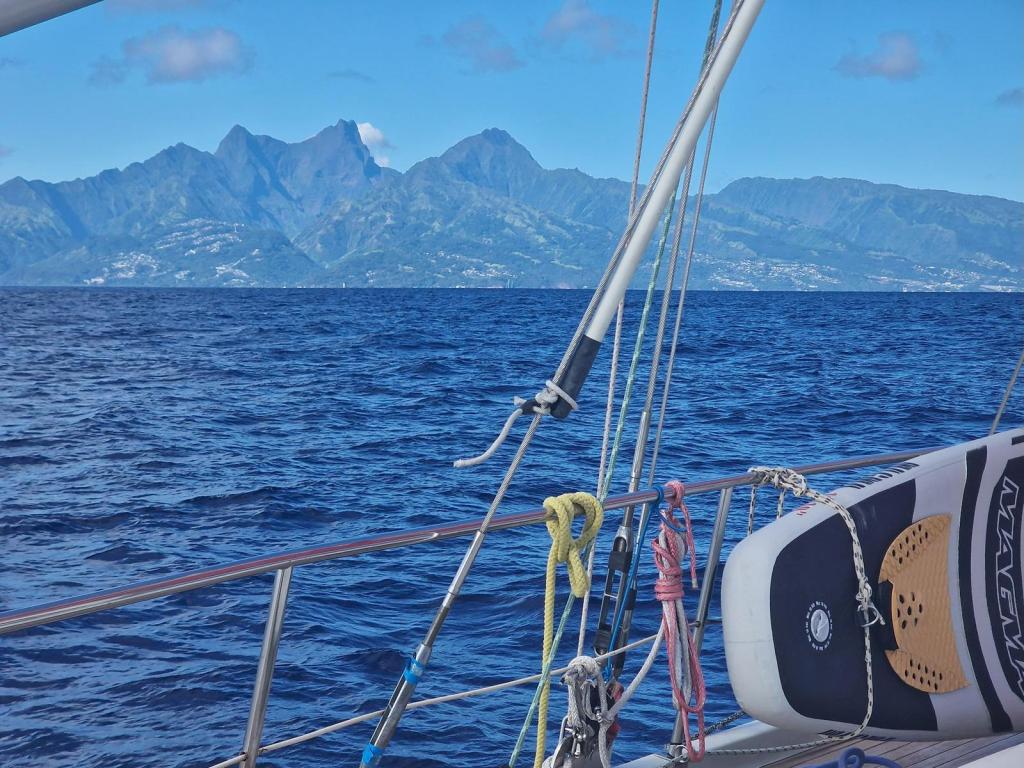
Approaching Papeete and the scenery is very different no low lying atolls but more mountains.
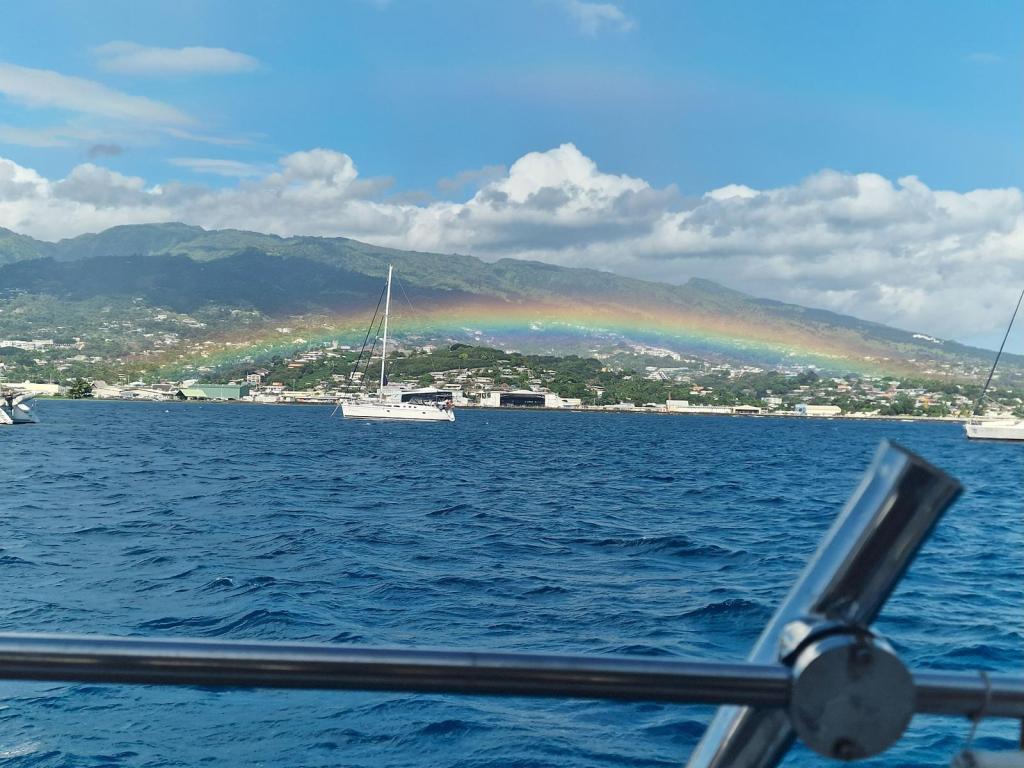
We went to what is called the airport anchorage where we saw this beautiful rainbow
Now it was time to pick up the water maker pump and motor.
And also to find a new a propeller to our Yamaha outboard engine, we walked around in Papeete to find a propeller, the Yamaha dealer had no suitable propeller and none of the other workshops had any that fitted. The problem is that I have hit rocks to many times with the propeller, so the rubber that the centre hub attached to the blades was broken, we can only drive very slowly, else the blads just slips on the hub. We heard about a small workshop who repair engines and contacted him to ask if he had a propeller, but even there it was no. Now I have a problem, my son and my 11-year-old granddaughter were coming in a few days, and I just have to have a working propeller as it is long distances to nice snorkelling places and other places I have promised to show them. I was really concerned, then the next day the man in the workshop called me on WhatsApp and told me he has found an old propeller that would fit! What a luck! I went there and bought the propeller, I had my doubt it would work, because it had seen a lot of abuse, it was several ships on the blades, but JIPPY it worked. Now I “only” have the issue with the water maker I thought.
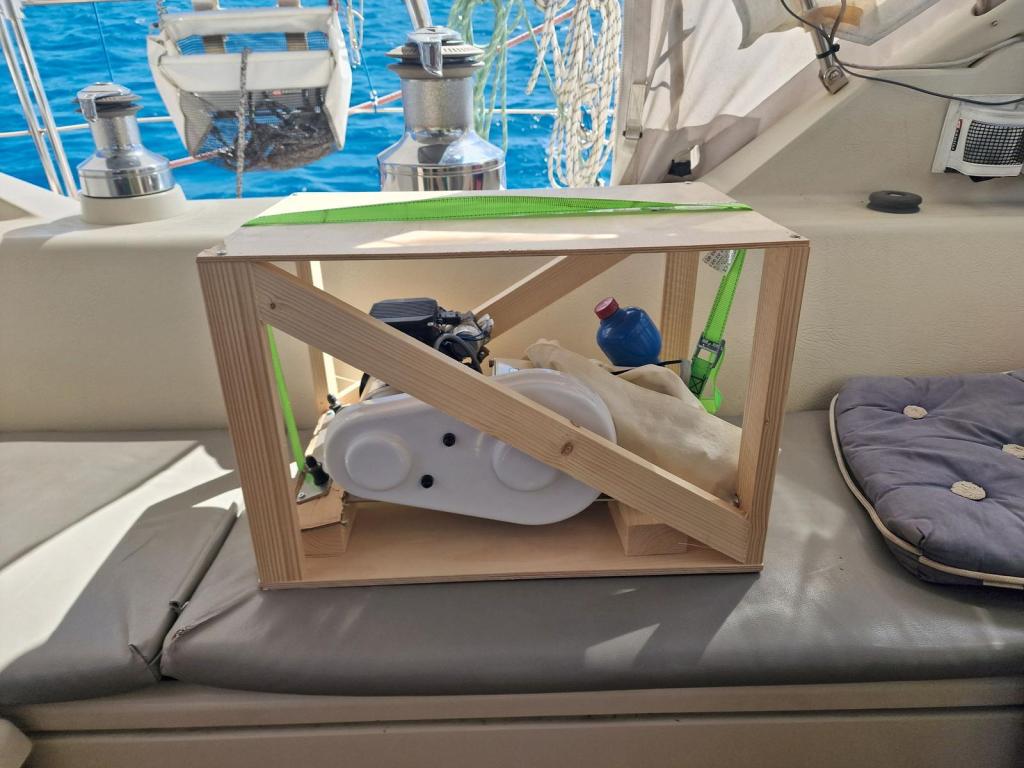
It came well packed in wood and plywood, and that was good, as you can see on the picture.
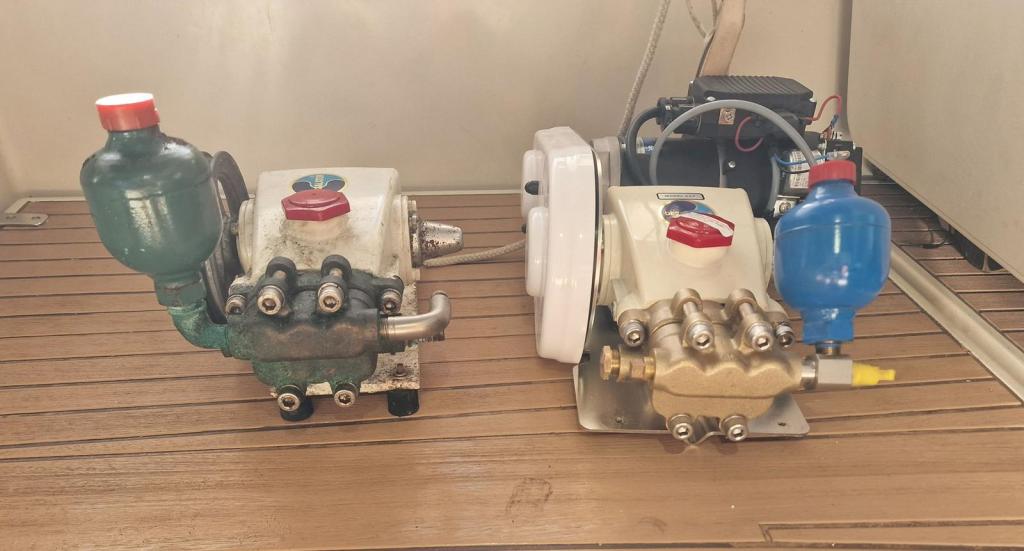
The old and the new units are mirror of each other and the old un it has o a 90 degree bend which do not fit on the new unit. Well with some hard work and thinking I got the new pack in place by using ply and wood to build a new foundation for the unit, and finally we can make our own water.
Of course, the cruising life is not easy, when working in the engine room with the Water maker, I found that it was VERY milky oil in the oil reservoir for the sail drive and also the level was much higher, so it was plenty of water in the oil. That need to be fixed promptly no way we can go on a long trip with that. Now I must find a place to lift so that I can replace the prop shaft bushing and seals. And now Kristoffer had arrived so do not wanted to waste to much of his time. To make a long story short, we managed to get a lift but we had to wait 4 days and the cost was exorbitant for the lift close to 2000 Euro for being 4 hours on the hard!
We used the time waiting for the lift for provisioning and some local snorkelling.
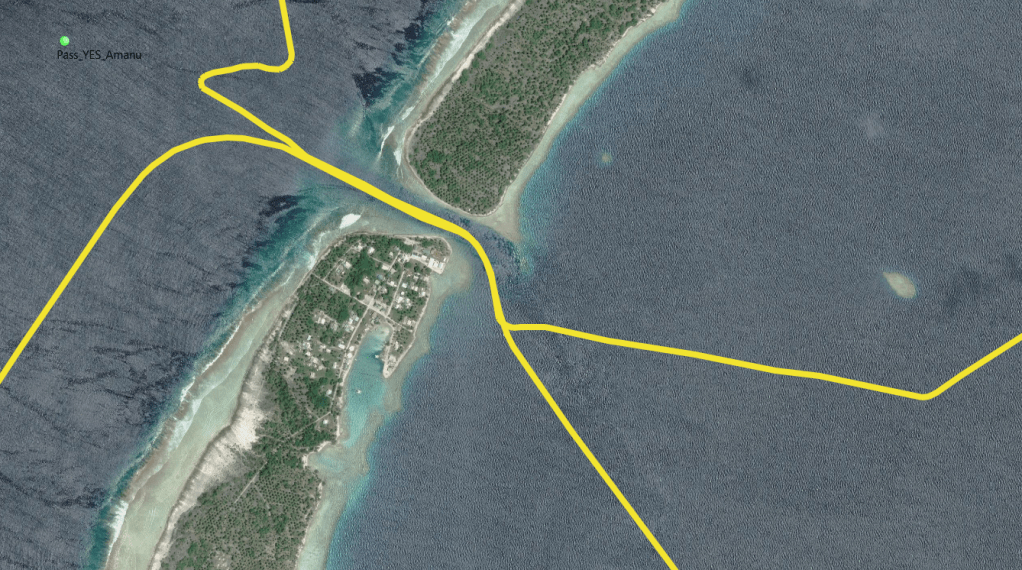
We casted off from Nuku-Hiva and sat course on Amanu ca 550 Nm away. We had light wind, so the trip took 5 days. One must time the entrance at the cut into the atoll quite carefully as current in and out of the atoll could be very strong, and when strong current it could be very large braking standing waves that one should avoid. One is supposed to enter with counter current and leave with the current with you.
There are several sources for the tide, and they often show different time so easy to get confused. This time we used a web-based tool called Guestimator, we arrived when it was supposed to be slack water, but when looking from distance it looked as very large and braking standing waves at the cut. No way I’m going to pass that cut now I said to the crew, fortunately when getting close it was only breakers close to land and the shallow part, when looking straight into the cut the water looked quiet OK. When we entered we had 4-5 kn against us but it went rather smooth, we had now help by our forward seeing echosounder.
At Amanu there are not many boulders to keep watch for, and on google maps they are relatively easy to see and by that easy to avoid. We had downloaded google maps for OpenCPN and satellite view is also available on Navionics charts on our Android tablet, so as long as you have the sun high on the sky and not Infront of you the boulders are relatively easy to see
The Amanu cut
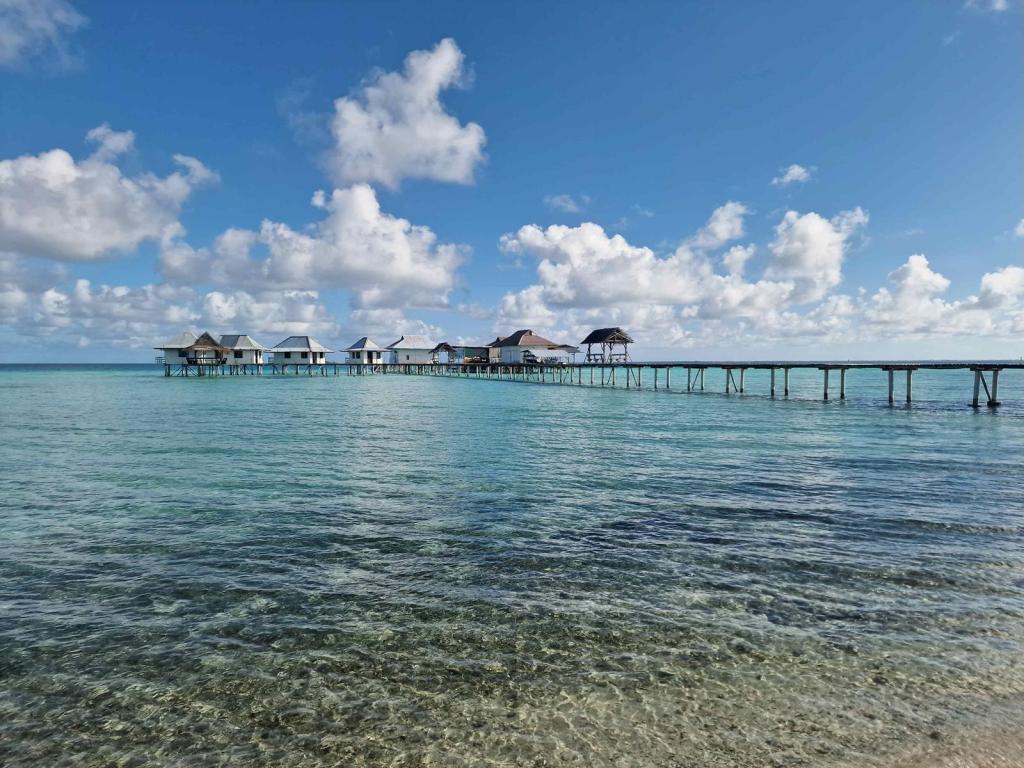
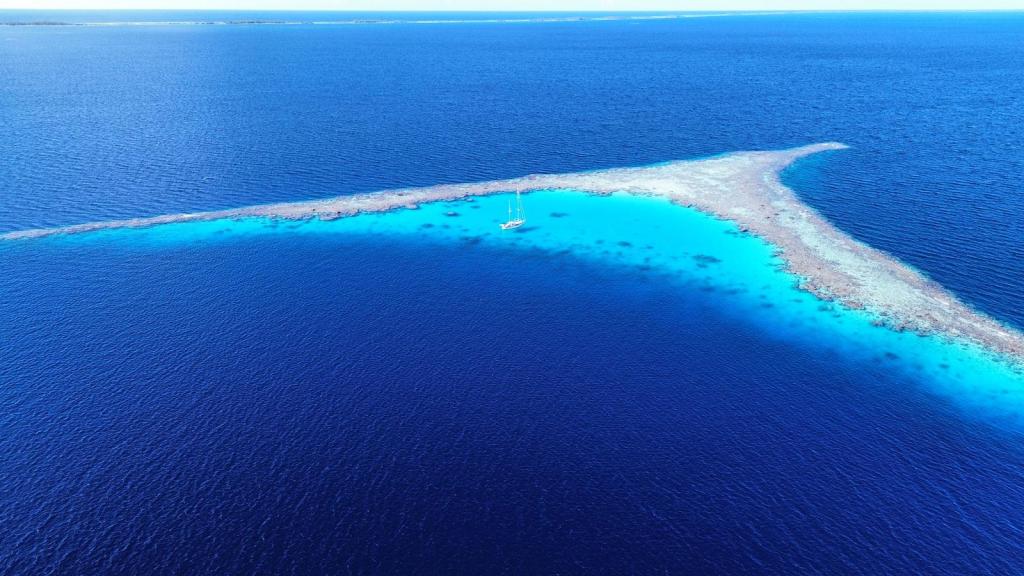
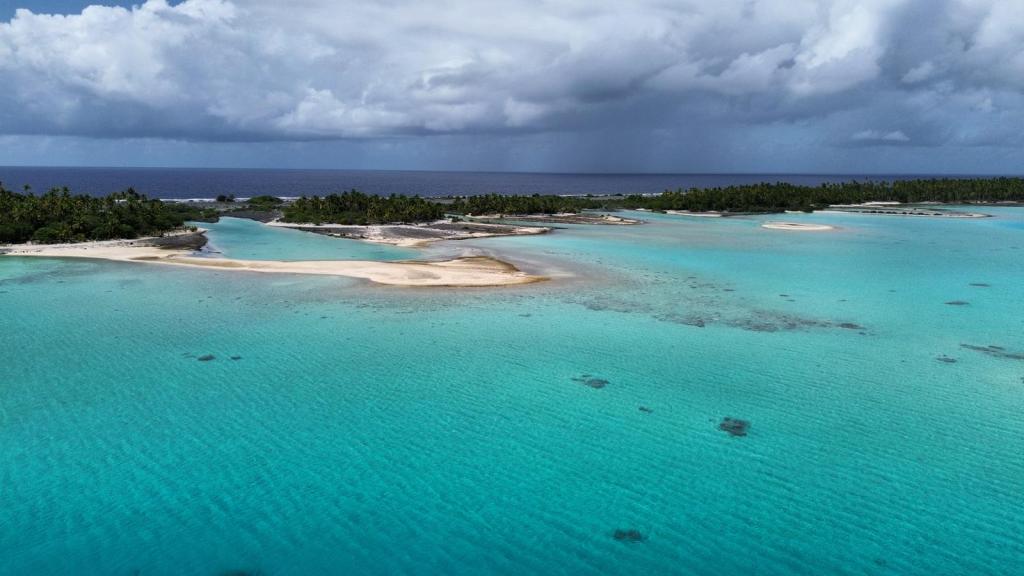
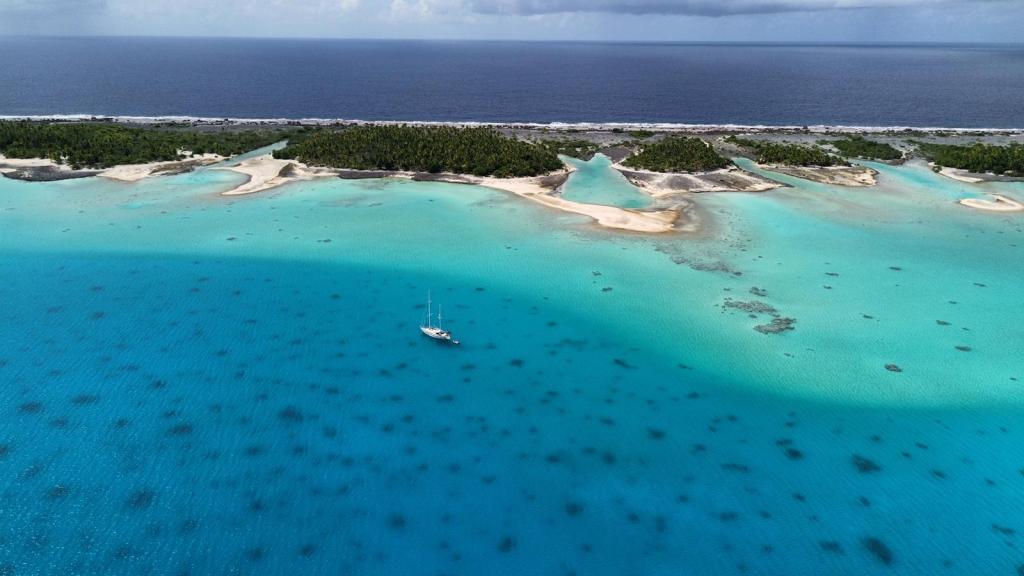
We arrived at our anchorage, it was a very spectacular anchorage at a reef in the middle of the Atoll.
This anchorage is called the “belly button” Not so many boulders on the anchorage but one have to float the chain by attaching fenders or whatever floats one choose to use on the chain, first float at ca 1,5 times the depth and then a floa for every multiple of depth. We have a rather heavy chain so large floats are essential else the chain can snag a boulder making very difficult to retrieve the anchor and one also risk to damage the corals,
On the picture above one see two of three floats that we used.
Of course during the night, the wind shifted 180 degrees, and we came close to a shallow boulder just astern of Kerpa, the anchor held well, but the night rest was disturbed as I went up a few times to see that we kept the distance to the boulders. Next day we wanted to move to a safer anchorage but before that we had some nice snorkelling and to my delight a saw a manta swimming passed me at just a few meters distance, rely great moment, of course I had not my camera with me so could not document the occasion.
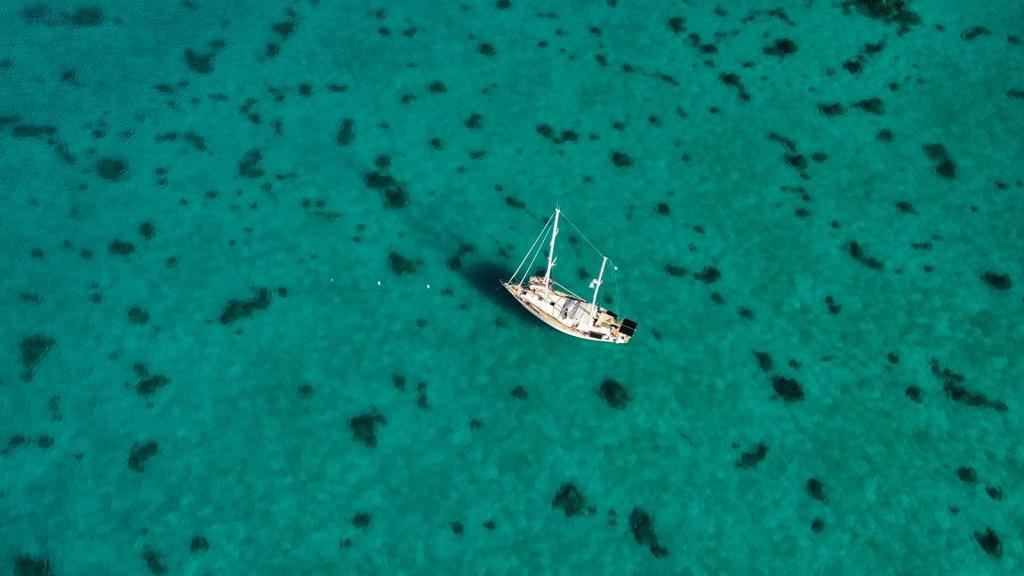
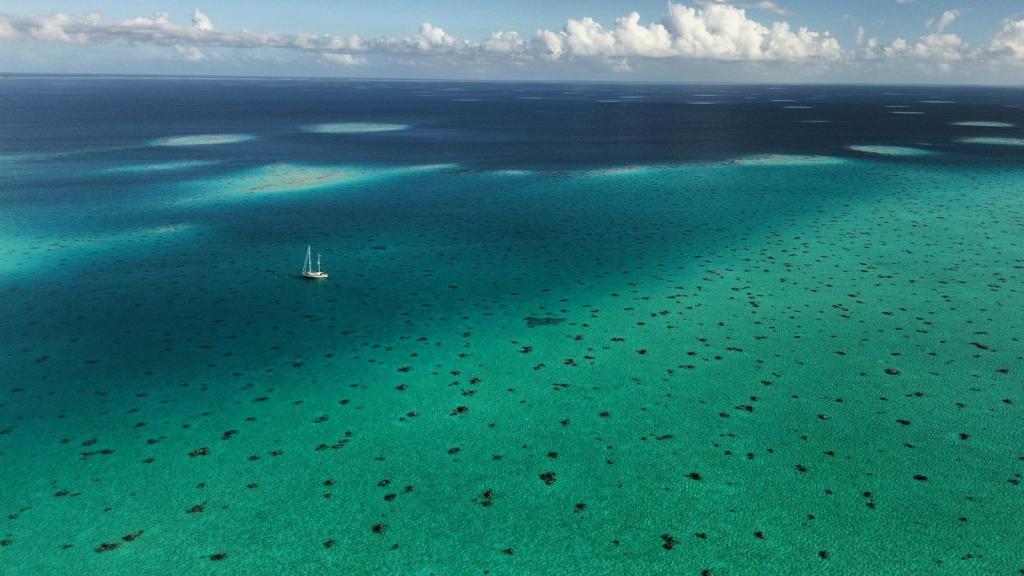
We moved south and anchored at was called southeast anchorage, much more boulders as seen in the picture
The atolls are rather large so if you get the wind from the wrong direction, you can get large swell even inside the atoll.
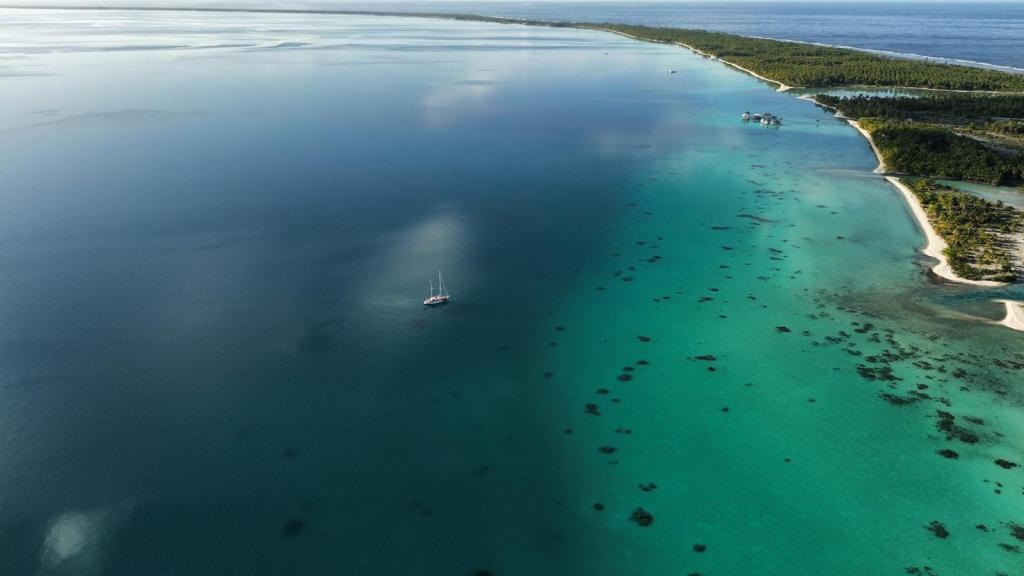
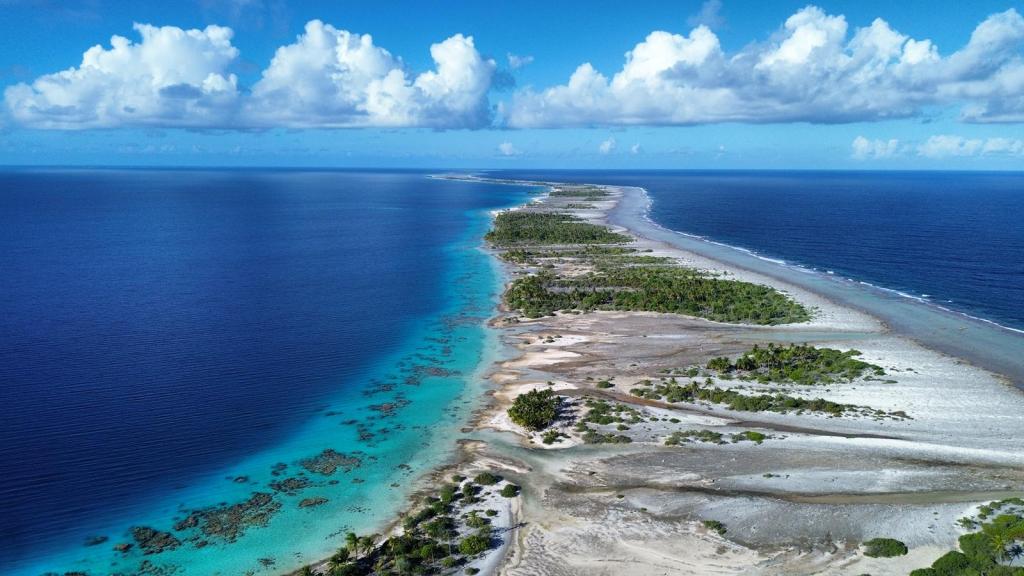
Amanu above looking north, below looking south
Amanu is ca 17 Nm long and 5 Nm wide.
Of course we were snorkeling
Also saw a turtle
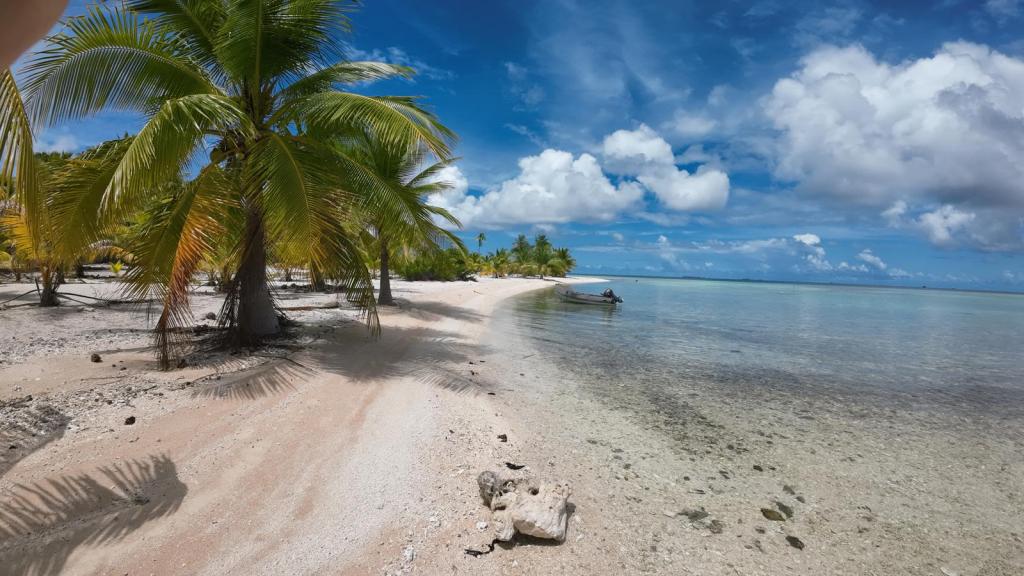
These atolls are really like paradise
Hao
Our crew Anna-Lena had a ticket home from the nearby atoll Hao about 15 Nm away. Hao cut is claimed to be difficult, but the entering was very easy, but the exit became a bit more adventures, but more about that later.
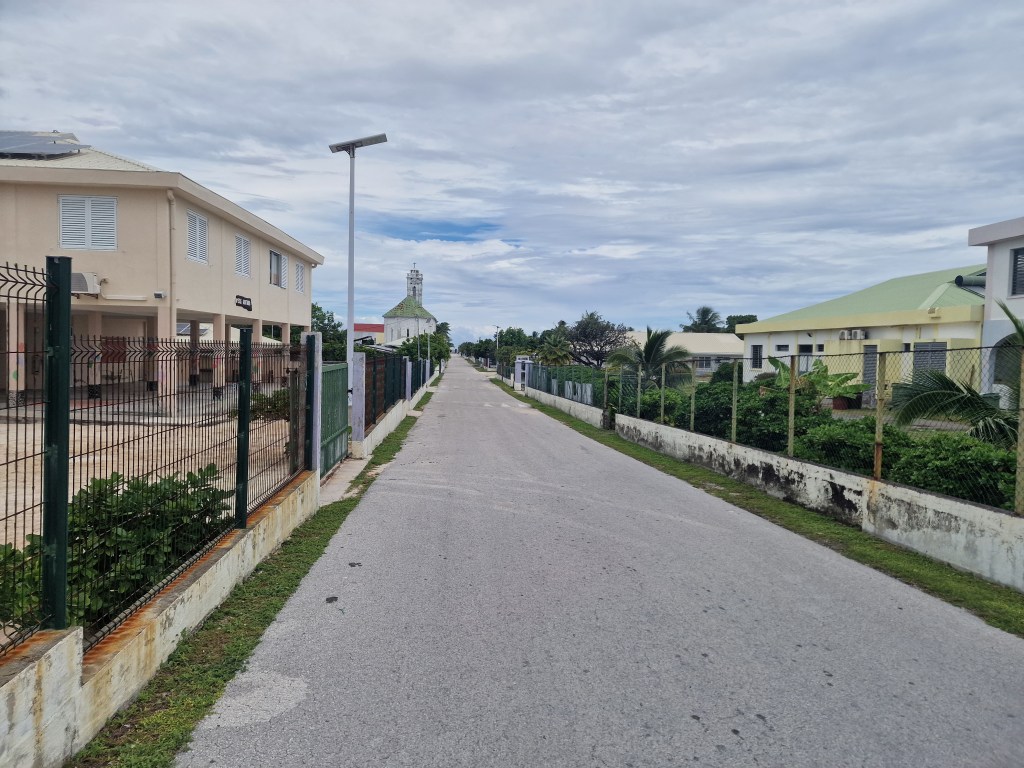
We anchored at the main village Otepa, and this time we were not alone at the anchorage it was one more boat there.
Otepa is a small but very friendly village, almost all we meet youg as well as old greated us when we walked around the village. We found two small stores and could buy some bread and eggs, eggs are not easy to come by. Anna-Lena who should fly home a few days later needed a ride, there are no taxis on the island, we asked a local policeman how to get to the airport, he then called one of his friends who later drove Anna-Lena to the airport. Guess what, when she arrived at the airport the flight was cancelled that day, but fortunately it was a flight next day and she could still catch her flight from Papeete back to Stockholm.
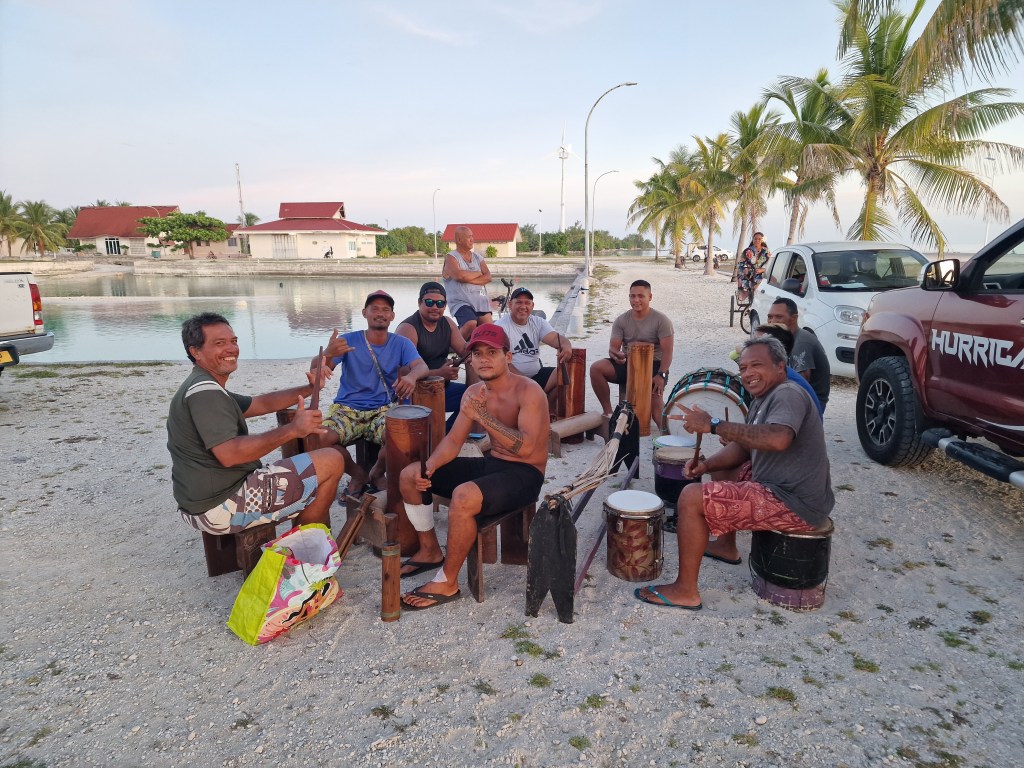
Some locals gathered together and played local music. On ther clip below you can hear them playing.
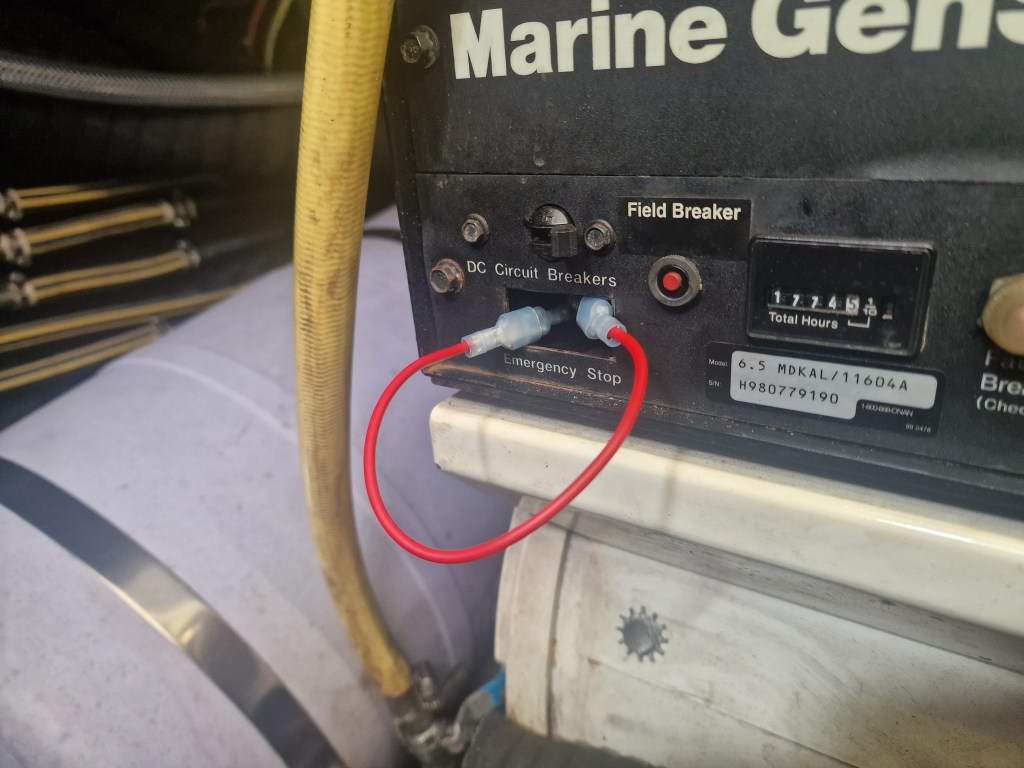
It is always something to fix, one morning our diesel generator did not start it was totally dead. Fortunately, it was an easy fix, it was the emergency kill switch that was broken
Just a cable between the two studs and we was on again.
We do carry a lot of solar panels 1160 watt, but as we do all our cocking on an induction hob and have two fridges and two freezers, we consume rather much electricity. Cloudy sky and rain is not uncommon in the tropics, so we now and then must use our diesel generator.
Cloudy sky rather common
After Anna-Lena left we moved to another anchorage Orare, there one found something called kawau, it is a reef protruding straight from the shore and out, it gives good protection from the waves when wind blowing along the atoll.
This kawau extend ca 1 Nm right out and gave us good shelter, and we were the only boat there.
default
default
The beaches look quite nice from distance and on most photos, but they consist of coarse coral sand and or just corals, so shoes are necessary to wear when walking along the shore. But is still very beautiful and nice to walk.
Our bottom was rather fouled, so we stayed a few days cleaning the bottom. It is a rather hard job, first we scrape with a trowel, that take away all the coarse fouling, after that one need to scrub the bottom with some abrasive such as a Scotch Brite or similar to get rid of the green algae growing on the bottom
Time to leave Hao, we had ca 180 Nm to go to Raroia and we found it more important to time the cut at the entrance of Raroia than the exit at Hao. I do not know if that was a good choice or not, we got a rather adventurers exit with very strong current with us going out.
Se video below
Raroia
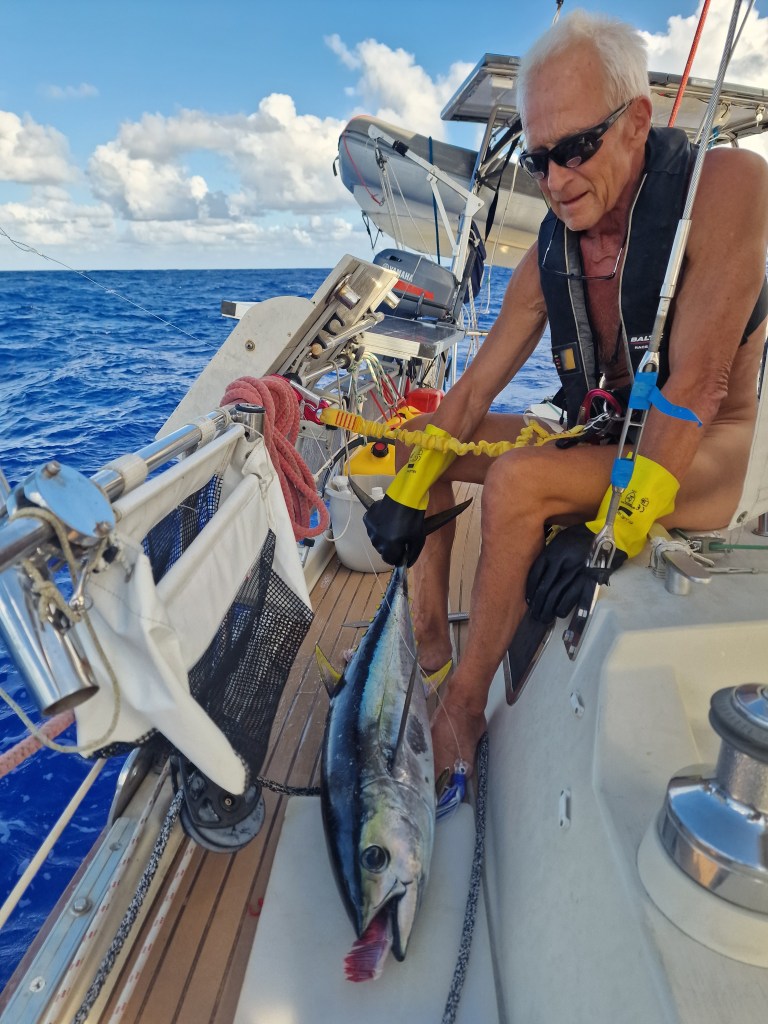
On our way we caught a nice yellow fin tuna
It gave us several nice dinners and excellent sushi
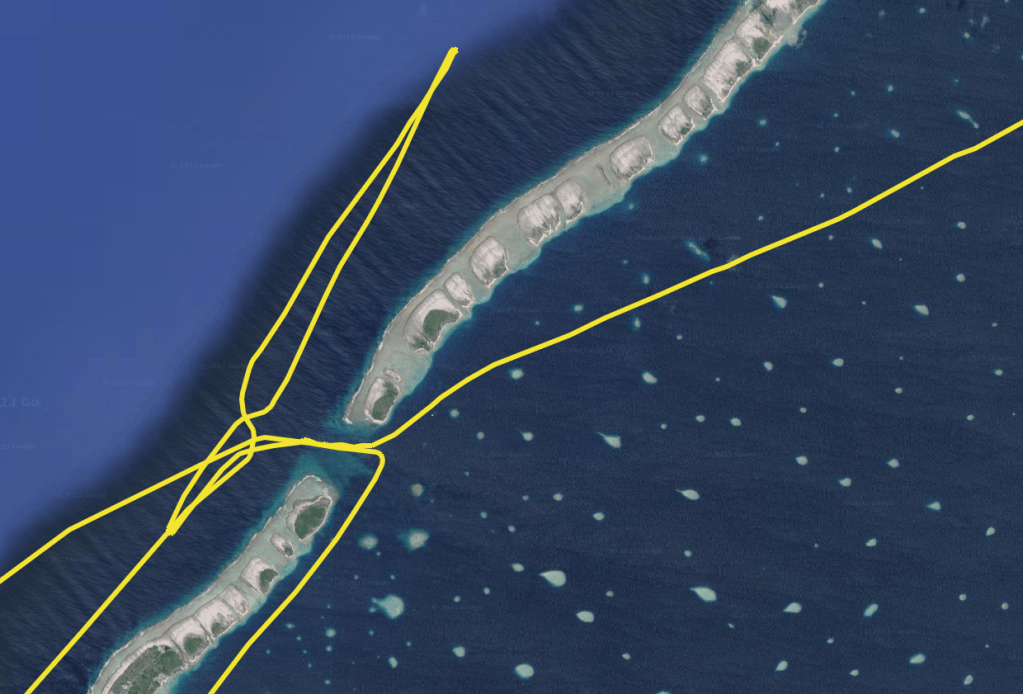
We came a bit early to the cut so we had to sail up and down for ca 1,5 h before we thought the water was not to upset.
You can se our track outside the cut and the the change in course outside the cut is the current pushing us side wise.
On the inside you can see that there are many boulders to keep track on.
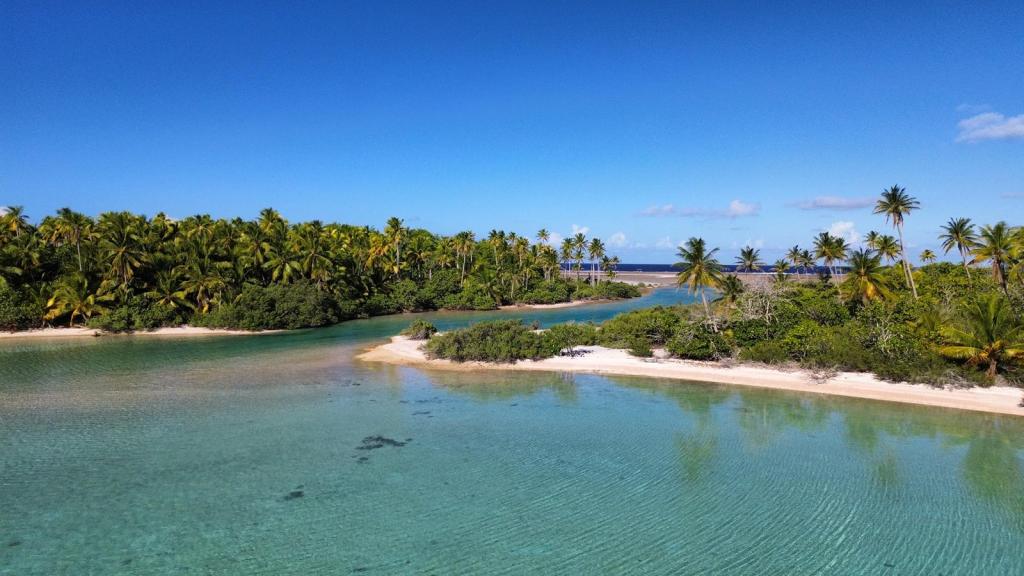
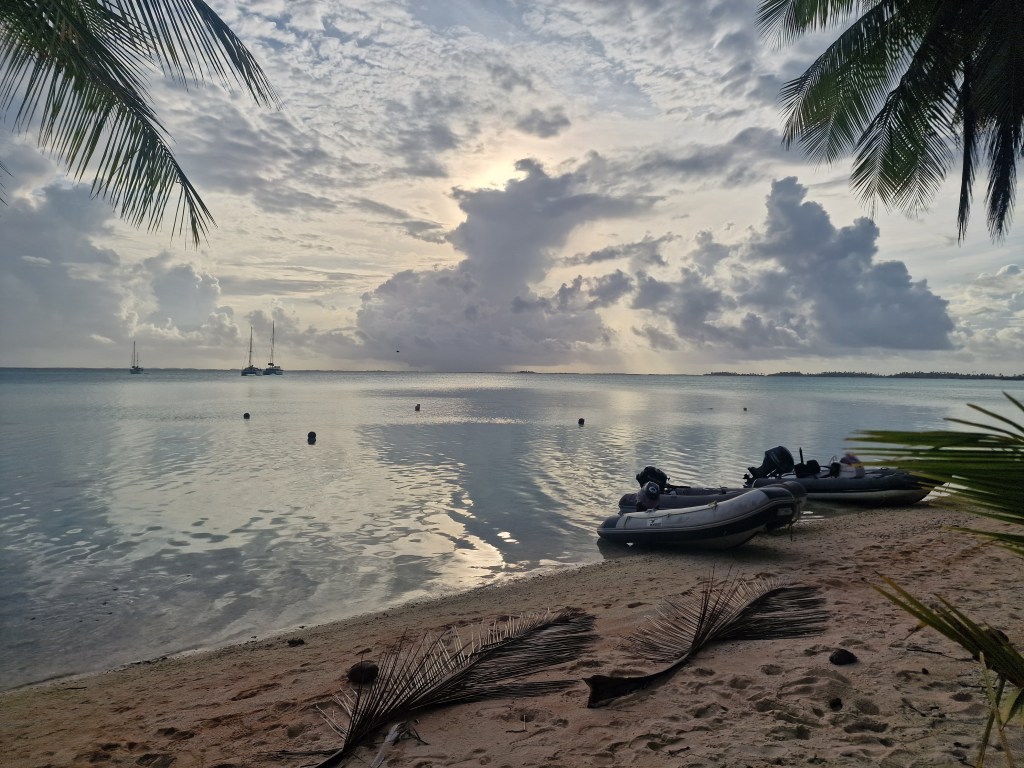
We found a very nice anchorage in the northeast corner of Raroia.
Here we encounter out first sharks, we had regularly 7 black tip sharks around Kerpa.
It was a bit scary first and we hesitated to bath, but a few days later we saw them when snorkelling and it felt less dramatic.
Below snorkling with the sharks
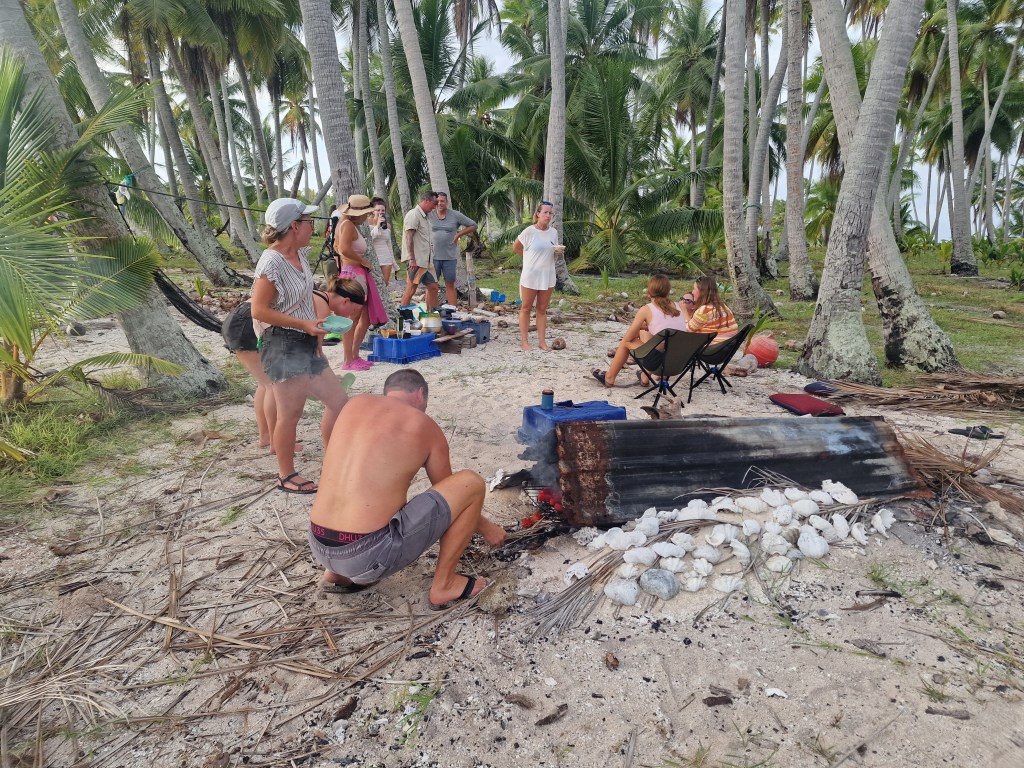
Not fare from us was a few other boats, families with kids that sailed together, one of them we had meet in Curaçao and they invited us for a barbeque on the beach, really nice to see and talk with some others.
Barbeque
Later we had some very nice snorkelling, a lot of fishes really nice.
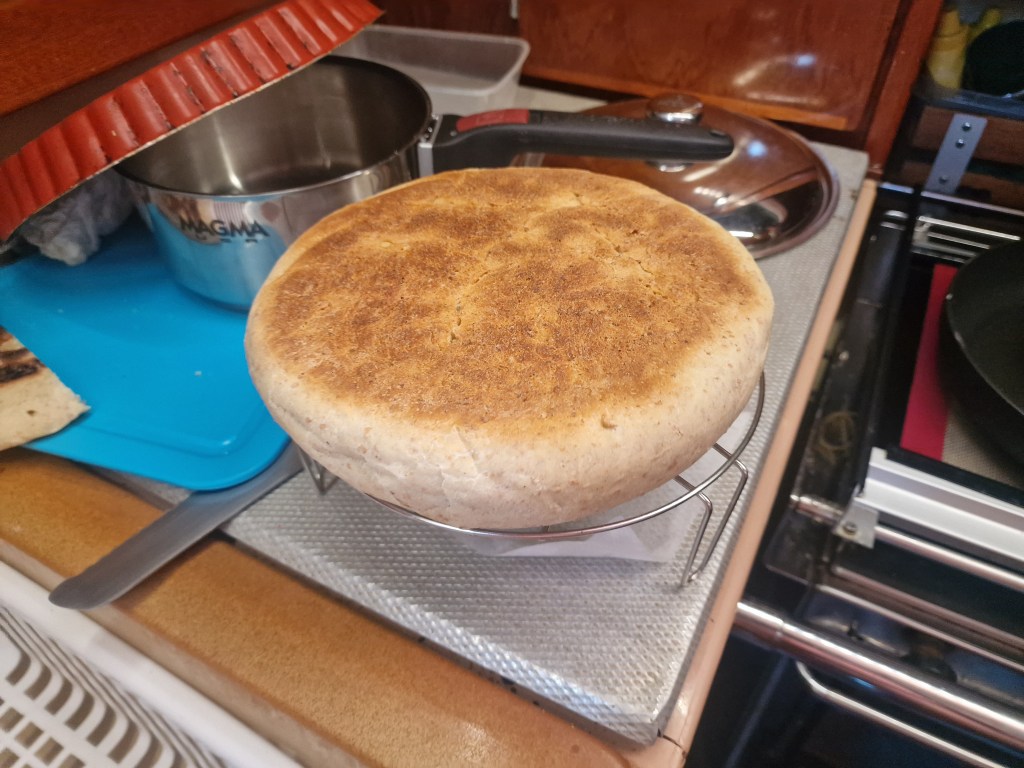
Our Air fryer broke down a few weeks ago, and we missed it a lot, especially as we used it for baking bread, and I do miss bread a lott. I thought it must be possible to bake in a pot! I looked into YouTube and found a few ways. Just ordinary dough put in a pot with a lid on, not too much dough then it get burned before relay. We bake it for 20 minutes on low heat, then turn the half baked loaf of bread and bake for another 7-10 minutes, Well, we tried to bake in a pot and after a few tests the bread become very good, a bit strange form, but taste was great.
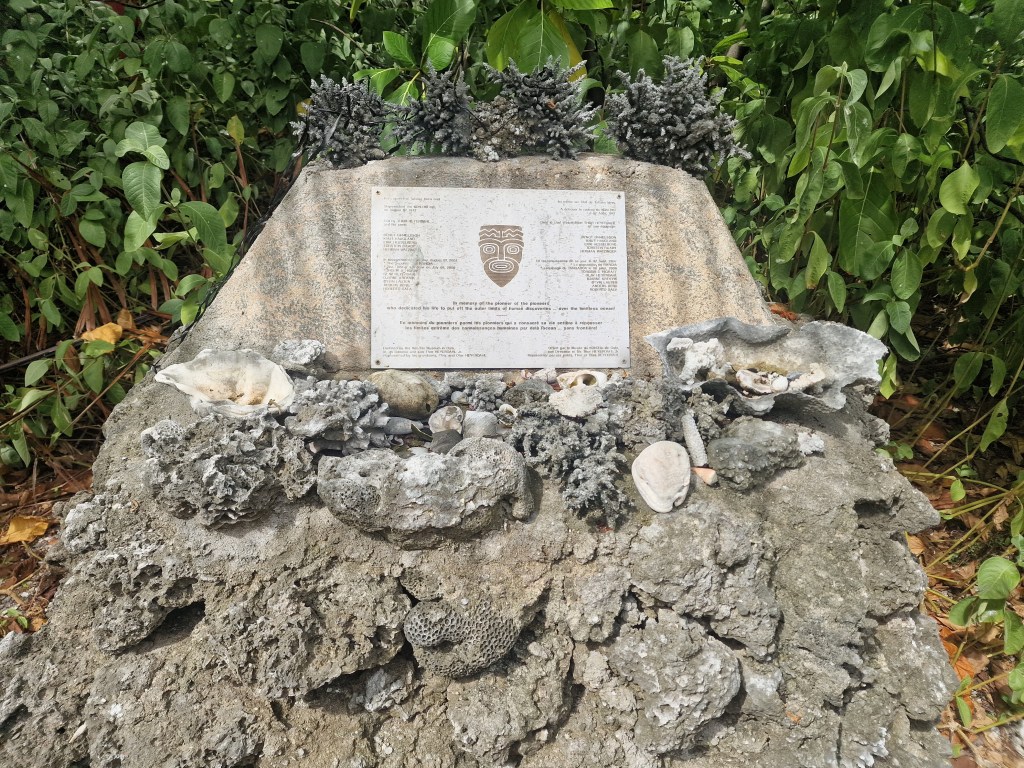
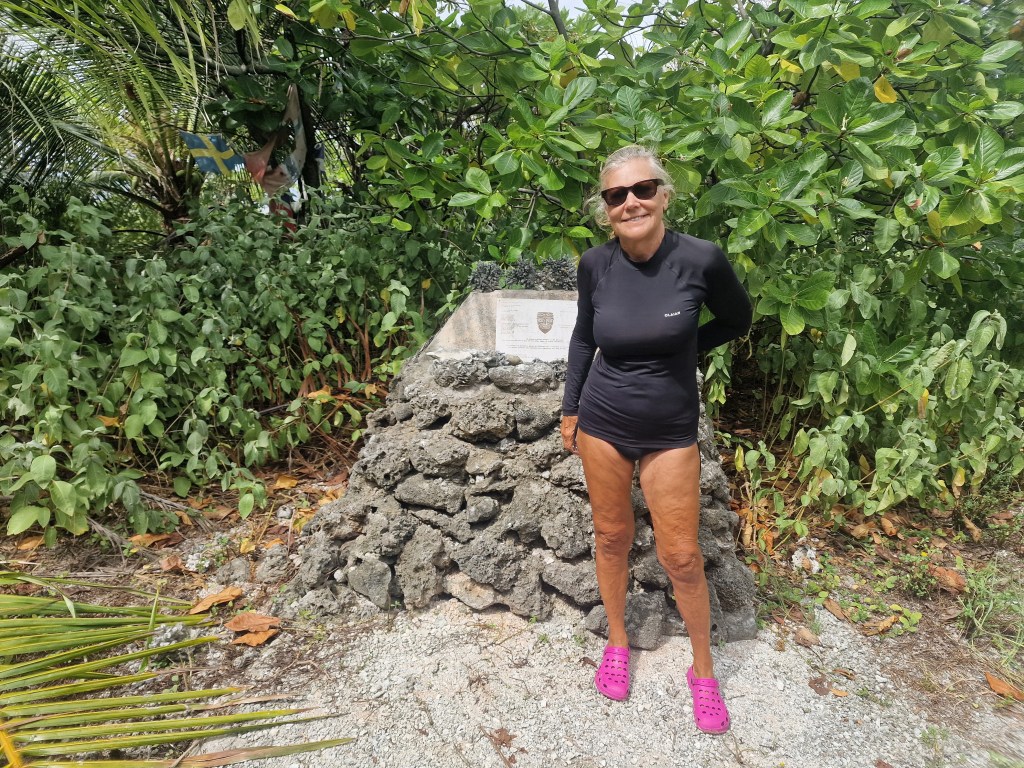
Raroia is also the atoll that Thor Heyerdahl arrived to with his raft made of “grass” he sailed from South America to French Polynesia 1947.
Kerstin at the Kon-Tiki memorial.
Makemo
The next atoll was Makemo about 80 Nm away. We had some slow sail as we need to make the right time to the cut, but just before the cut we got a squall that lasted for ca 1 hour, we did not want to enter as visibility was very poor and strong wind so we just motoring slowly waiting for the squall to pass. We did not mind waiting a bit as water was rather rough at the entrance, finally the weather becomes more pleasant and the entering less rough.
passing the cut not too bad
Makemo anchorage. It was plenty of boulders and several boats had problems to leave as anchor and/or anchor chain got tangled in the coral heads.
It was a shop in the village with rather good supply. We could stock up with potatoes, onions, cucumbers and some other stuff.
The village
We did not stay long at the village as wind turned and fetch became quite long and anchorage rather bumpy, we turned to the Nort East corner where it was calmer.
There are many boomies or boulders in Makemo, they are very visible on the satellite map, but one has to zoom in a lot as some of the boulders are only a few meters in diameters so sharp outlook is necessary both on the sea and on the chart. We prefer when there is a lot of boulders as then you need to have constant sharp outlook, if only a few boulders one risk losing attention and it is easy to miss and hit one. These boulders are often just below in the water, size usually from a few meters in diameter up to maybe 50 meters, just besides them it is normally rather deep, so if one should hit one, it is high risk that you run into them with the hull and not with the keel, so damage could be very severe and you risk taking on water and sink. So sharp outlook very important, not Kerstin’s favourite tasks
Norh east anchorage Makemo. Not easy to find a good spot to drop the anchor.
A local had made some artwork, artistic installation of floats
But the water was fantastic
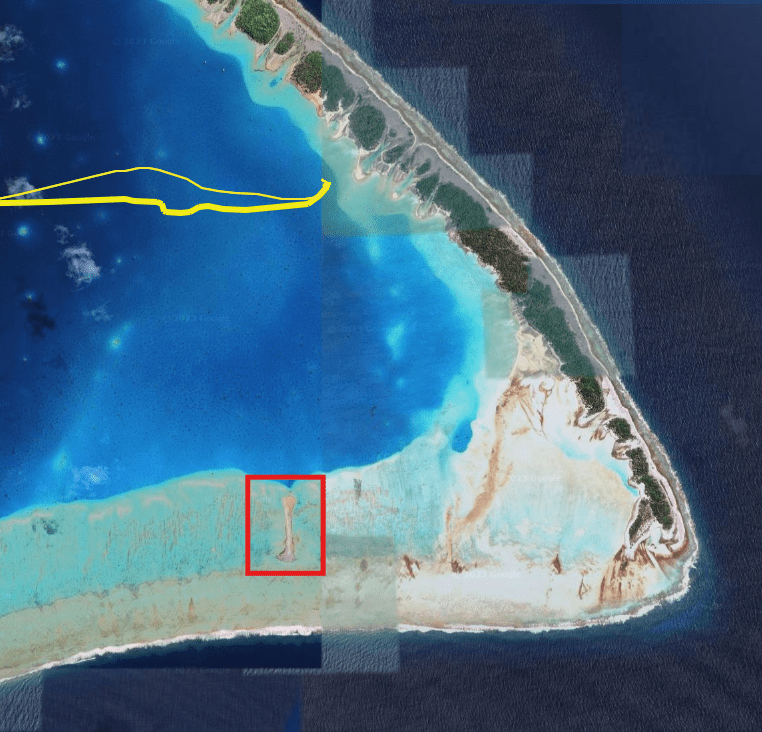
At the south eastern corner of Makemo we had some great snorkelling
See the red square on the chart, strongly recommend you go there if visiting Makemo, relatively healthy corals and a lot of fish. I made a short YouTube video
Yes we had a catastrophic oil loss when leaving Nuku Hiva, but that will be a cliff hanger, more about that later.
Hiva Oa
From Panama we arrived at Hiva Oa and had a day of rest. The next day we took the ca 3,5 km walk to the village Atuona to clear in. Very soon on the way we saw a Mango tree, which we come to see many of in the Marquesas and we could often pick mangos that had fallen down.
The procedure to clear in is very easy, you fill in a document online, fill in normal stuff such as boat data, crew list passport numbers etc. You should also declare alcohol and tobacco, tobacco is no issue for us, but we do carry a lot of wine, beer and rum etc. Reading the allowance for each person, it’s normal quantity a few litres of each, but we had substantially more as prices are very expensive in French Polynesia. We have heard that if you declare the full volume they will just accept it, and we thought even if the charge us tax on what we bring the total cost will be lower than if buying locally. Luckily, they accepted our very large quantity of alcohol and everything went very smooth.
After we visited the local grocery shop, we found prices extremely expensive, Whine starts at ca 20 Euro, spirits 70-100 Euro, beer 3 Euro for a can, another example was a small bottle of olive oil 22 Euro. Potatoes and onions were just north of 6 Euro.
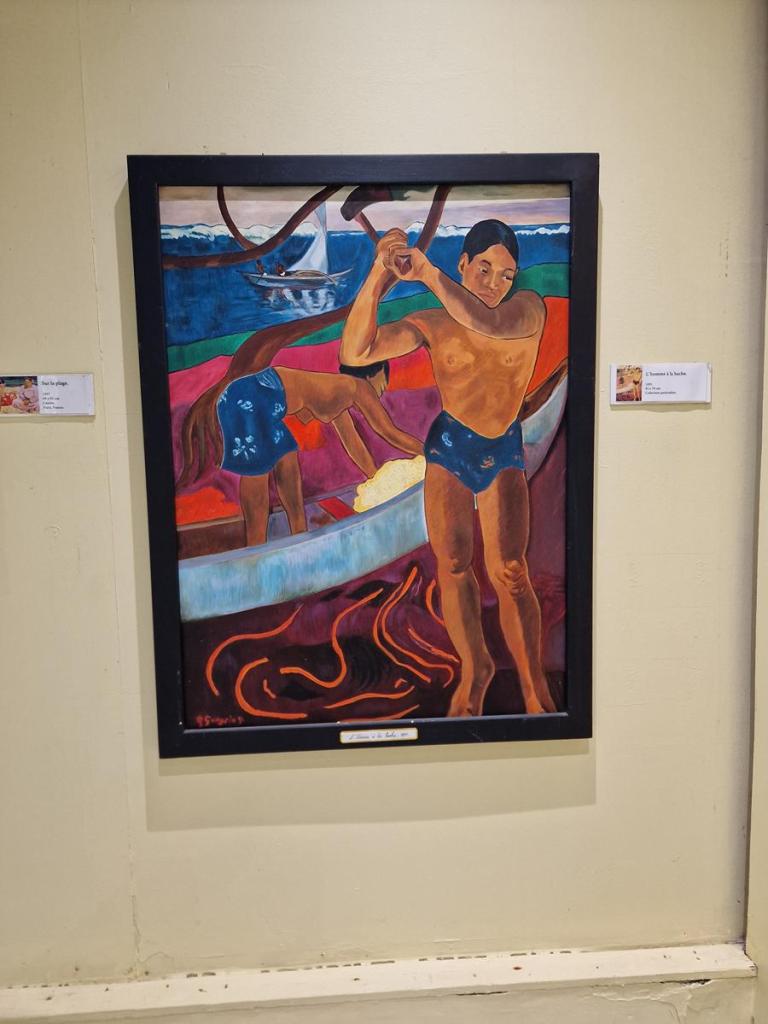
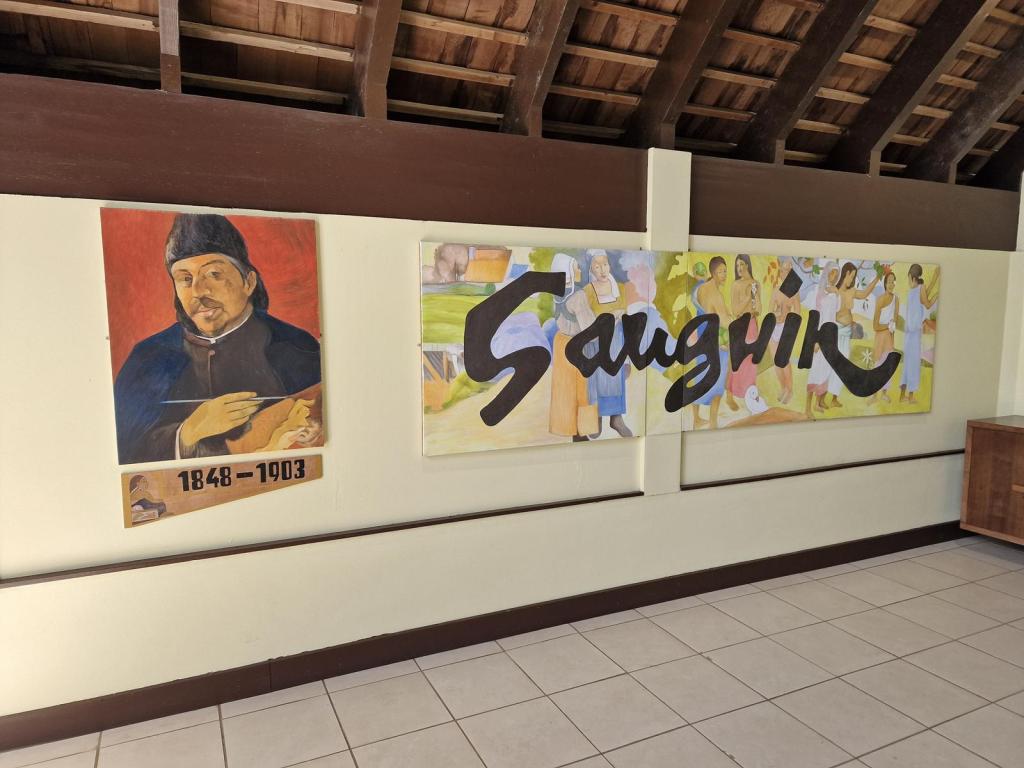
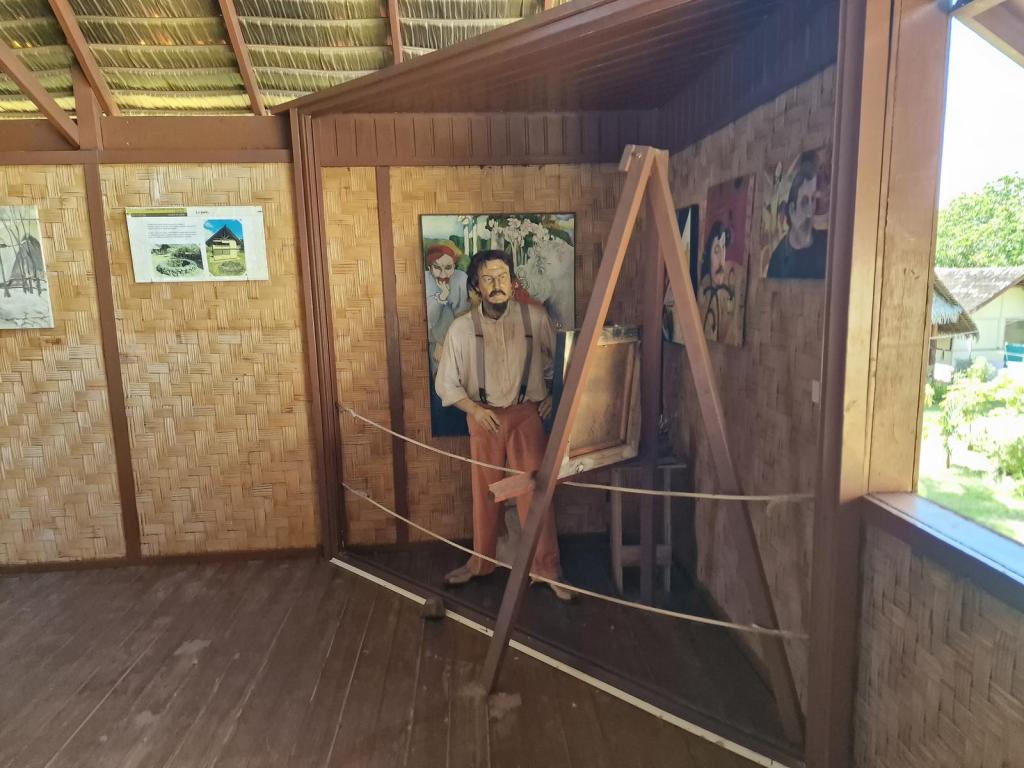
Outside the gendarmery, very convenient for us was the Paul Gauguin Museum, he lived in Hiva Oa between 1901 and until his death 1903.
Paul Gauguin and his studio
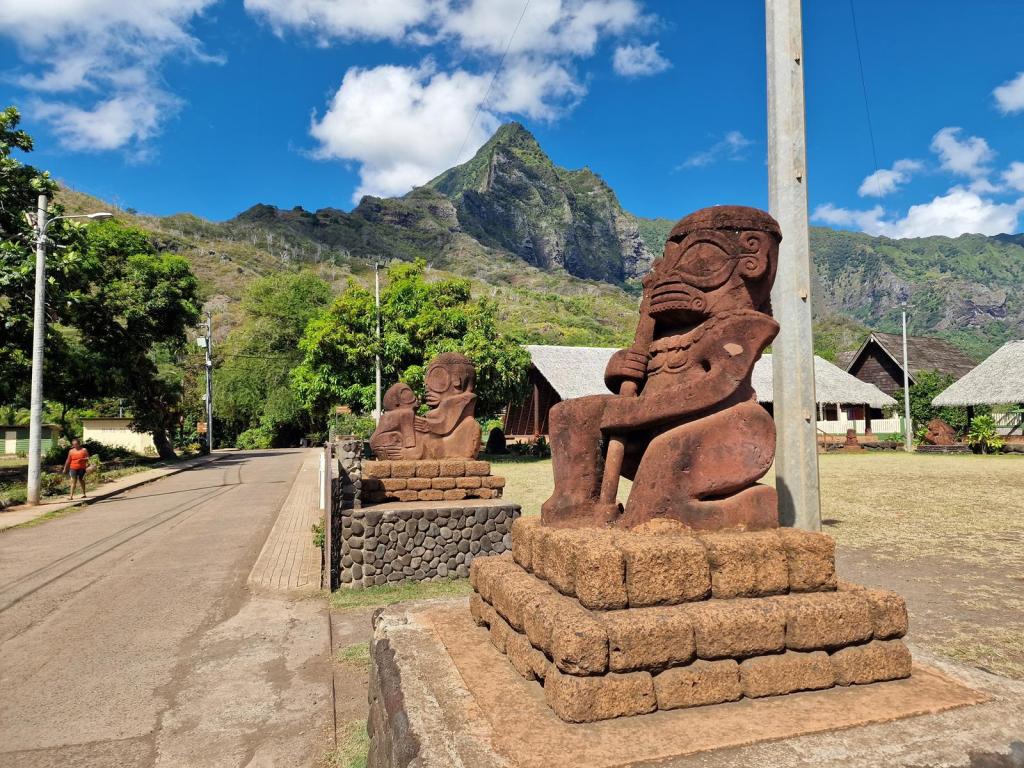
Almost everywhere one could see Tikis
Tkis; by ChatGTP
Tikis in French Polynesia are traditional carved figures that hold deep cultural and spiritual significance, often representing deified ancestors, gods, or protective spirits. Originating from the Marquesas Islands and other parts of Polynesia, these stone or wood carvings typically feature stylized human forms with prominent facial features and powerful postures. Tikis were commonly placed in sacred sites, such as marae (temples), and used in rituals to invoke protection, fertility, or strength. Today, they remain a vital symbol of Polynesian heritage, blending ancient beliefs with contemporary cultural identity and artistry.
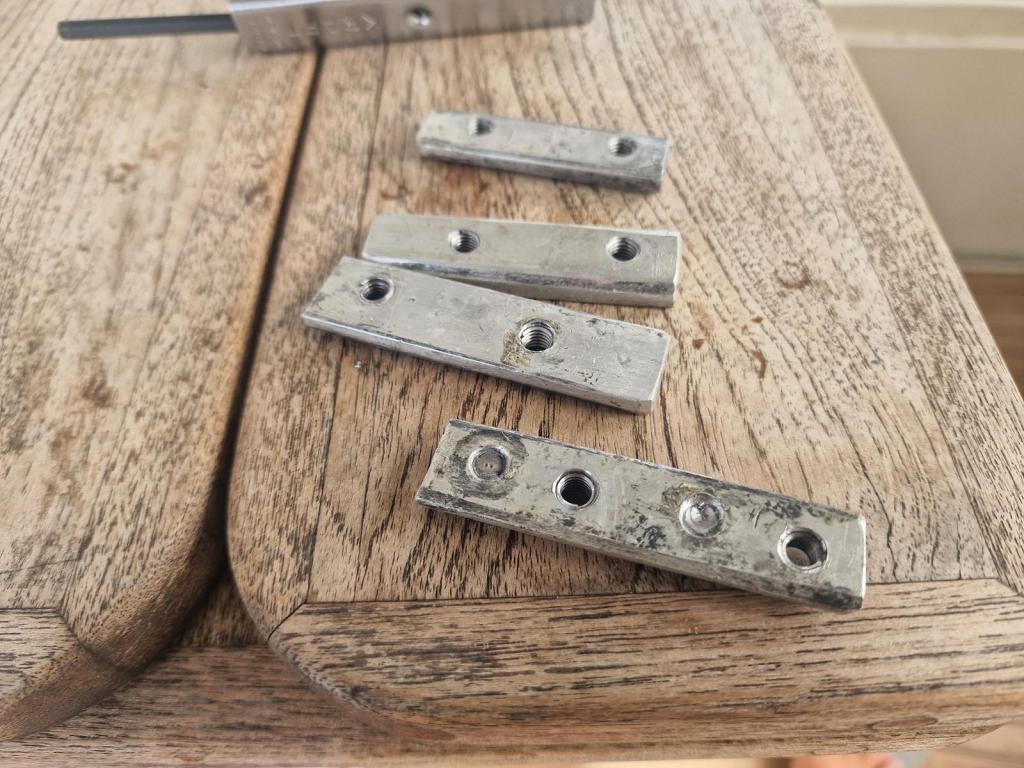
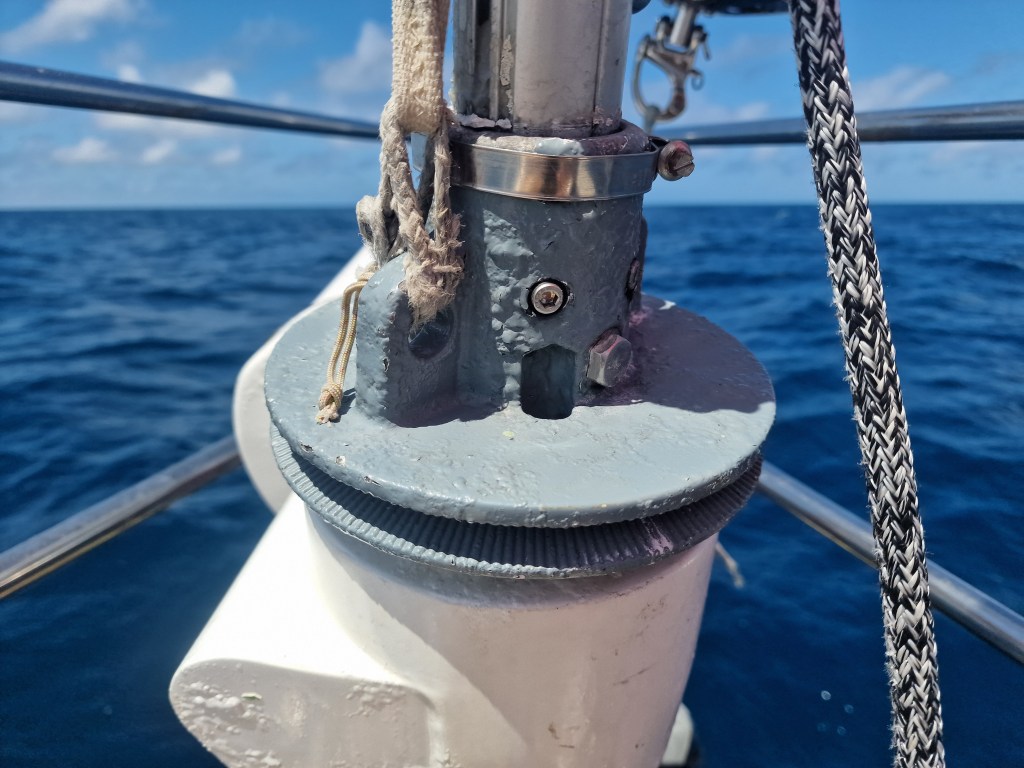
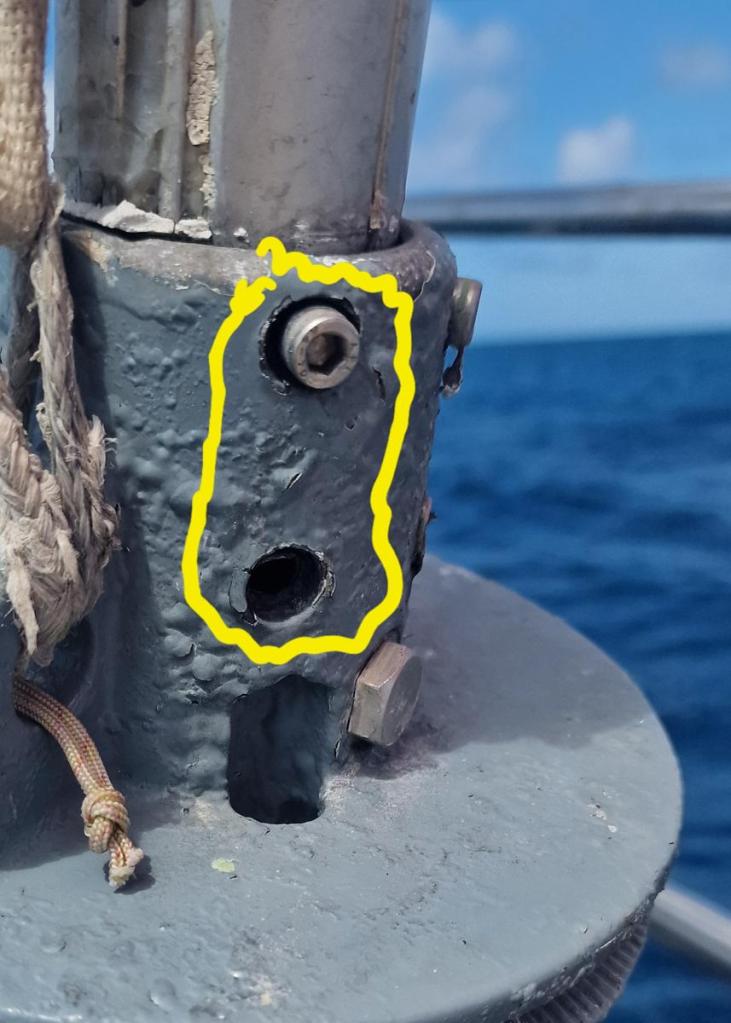
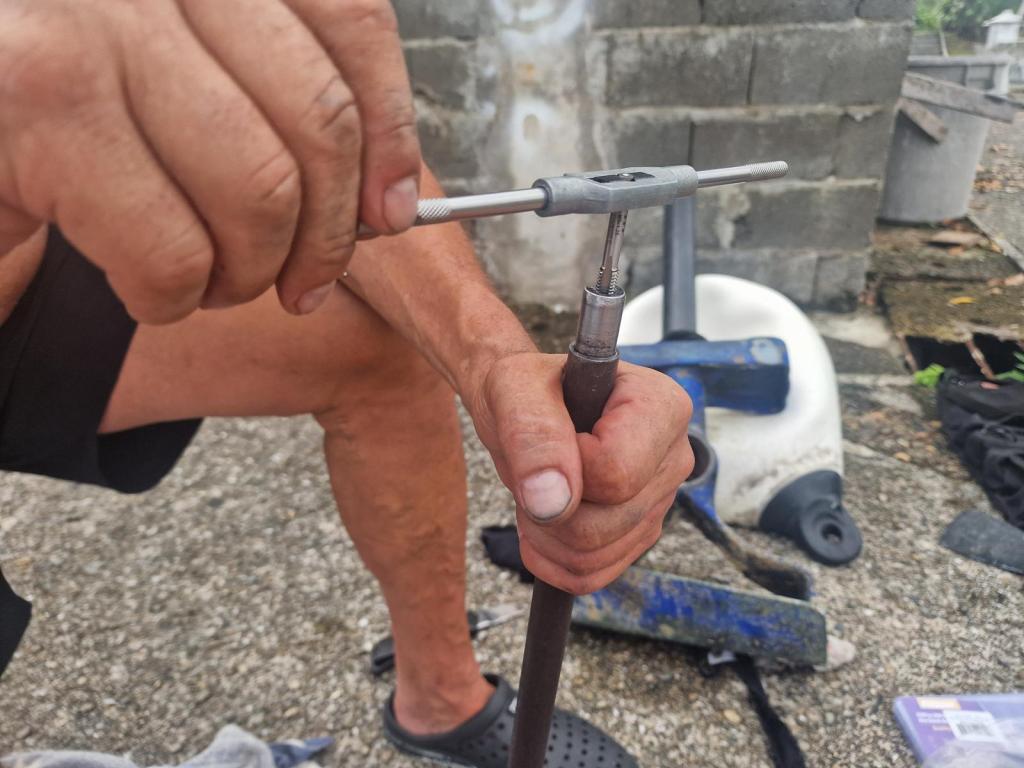
Back at Kerpa it was time to attend the foil attachment to the furling unit, if you saw my last blog post you might remember that the screws attaching the foil and the furler had started to fallout and the threads was severely damaged. Lyckily I few years back I bought a HELICOIL kit which is used for repairing threads, works very well for repairing aluminium threads.
You can see the aluminium piece sticking out from the foil, there are 4 of them and they needed new threads
New threads you can see that had to drill new holes where the bolts had broken off.
It was first time for me to use the HELICOIL and it was not too difficult to use, one rather quickly get the feeling for how to drill and make new thread for the HELICOIL and insert the new thread.
I reattached the foil to the furler, and now it feels as very strong and secure attachment.
Besides that, we used a few days to clean off all the goose necks that had grown on the bottom and a bit over the waterline.
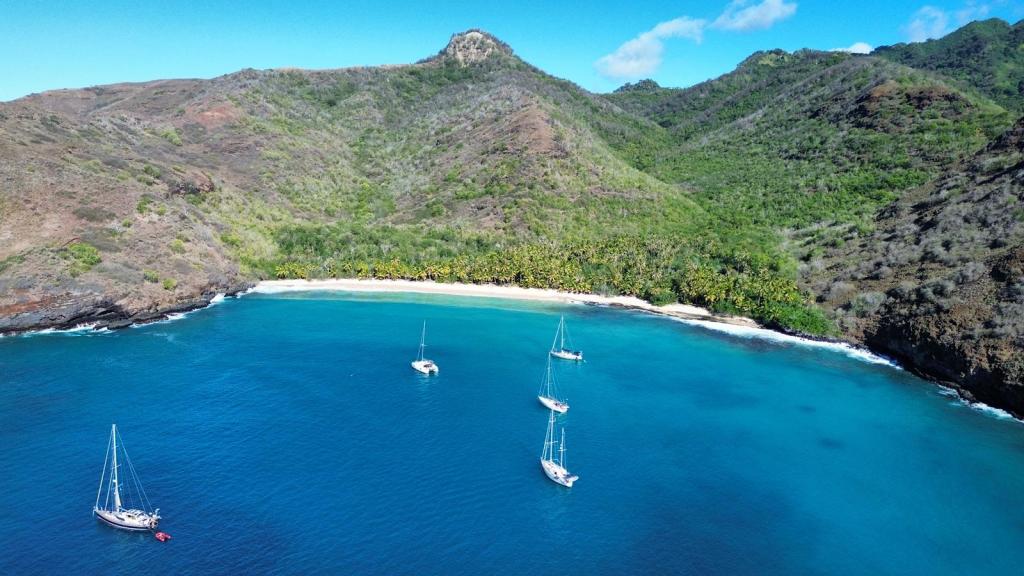
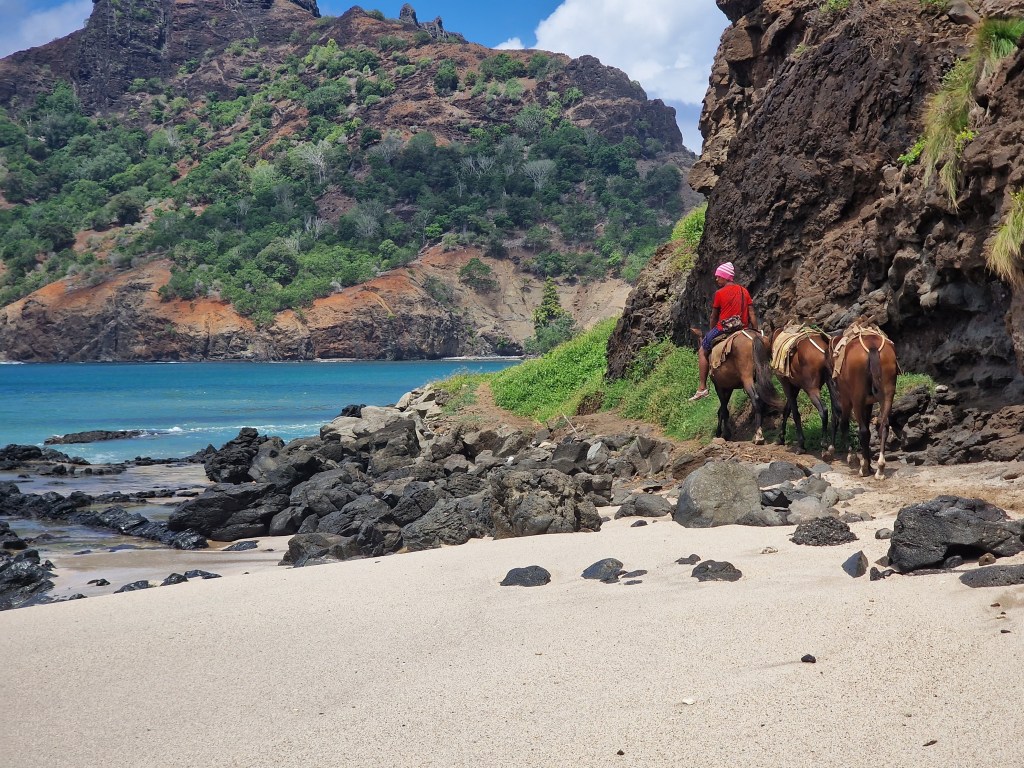
The Hanamoena bay is very beautiful and has one of the only few proper sand beaches in the Marquesas. It was difficult to get ashore as swell was large, we anchored the dingy and swam in and had a walk on the beach. On the way back the swell has grown and to get out to the dingy was a bit of an adventure.
We also saw our first Manta it swam by Kerpa at anchor
Hapatoni
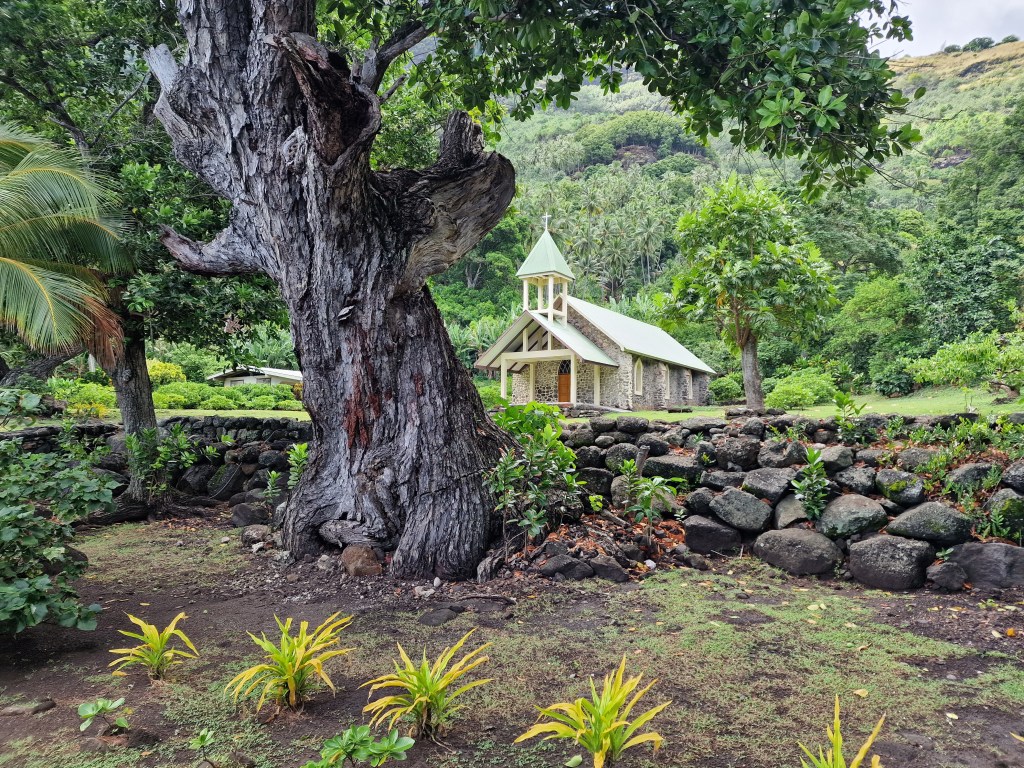
Hapaton is a small village further south on Tahuata. In French Polynesia one sees a lot of churches, not uncommon that a small village has more than one, I guess competing religious communities. Hapatoni had a very cute church
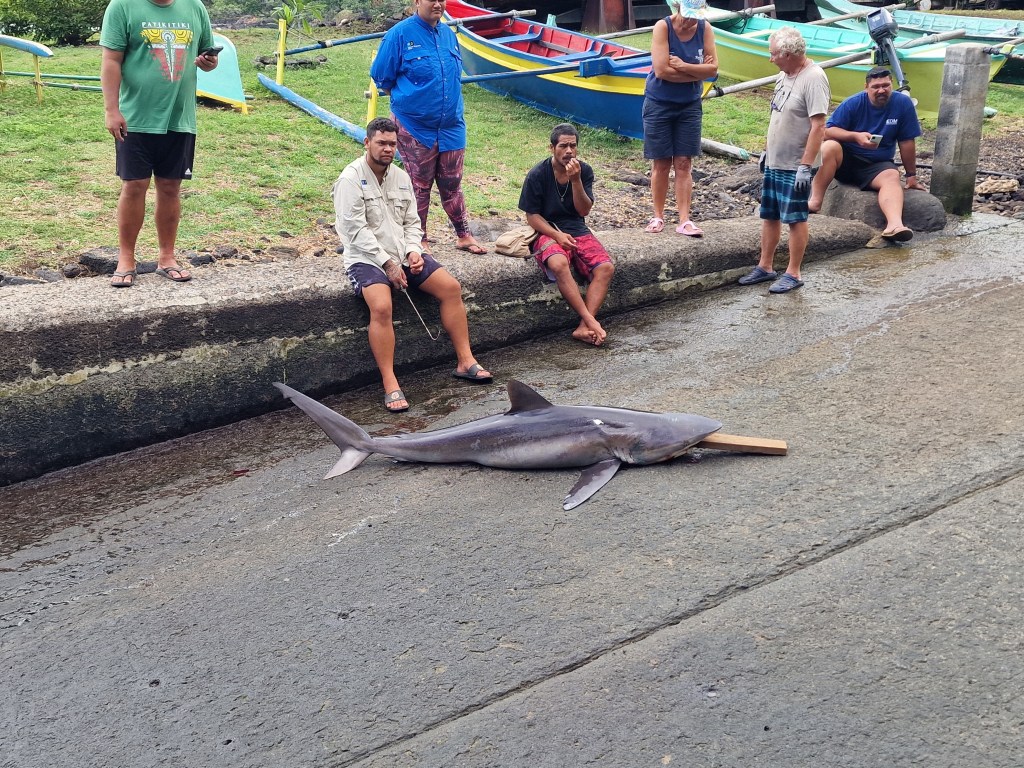
In the harbour locals had just had caught a shark. Later when we got back from a walk they were butchering and distributed the meat. Did not know that they eat Shark meat.
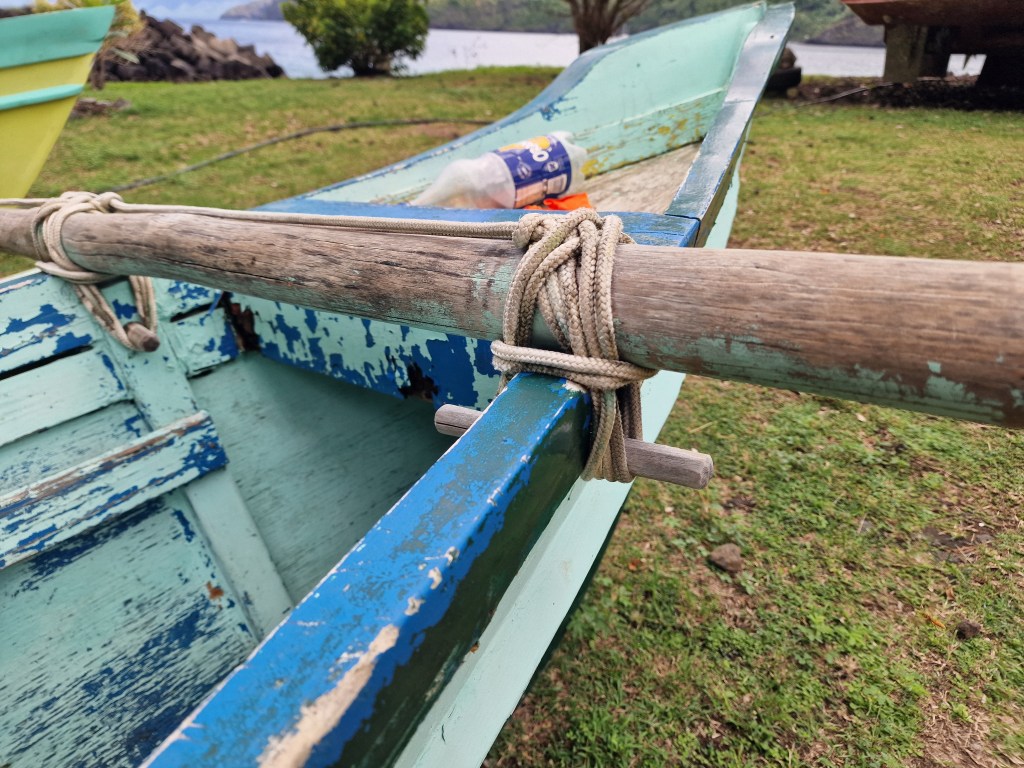
Interesting out-rigger Polynesian style
Plain but working attachment of the outrigger. We saw many modern GRP canoes with outrigger, seams to be a popular recreation and work-out activity.
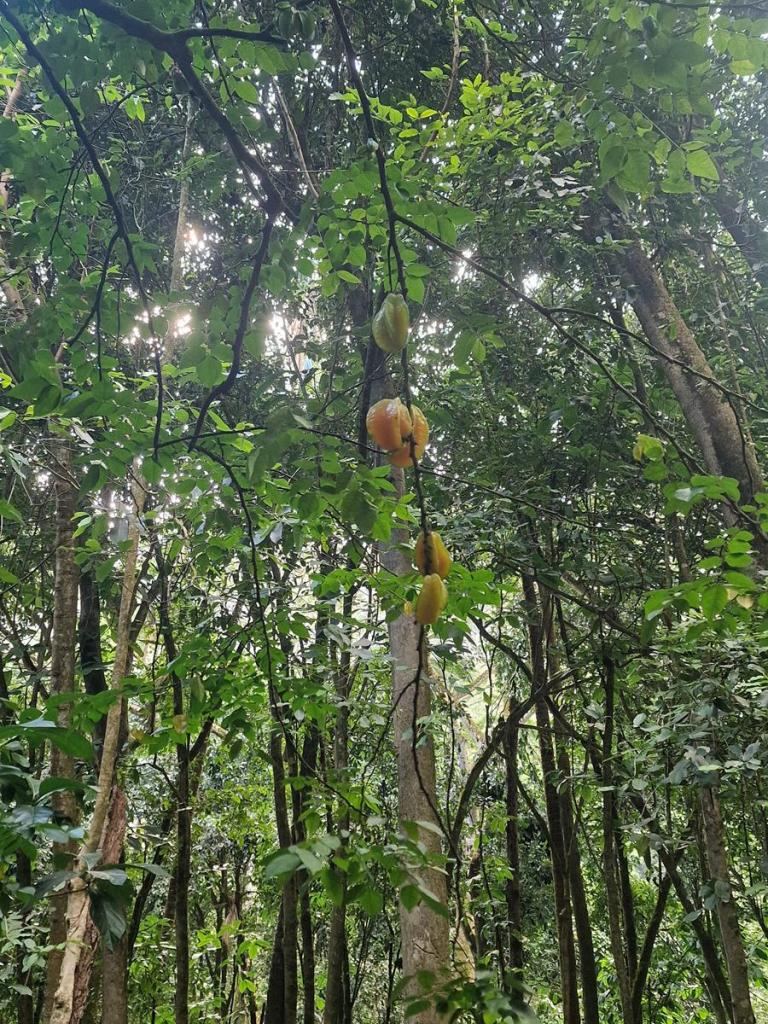
On our walk outside the village, we saw our first star-fruit tree, we picked a few but they were rather sour.
Fatu Hiva
We had a short trip back to Hiva Oa where we picked up a friend Anna-Lena, she will sail with us for a month. She had a new Echopilot forward seeing sonar with her. Some might remember that I installed a new Echopilot sonar in Shelter Bay Marina, and that it did not work, I did not know which unit that was broken, I showed that I had to replace both the transducer and the display, but after that it worked. The transducer is probably 45 mm in diameter and a bit awkward positioned, so when pulling it out a massive amount of water just flushing in a bit of shaky moment before I could put in the new one.
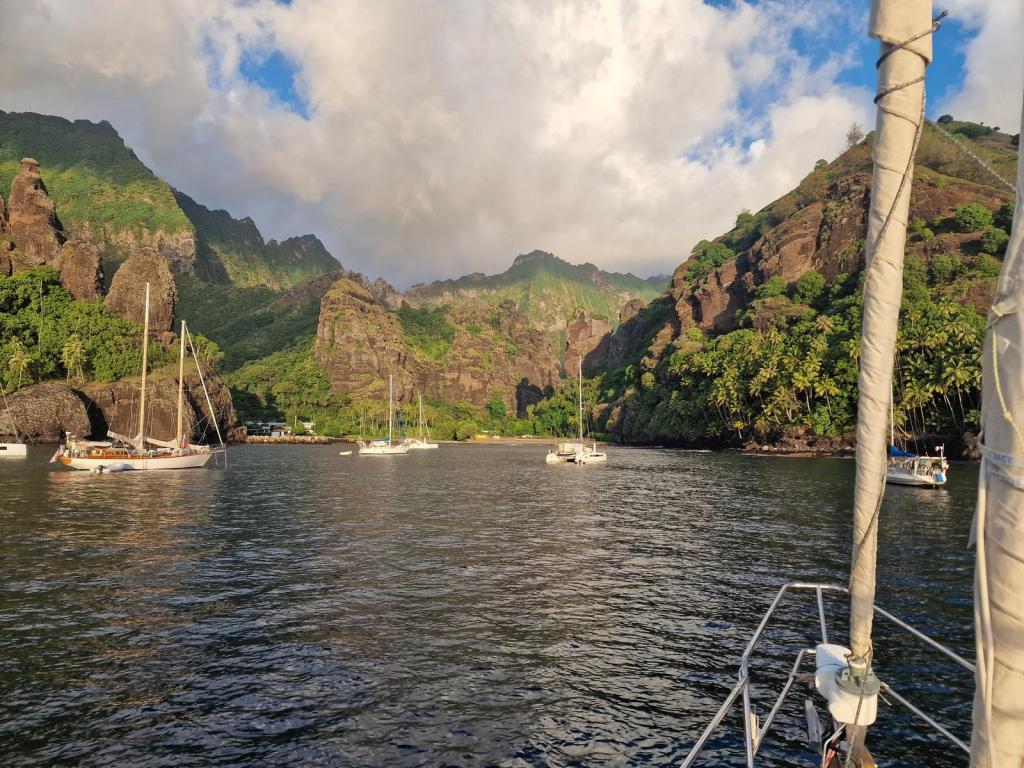
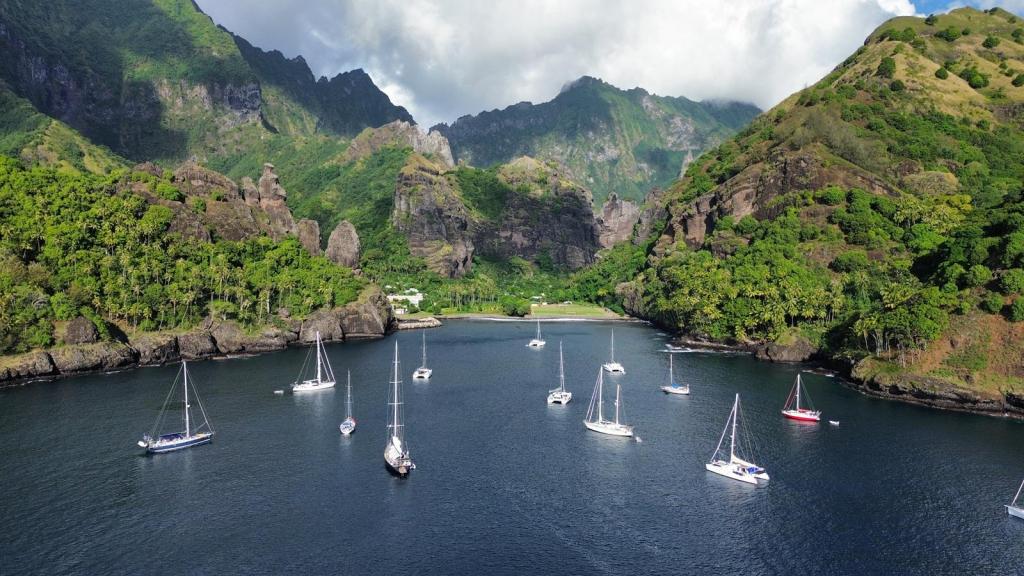
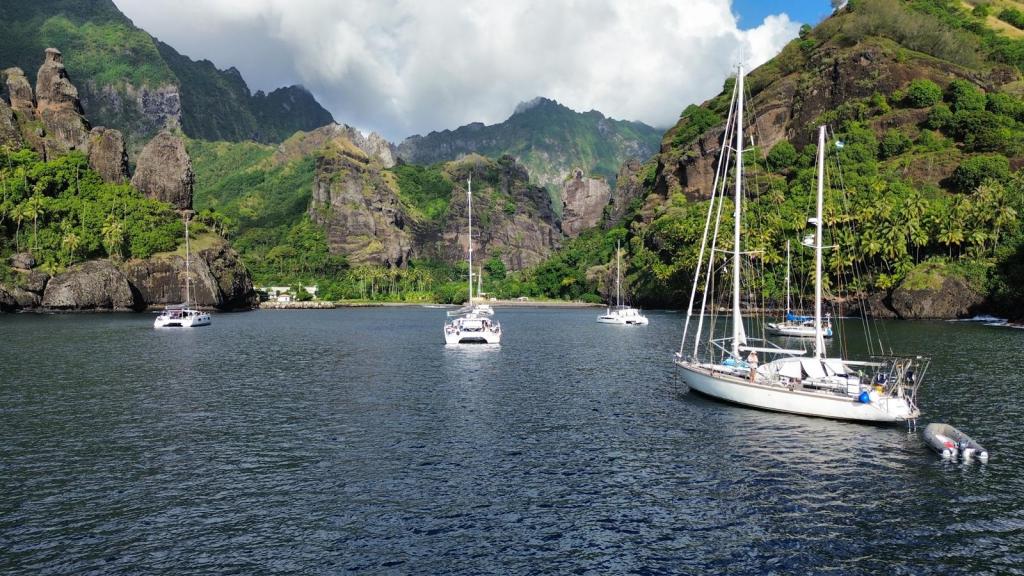
A few days later we sat course to the famous Fatu Hiva, we have heard from so many that it should be very beautiful. And it was, below the iconic anchorage.
Dingy dock
On both Hiva Oa and Fatu Hiva one had to pay tourist tax, it was new for this year. Not very expensive about 10-15 euro if I remember right.
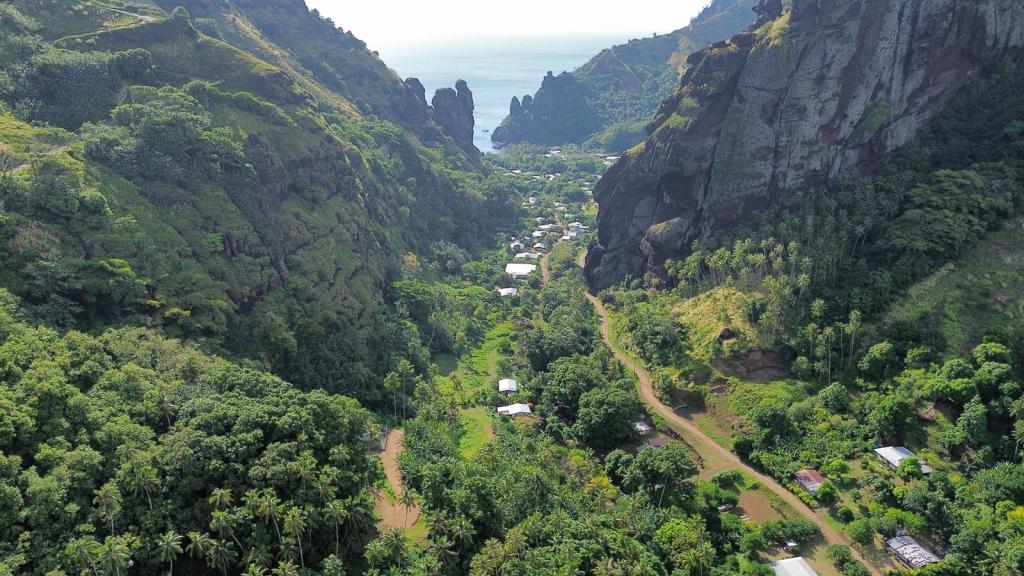
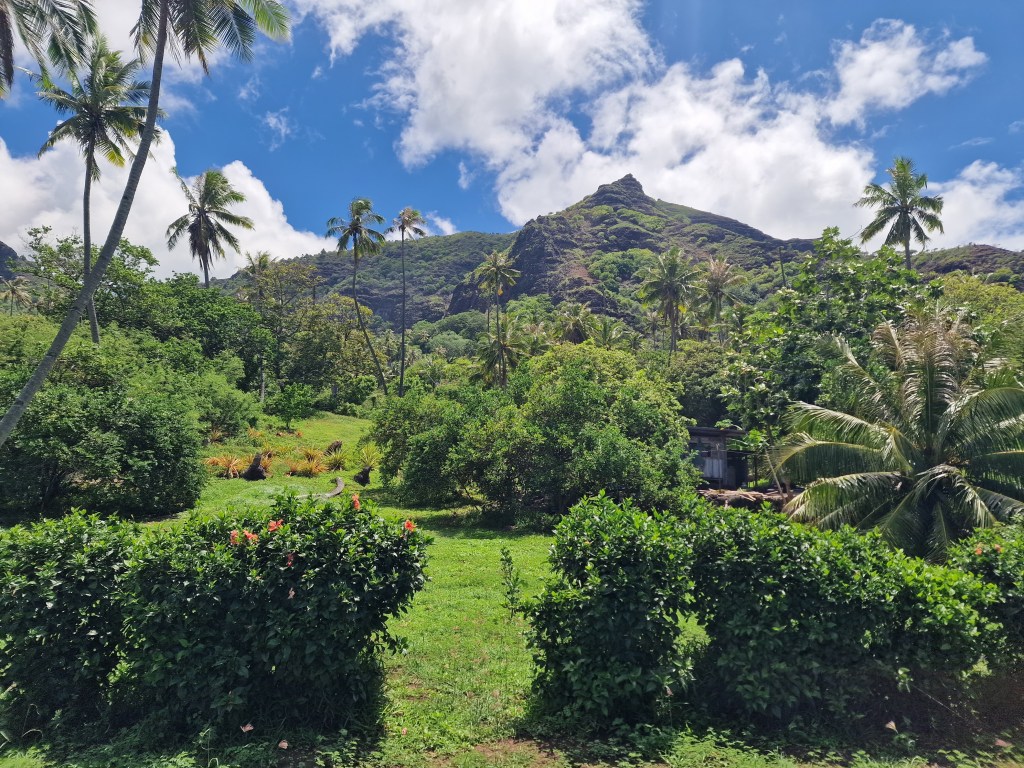
The village is very cute and situated in a very beautiful surrounding.
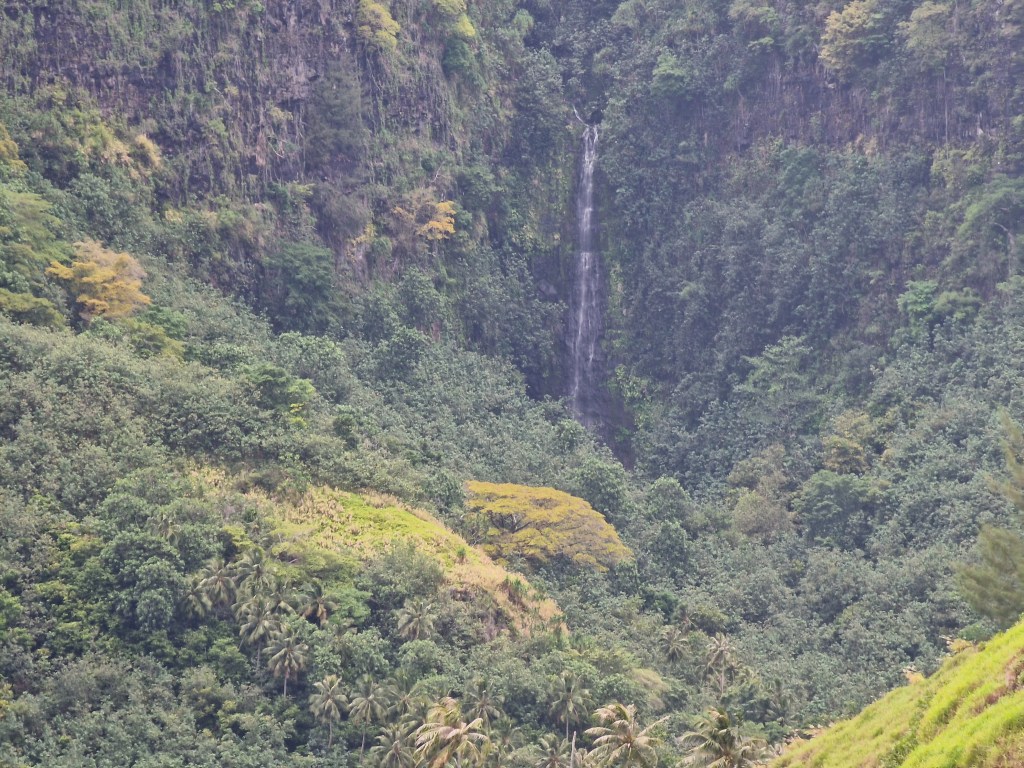
We took a walk to a nearby waterfall and admiring the beauty.
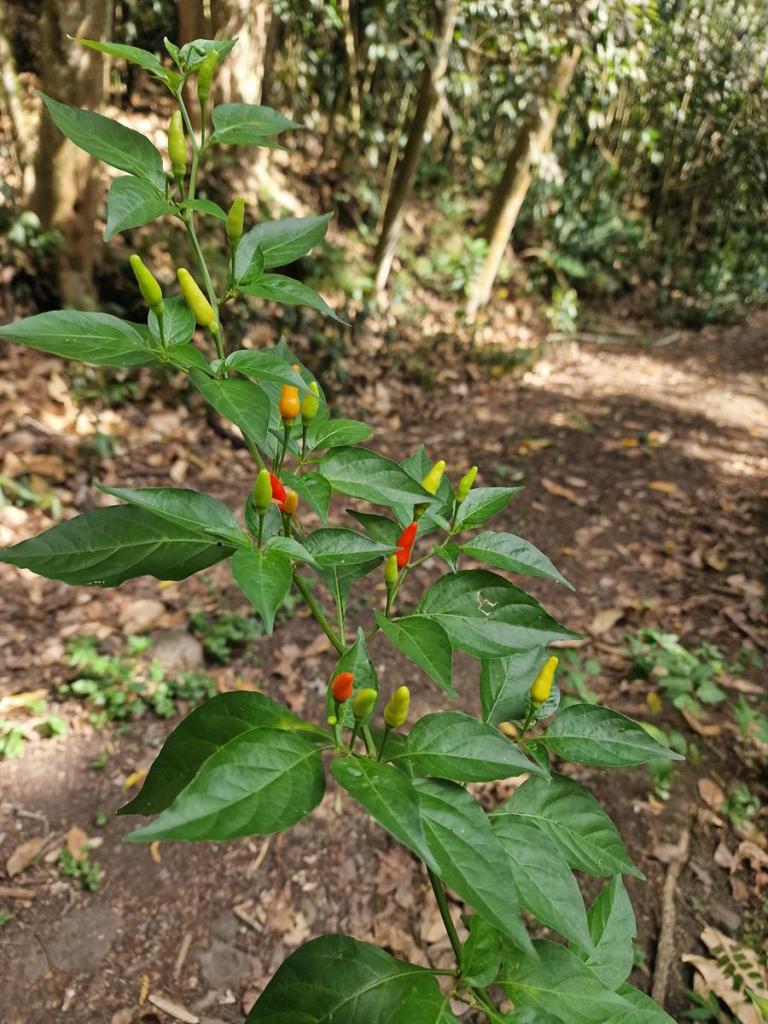
On the way we saw wild chili
Not much water in the waterfall, but it was a nice walk.
The day after Kerstin and I took a more strenuous walk up to the top of the cliff above the anchorage ca 540 m above the sea level. It was hard work in the heat, but rewarding.
The village and anchorage.
It was rather steep walk
We could see the waterfall from yesterday in the distance.
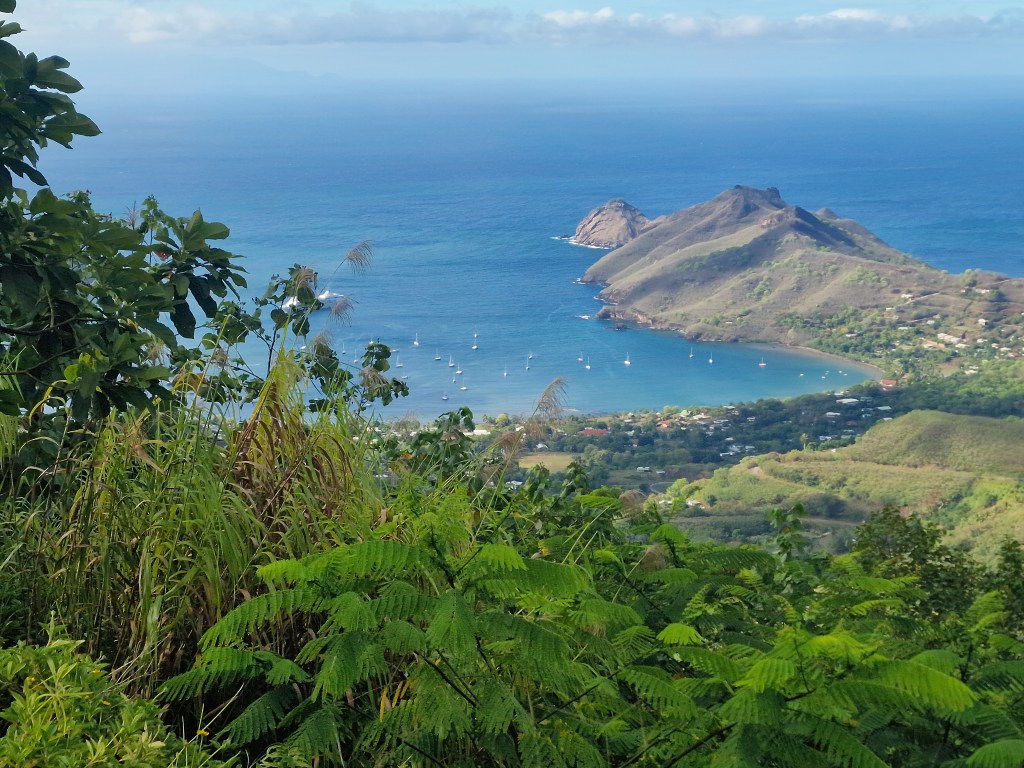
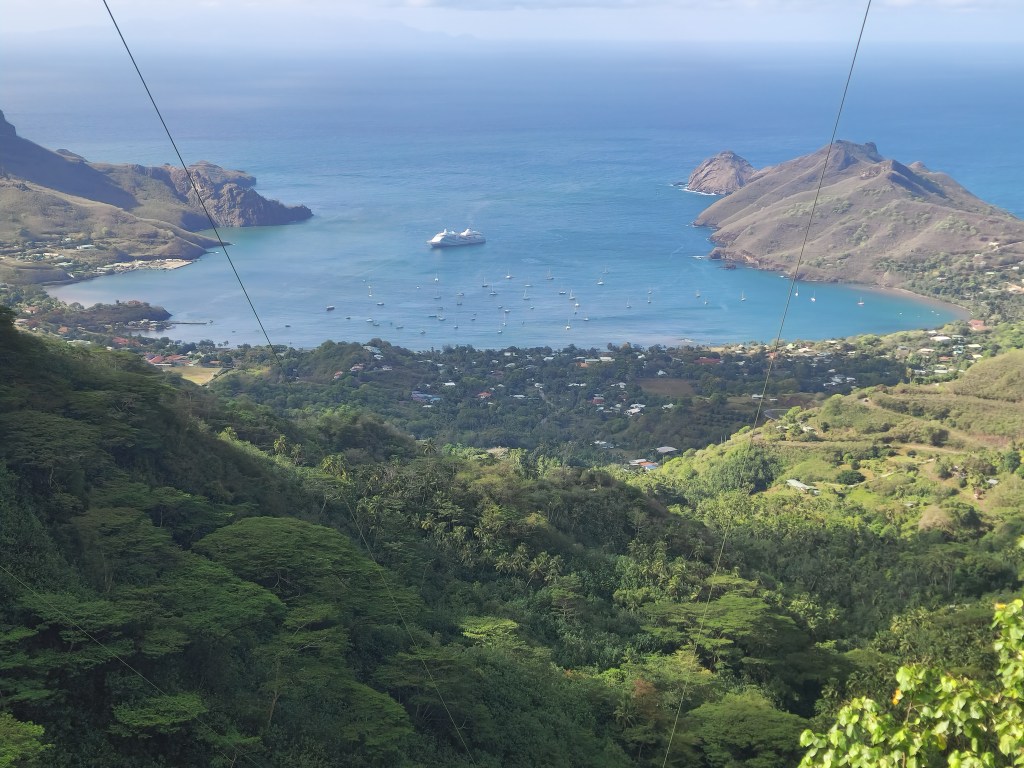
And the anchorage from above
Nuku Hiva
From Fatu Hiva we sat course towards Nuku Hiva, with an overnight stop at Tahuata.
The main anchorage in Nuku Hiva is the very large Taiohae Anchorage.
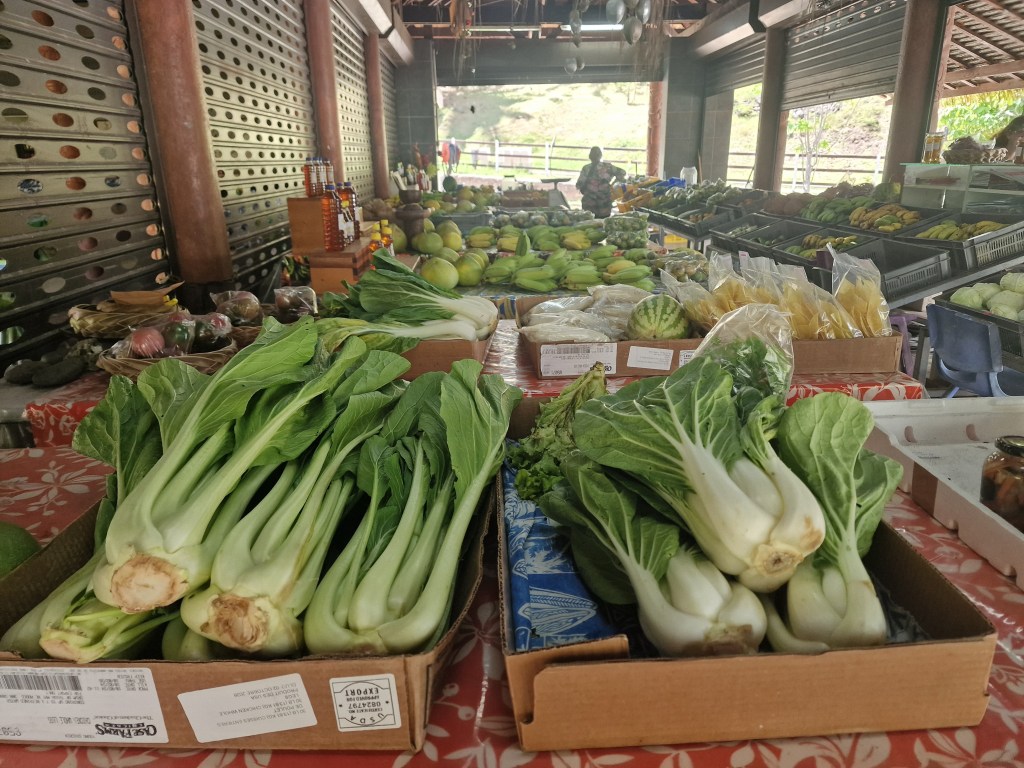
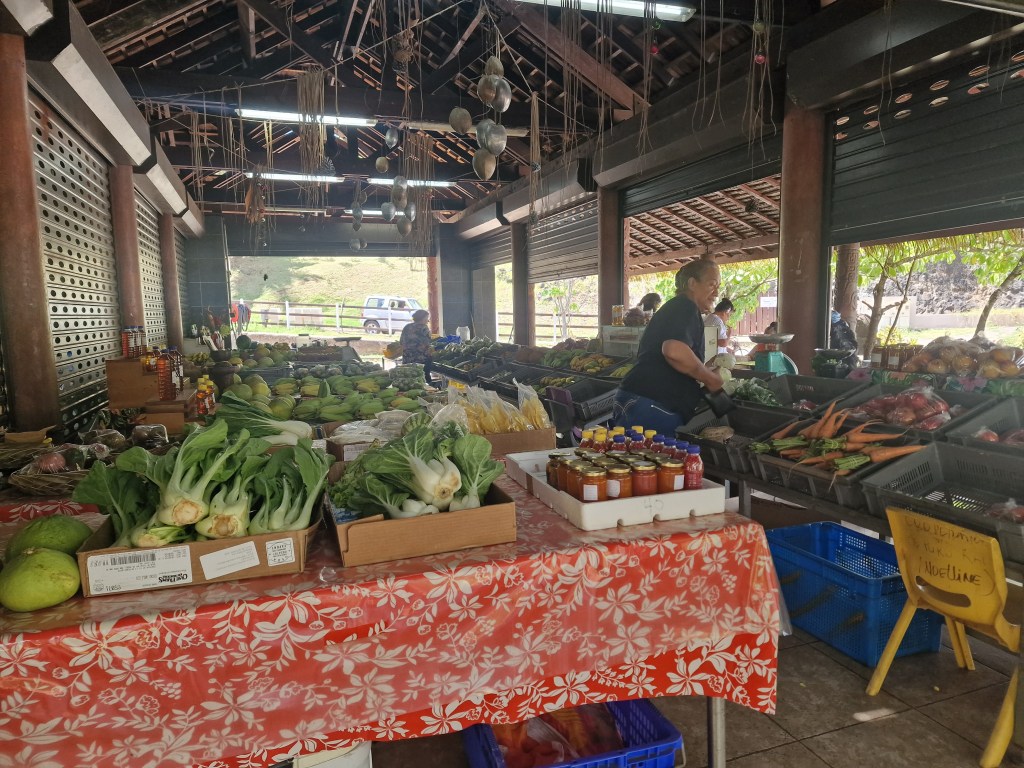
Here you find grocery shops, chandlery, restaurants and boat service etc. The vegetable market is just at the dingy dock, as well as small restaurant serving nice lunch for ca 15 Euro.
The veggie market
At the dingy dock they clean fishes and give the leftovers to the sharks in the water.
We rented a car and had a very nice and a bit of an adventures trip on the island.
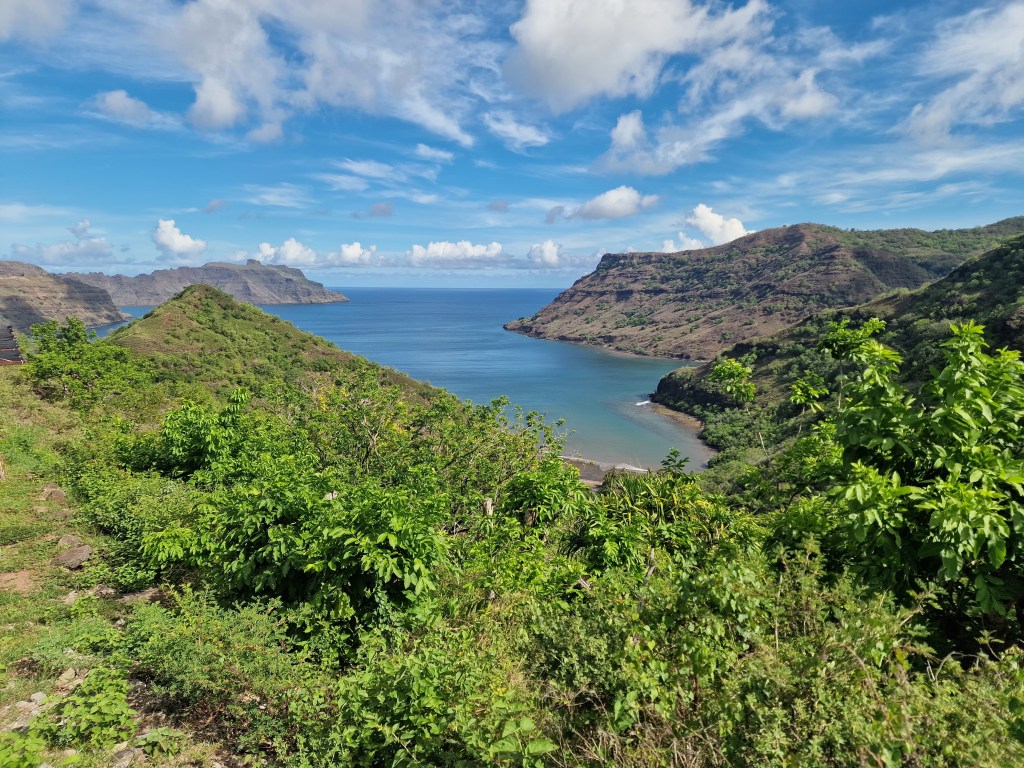
Amazing scenery from above.
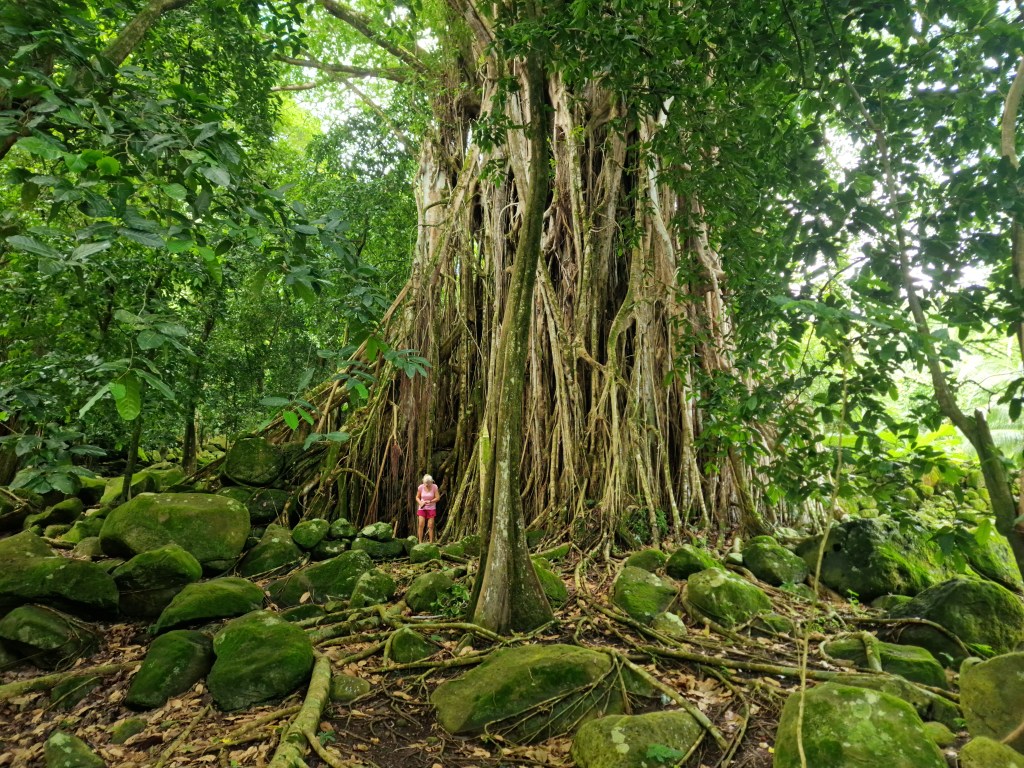
At one stop we saw this impressive and massive tree.
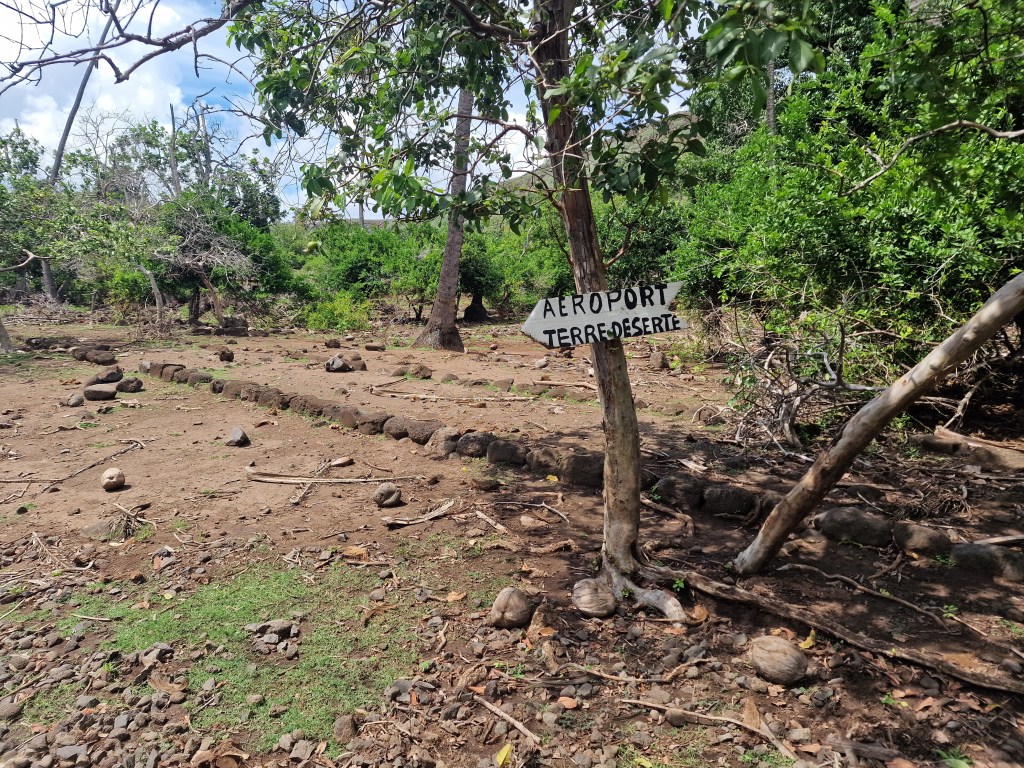
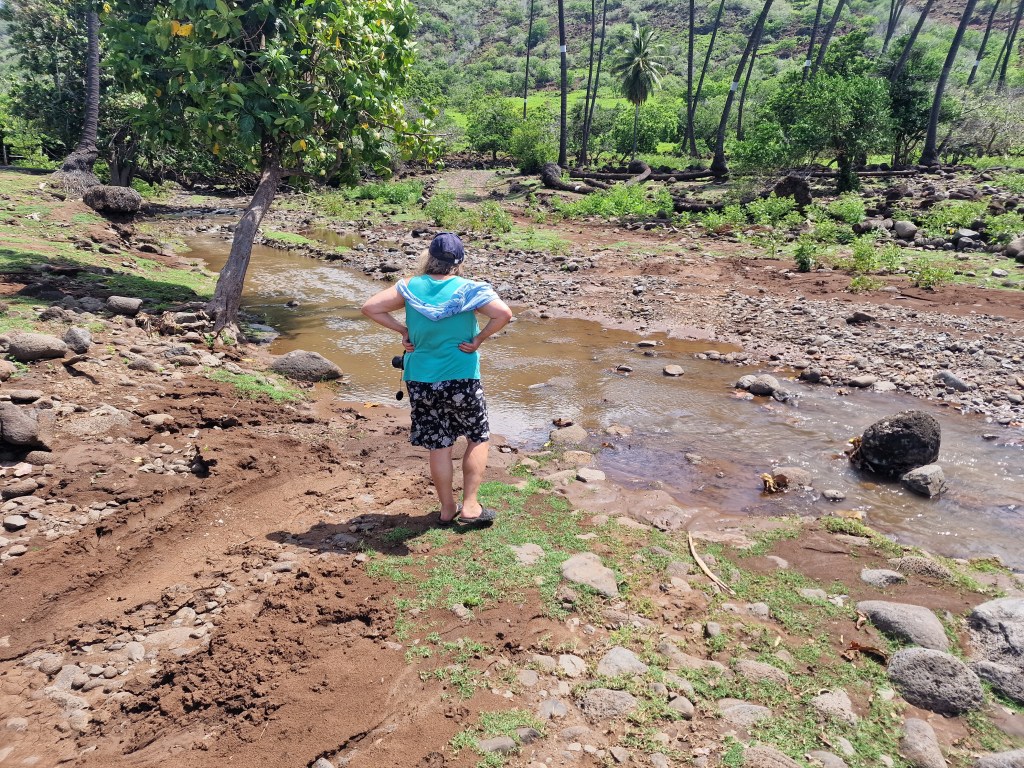
We had a nice walk and lunch stop at Hatiheu on the north side of the island, and from there the bit more adventures part of the trip started. We wanted to drive around the island and there should be a road leading from Hatiheu to the airport. It was but it was in a very poor state.
Anna-Lena looking at the road and says it will not work, I claim it will work, lets try we, had a 4-wheel drive so it should be possible, she said no, I was on my way to insist, when a local come by and said you can’t go that way. So I had to turn back, and it was at least 5 km back on a very poor and extremely bumpy road.
Anyhow it was a very nice trip.
Catastrophic oil loss
We wanted to visit the Anaho bay on the north side of Nuku Hiva.
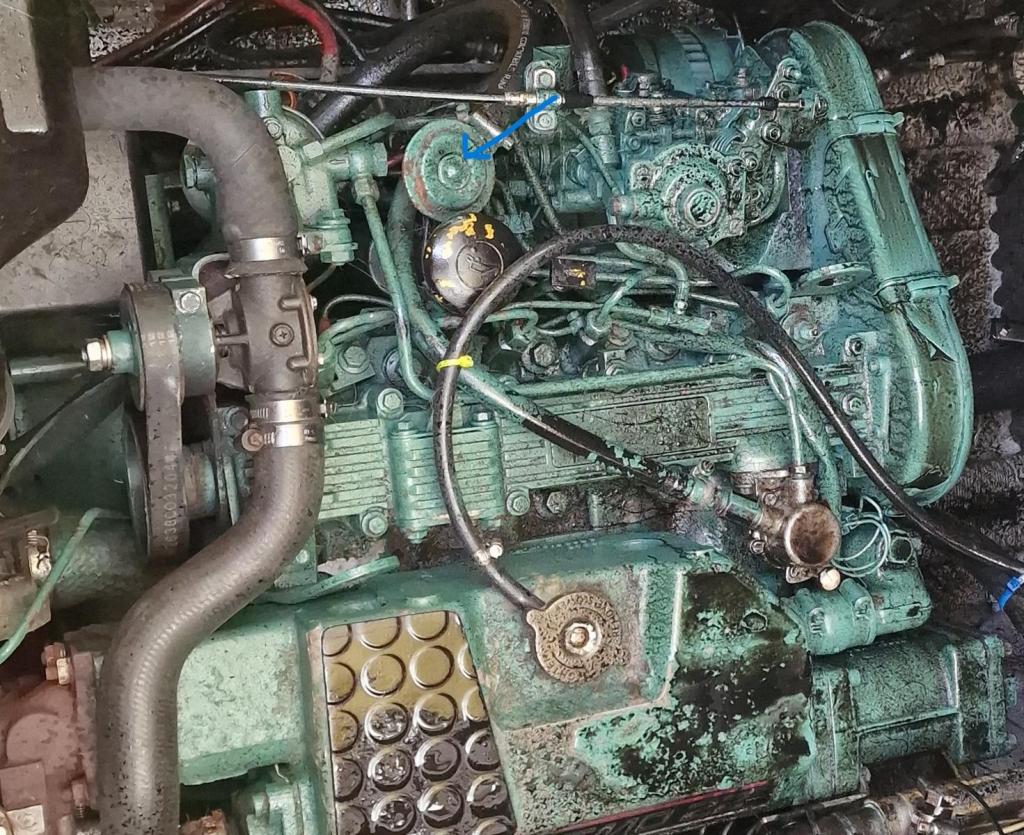
So, we took up the anchor and motored out from the bay, but we did not get very far, less than one nautical mile, then the alarm went on, and I notice immediately that it was the oil alarm. Off with the engine and open the engine hatch and it was a bit of a shook, oil splashed everywhere in the engine room.
It was not much wind, so easy to sail back and set the anchor again, we were very lucky it happens there, very easy to get back to a safe anchorage, and at a place where we could get help.
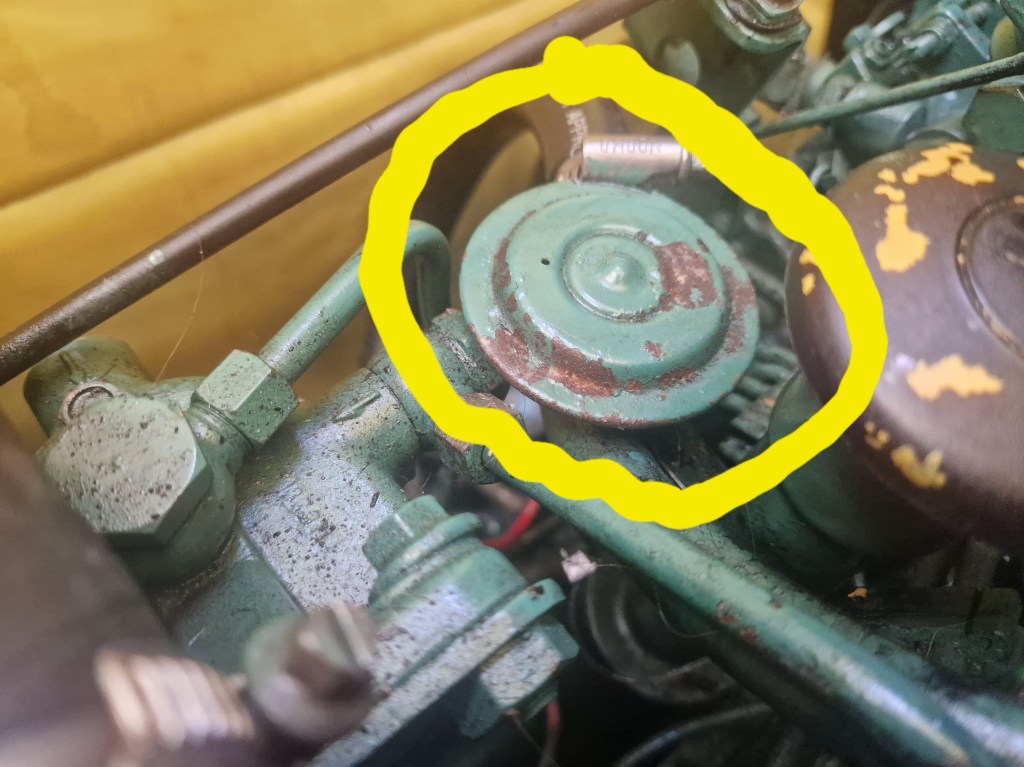
When the anchor was in it was time to find out what the problem was, and start to clean up the worst mess. To be on the safe side I called Nuku Hiva Yacht Service, they could help, they called an engine mechanic who lives on a catamaran in the anchorage, and he was available immediately. He soon found the problem, it was the crankcase vent valve that had come lose, so easy to fix, but we also found that it was a chafe-hole in the oil hose from the oil cooler to the oil filter. If such hose was available in Papeete it could be there in a day or two, unfortunately it was a Friday so we would not find out before Monday.
The went cap was easy to put back.
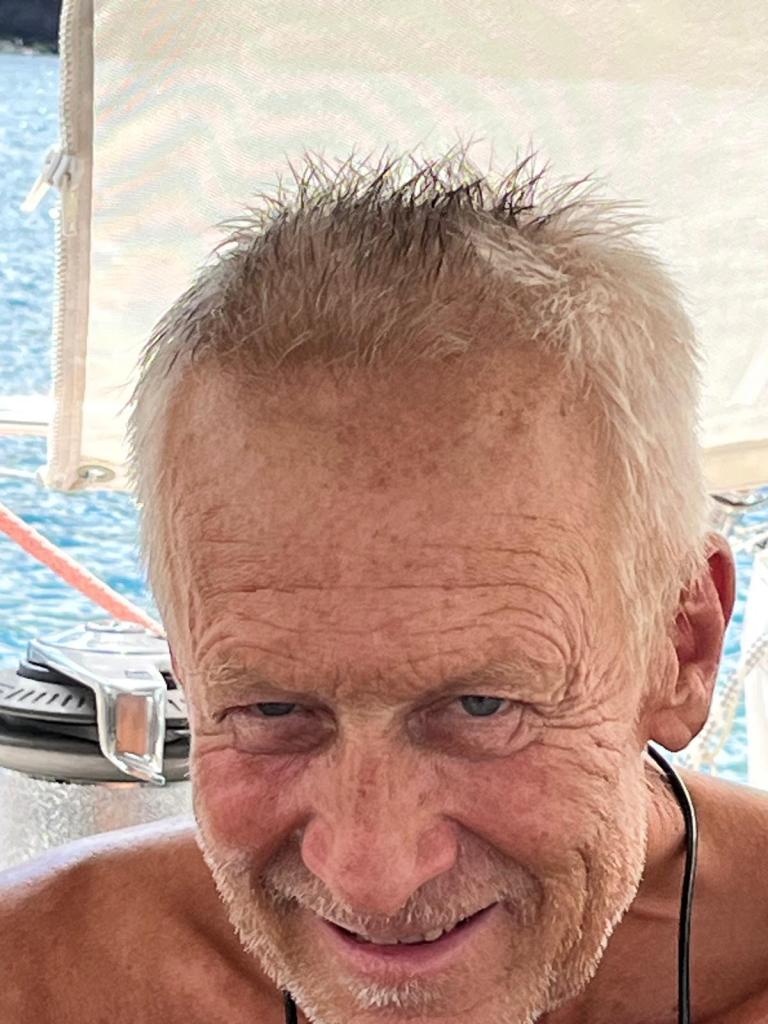
While waiting for information about the availability of the oil hose I cleaned the oil the best I could. It was a lot of oil absorbed in the sound insulation it was a hard job to get that reasonable cleaned, can’t say I enjoyed it very much, it was hot like a steam bath, I got oil everywhere and the sweet was pouring from me, but the job had to be done
Got oil all over my body including my hair.
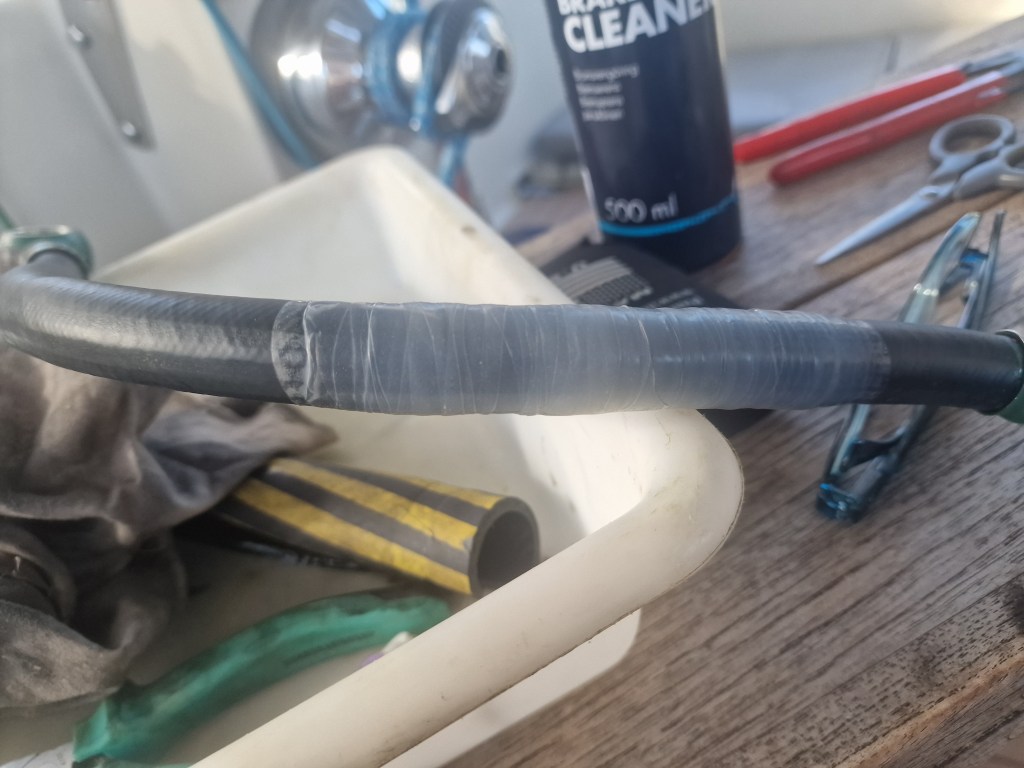
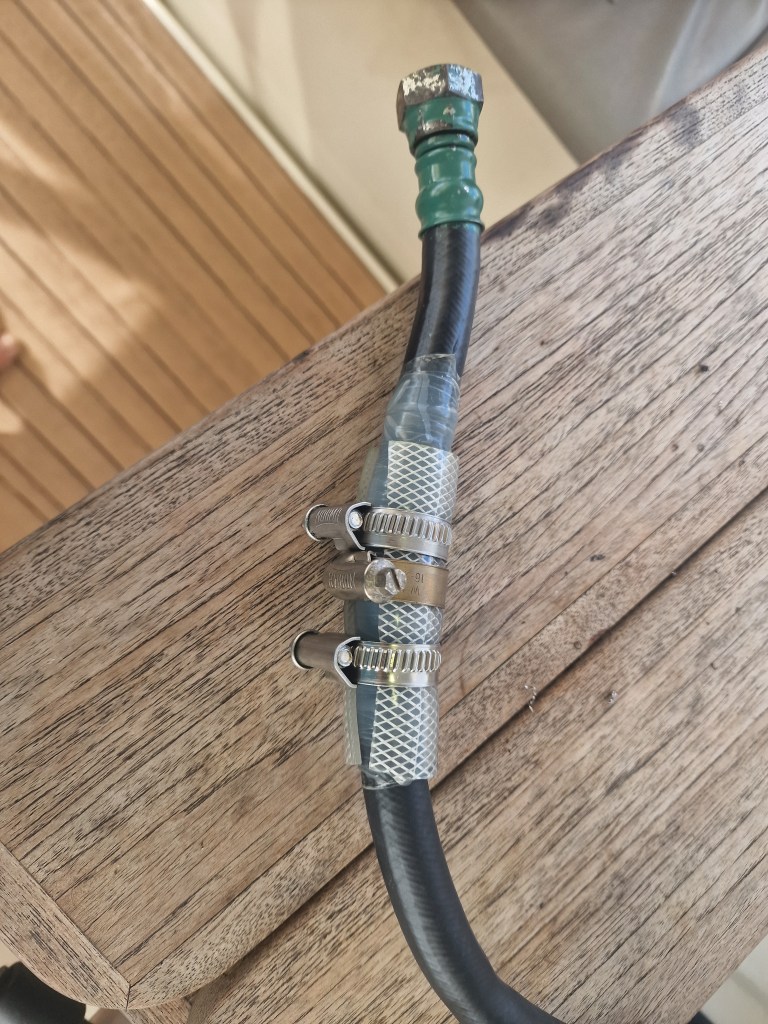
Unfortunately, it was ca three weeks delivery time on the hose as it was not available in Papeete, not fun at all, especially as our friend Anna-Lena was here, not fun to spend three weeks out of four at the anchor in Nuku Hiva. What to do, well I have self-vulcanization silicon tape, that would work, so let’s try, I talked to my good friend Hans back in Sweden, he suggested to add an external hose fasten with hose clamps to support the silicon tape.
Self-vulcanization silicon tape on the hose
Supported by a hose and hose clamps
Oil hose bush craft repair. Kerstin and I pressure tested it with help of a bicycle pump with a manometer up to ca 3,5 bars pressure, and to our delight it was tight.
One problem when reattaching a coupling like that, is that one needs new aluminium washer the old get hard and do not seal properly, they were not available locally, so I had to reuse the old ones. Unfortunately, I now have a small leak at the joint, but it is not too bad. I have ordered a new hose and washers, that will arrive late June in Papeete when my son and his daughter come to sail with us for a month.
Now finally we could go to Anaho Bay.
Anaho Bay
And it was very beautiful, we could have stayed for many days.
We really enjoyed Anaho.
Again, a nice small church
Local transport
It was just beautiful
The plan was to also visit Ua Pou, but due to the break down, and that Anna-Lena had a flight home from Hao in the Tuamotus, we decided it was better for her to have a few days in the Tuamotus.
Next blogpost we arrive to Tuamotus something I have look forward to so long.
On Christmas Eve our crew left, and we were alone again, what a relief.
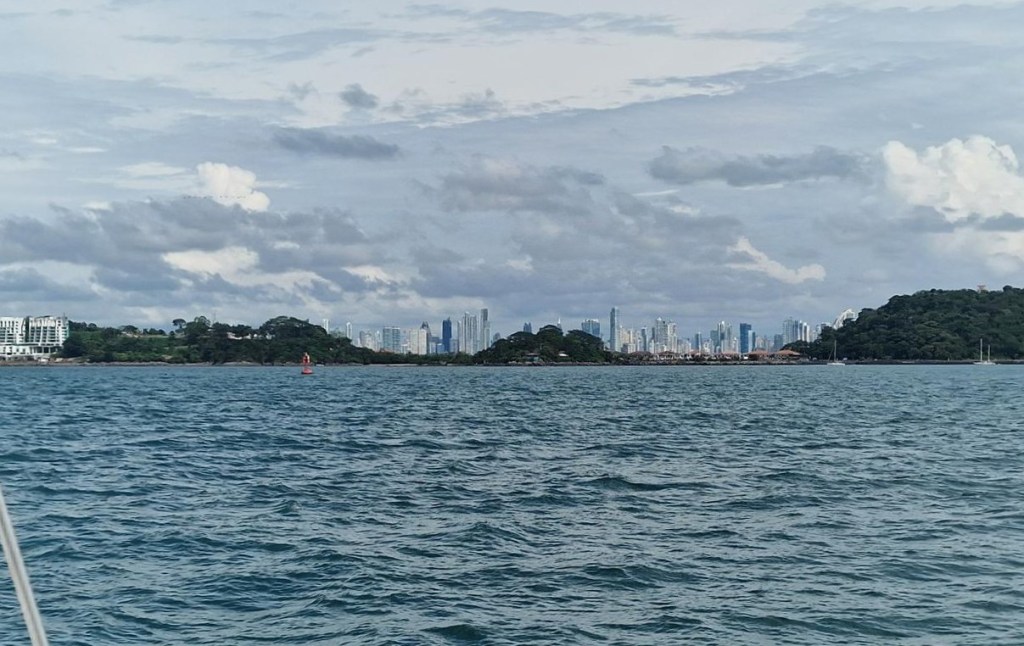
We left the buoy at the Balboa yacht club and headed out towards the Pearl Islands and had the skyline of Panama City behind us.
Heading out also meant that we finally went out on the Pacific Ocean
Relatively fast we were rewarded with a fish on our hook, this time it was a Spanish Mackerel of a good size.
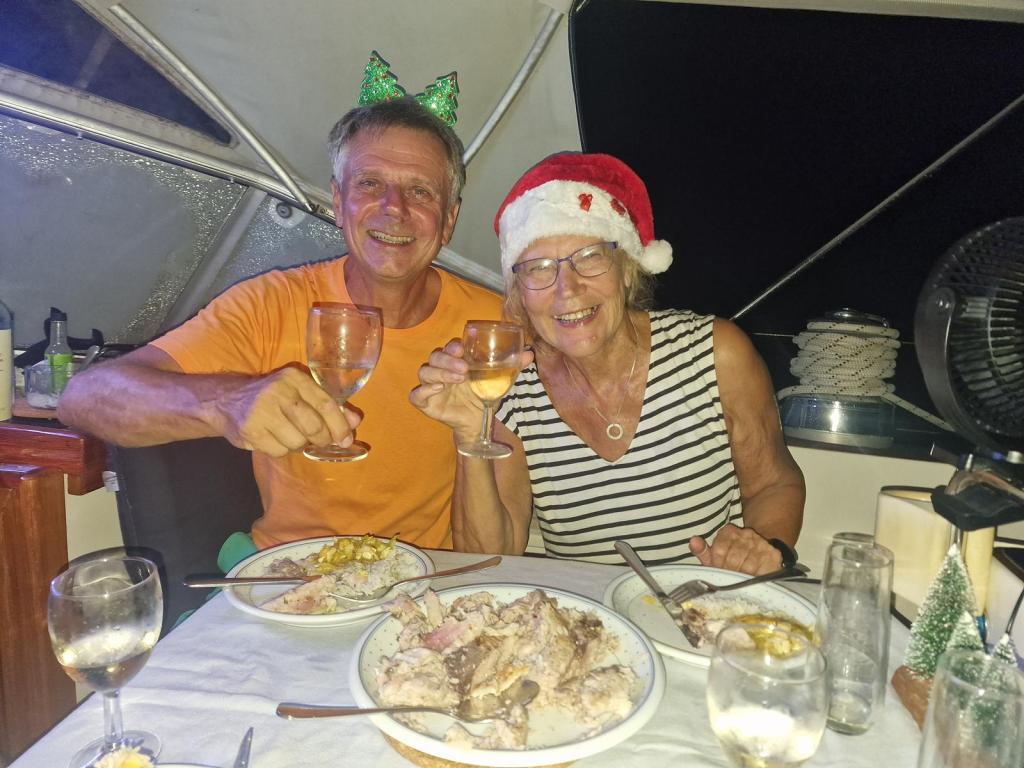
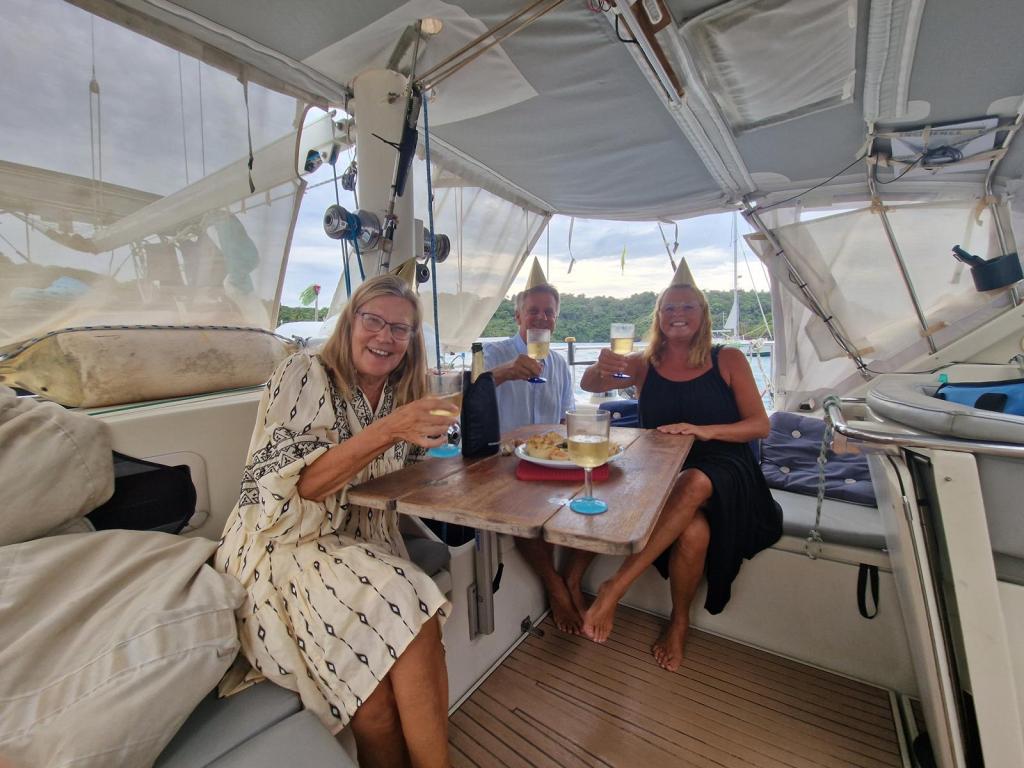
When reaching the anchorage at the Pearl Islands we were invited to Christmas dinner by Peter and Catharina on Blue. We had a nice evening. We spent the time together on the Pearl Islands and on New Year it was dinner on Kerpa.
Christmas dinner
New year dinner
In between we had some heavy rain, so took the opportunity to top up our water tank with ca 100 liter of rainwater
We had a very nice time together, they sat sail towards Costa Rica, and we headed back to Panama City for final provisioning.
Panama City
We anchored outside the Flamenco Marina
Besides several days of provisioning of canned vegetables, fresh fruits, topping up with more wine and beer, filling CO2 tubes for carbonate water, Jerry cans for extra diesel etc, etc.
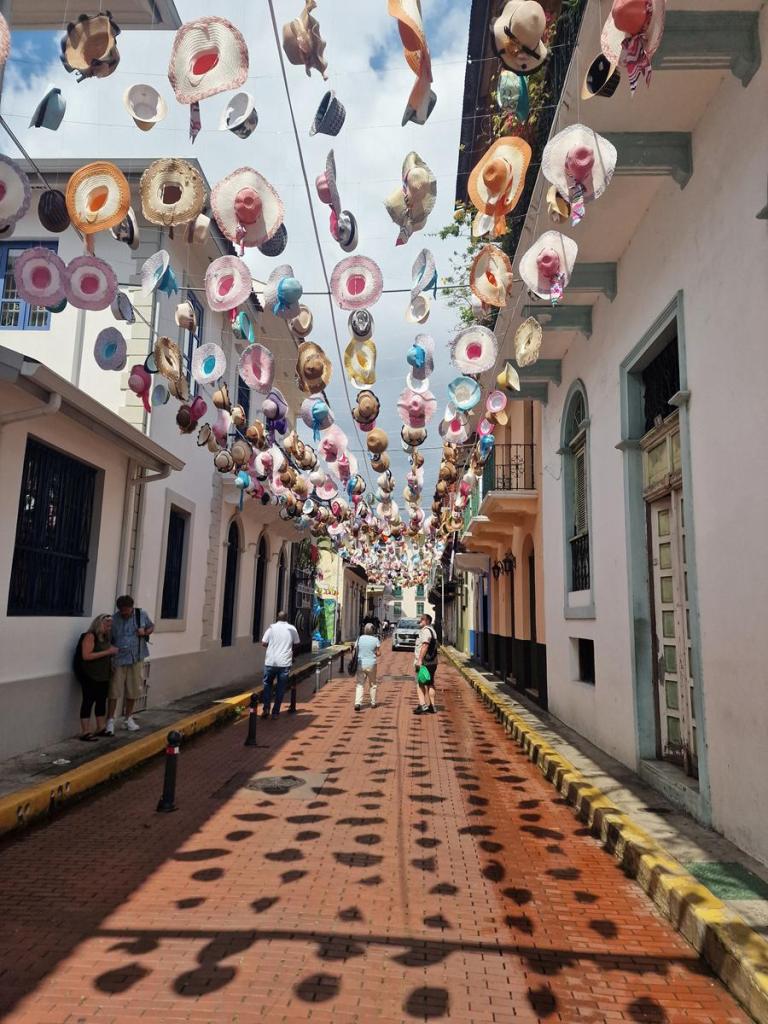
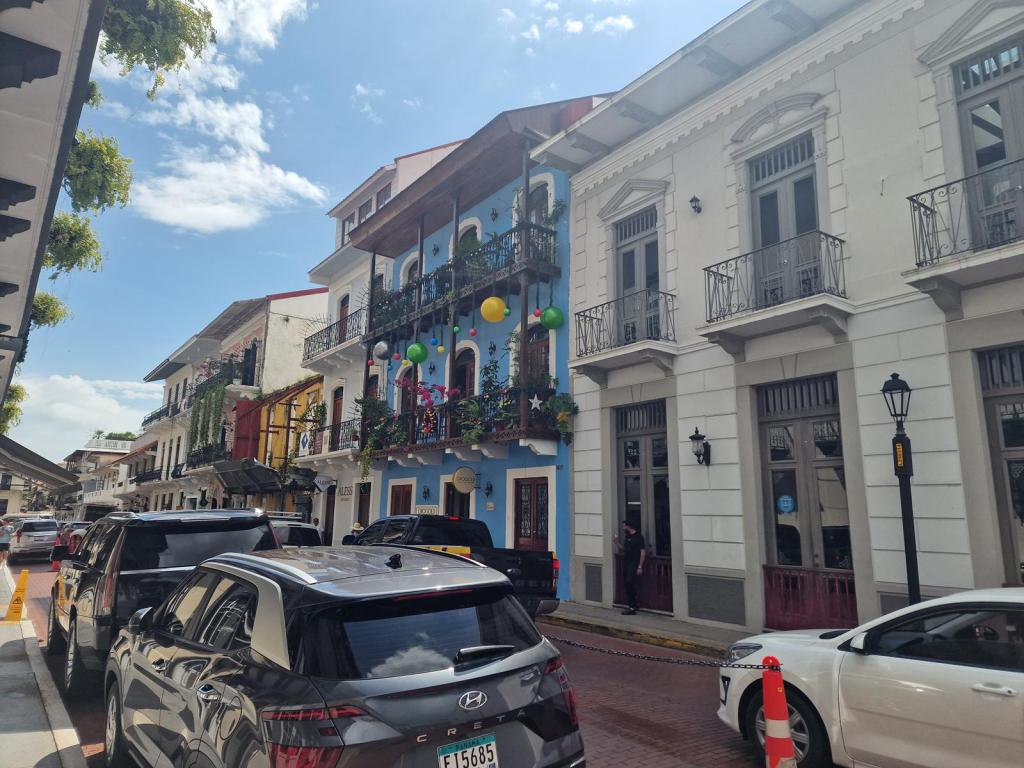
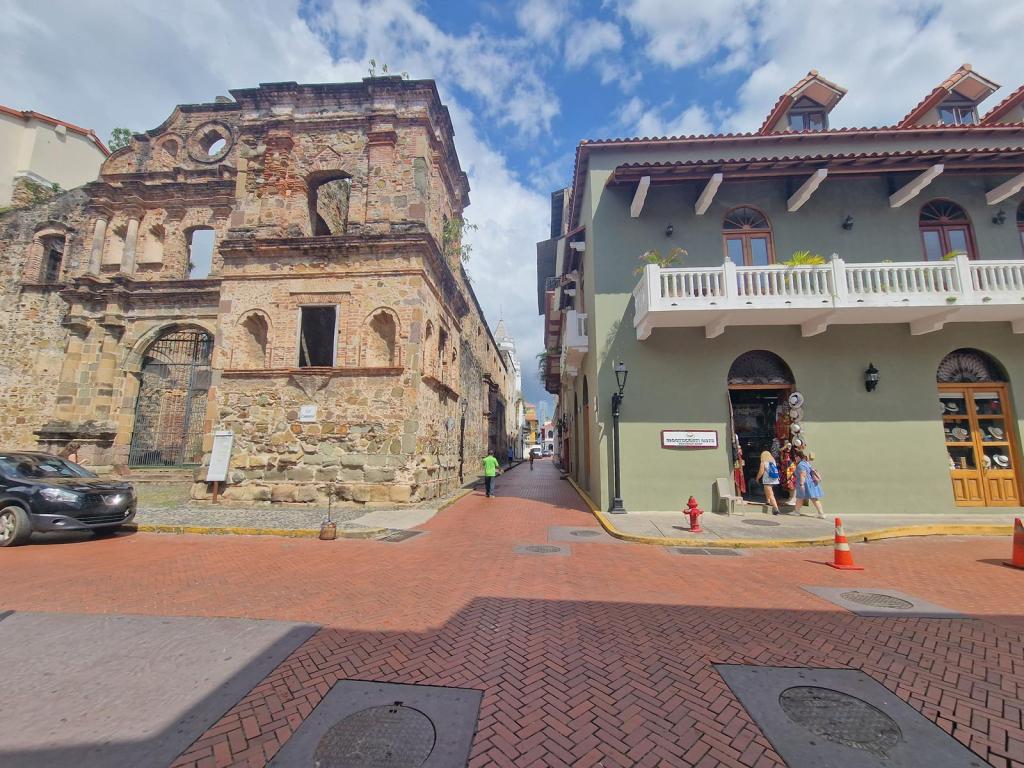
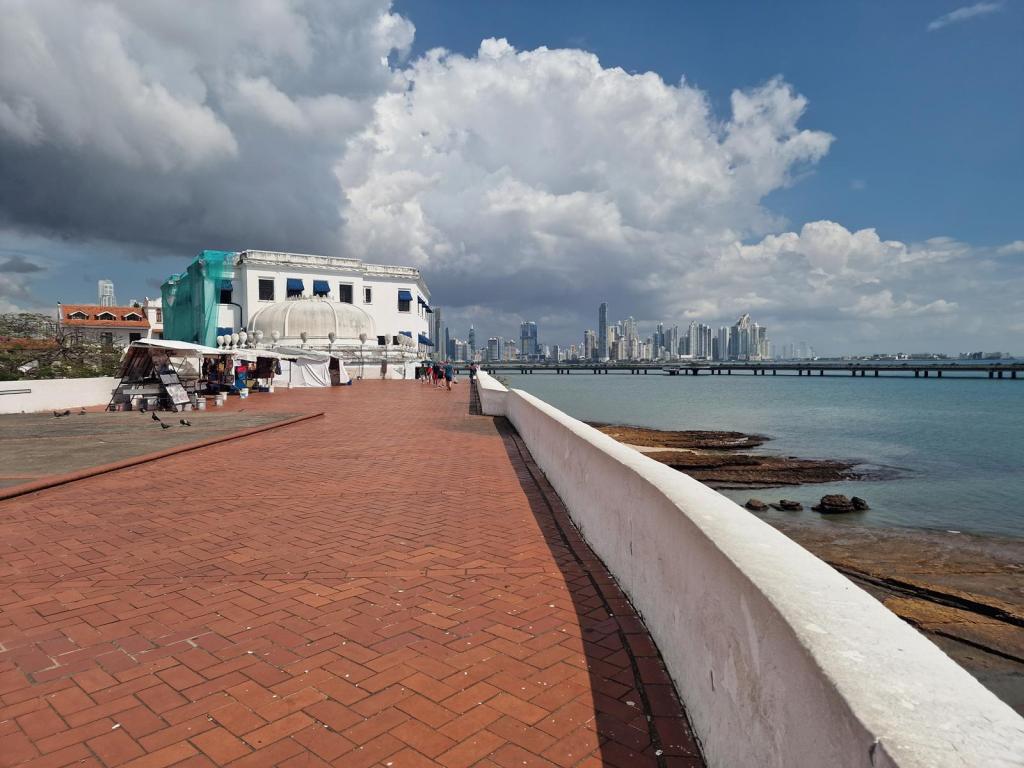
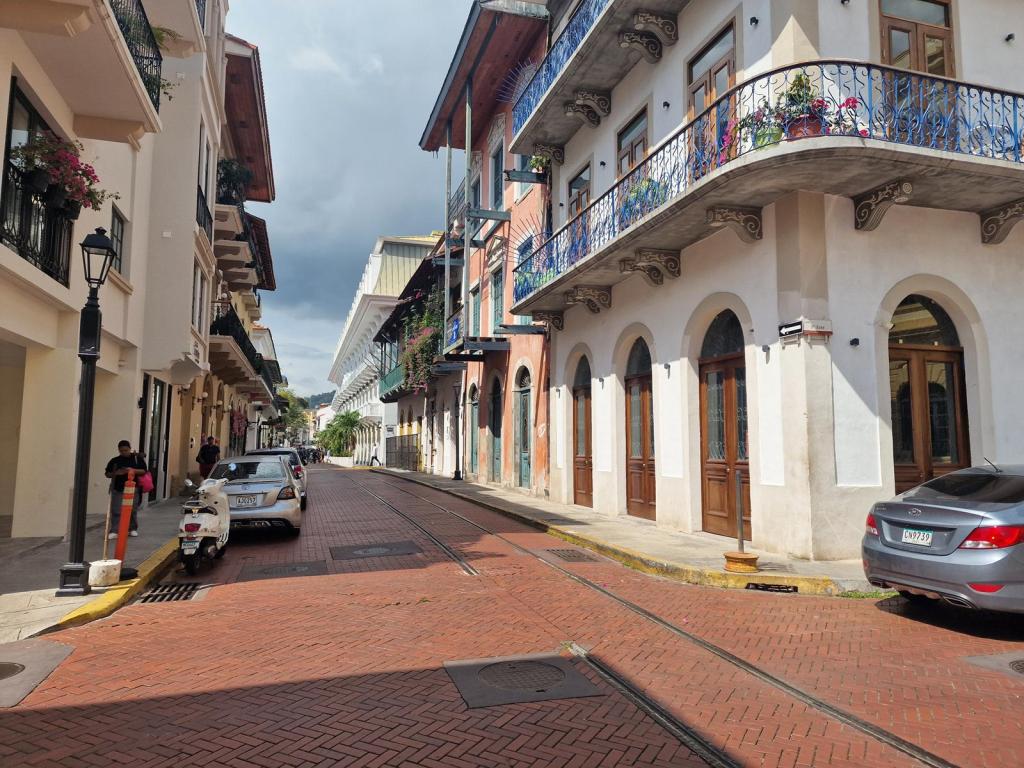
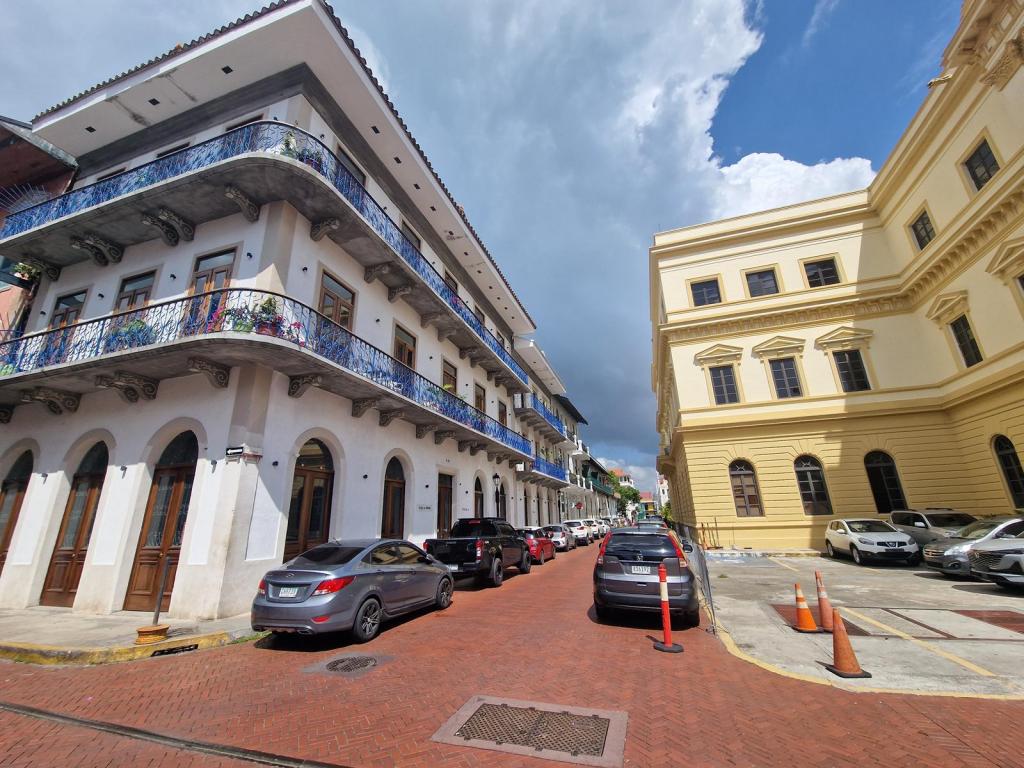
We took a day in the old town
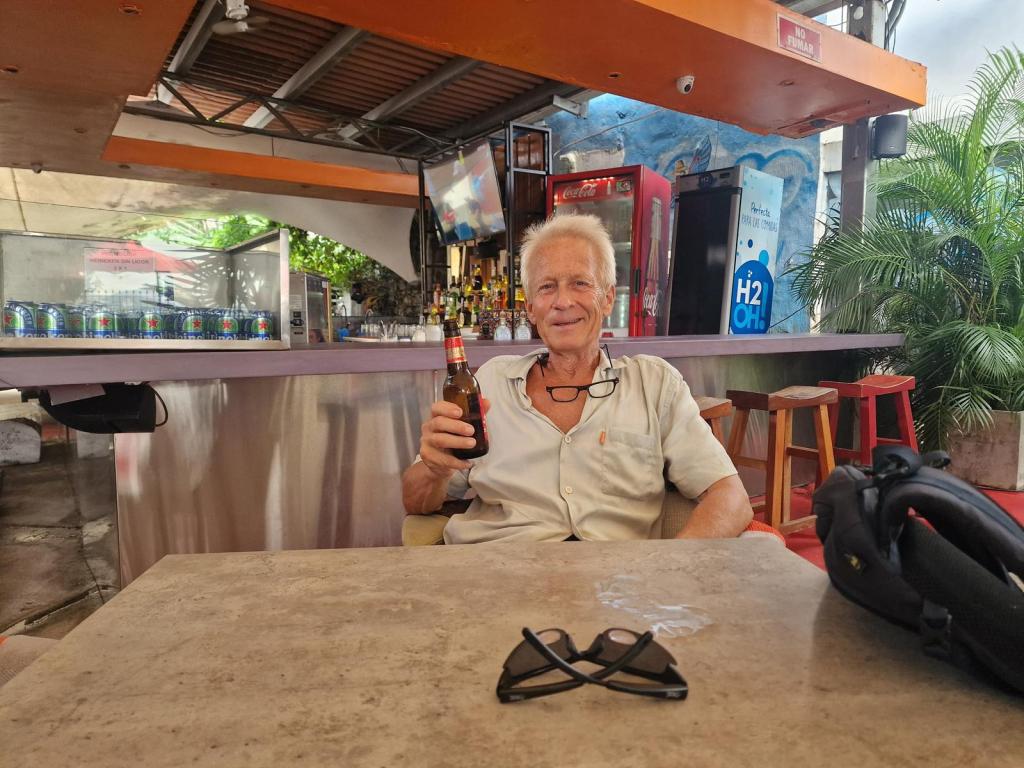
It rains short spell more or less every day, but gave good opportunity for as pitstop, to have a beer or two.
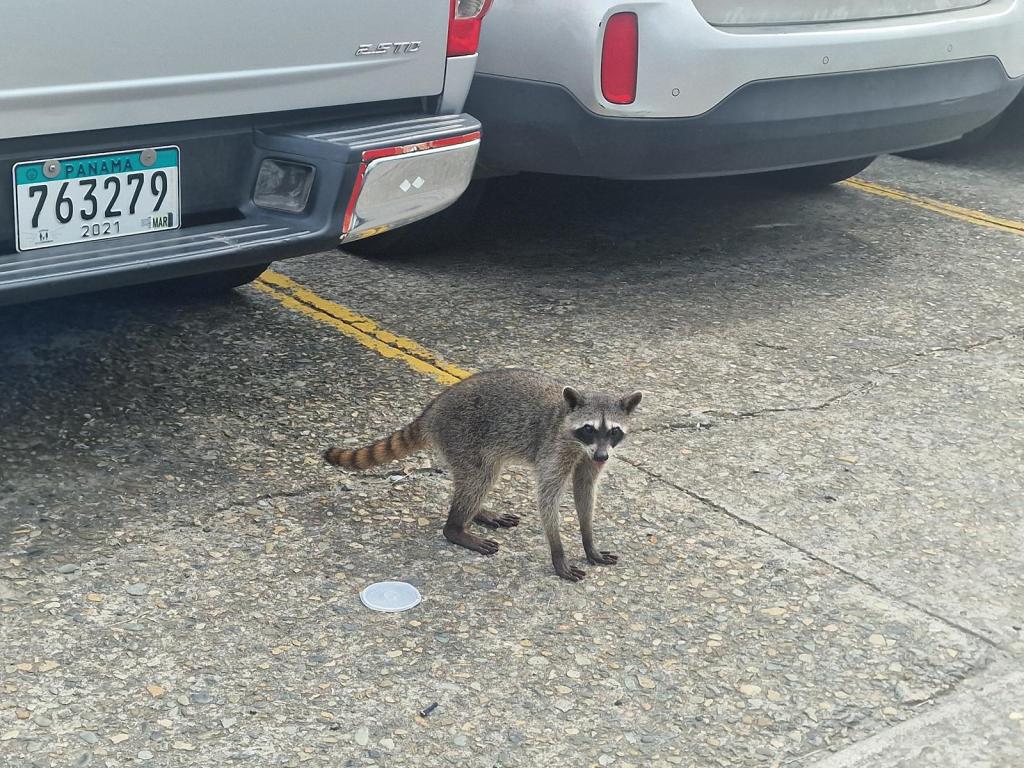
One day at the marina parking we saw this for us strange animal, a racoon
Sometimes we had some heavy rain too
Back to Pearl Islands
After clearing out we sat course towards the Perl Islands, this time to The Hotel Bay at San Jose and there we meet Kristin and Jan on the Vilja. We had a short but very nice time together.
Kerpa and Vilja at anchor
We visited the Hacienda Del Mar together and had some cold but rather expensive beers in a relaxed environment.
It was nice to be together for a while as we during the passage to the Marquesas we would be totaly alone for ca 4 weeks.
Towards the Marquesas.
Due to both expensive and cumbersome processes to go through for permit to visit the Galapagos. We visited Galapagos a few years back when we made a 2 month bus trip from Ecuador to Brazil, so we sat course direct towards Hiva Oa, ca 3900 Nm.
On such long trip it is not possible to find a good weather window, one must take whatever comes. On the first stretch towards The Galapagos one risk both light winds and wind against you. We do not fancy very much to go by engine, so we decided to have a weather routing service. Usually we use Chris Parker, but he is more focused on the Atlantic and Caribbean Sea. After some googling and FB questions we found a service called Ocean Tactics managed by John, He had some good revives. 550 USD for a full year service including 2 longer crossings such as Panama-Marquesas and Fiji to New Zeeland, on top of that, 5 shorter trips such as Marquesas to Tuamotus ca 500 Nm, sound as a reasonable deal. The service should include bot departure planning and daily feedback with points to aim for and of course a weather report.
If you get good advice, one might save 550 USD only on diesel cost by avoiding calm weather and being correctly placed in the current which can contribute to over 2 kn during major part of this passage.
Later the same day as we signed up, I got a message on Messenger from an other Amel owner warning that the service is very poor. Unfortunately, he was right so I must warn others from signing up with Ocean Tactics.
The departure planning was a joke, and the weather report I’m sure was from Predict Wind, the professional package. Much better and cheaper to sign up your self for the professional package. If you need weather service on passage, better to use Chris Parker, which we did a few times on our crossing.
How to describe a 27-day passage is not very easy as many days are the same and not much variation, but it is still a special feeling being out on the ocean for almost 4 weeks only the two of us. It can maybe be boring to read about.
The first questions we get, isn’t it very boring to be out there only the two of you?
And what do you do all the time?
Answer to the first question, no it isn’t! Even tough I had some doubt about doing the trip only the two of us. On the contrary it was so great to do the trip just the two of us, not boring at all, your favourite corner in the cockpit is always there for you, no one to consider. I enjoyed the trip much more than expected, not bored at all and could have stayed out for much longer time, but Kerstin was very happy to arrive and would not enjoyed a day or two more.
Our Starlink contributed, to not feel alone or bored. We had face time calls with friends and family, must say it was very nice to talk with our kids and grandkids, further we could follow news which we missed a lot before we got Starlink, especially these days when world news is very interesting, and things change almost on a daily basis.
And of course, to keep track on weather.
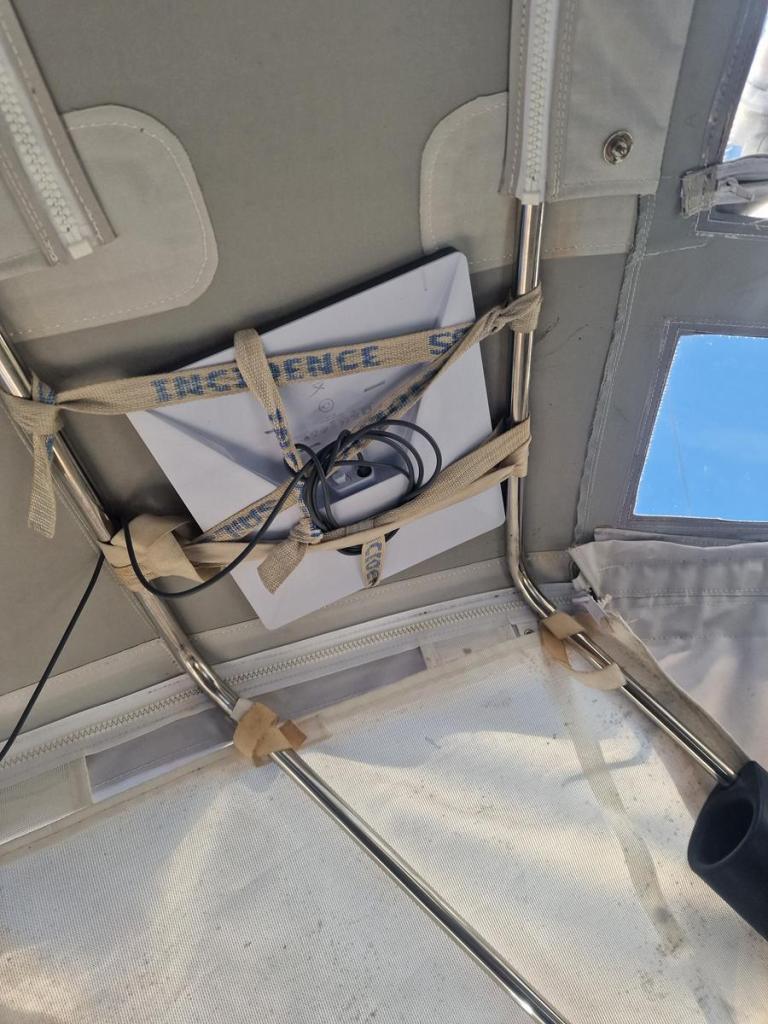
We have two units as we like redundancy, one Starlink Mini drawing ca 20 watt, and a Generation 2 unit that consume just over 40 watt, during the passage we have both active if one would fail, but of course only one turned on, the mini. We found that the mini connected much faster than the G2 did on our Atlantic crossing, sometimes the G2 took up to an hour to connect if the sea was rough.
Very simple installation of the mini but working. The G2 antenna we have on the stern rail.
The other question what do you do all days? To be honest not much, just enjoying the time.
So how to visualize the trip, I choose to show you several short video clips from the trip, and maybe you can get a feeling how such a long trip could be, I tried to make film but my computer did not cooperate
Please give feed back, if you like this way or not to describe how a long crossing could be.
Appreciate if you also give comments or a like then I know that at least some reed to the end.
The start and day 1
Finally on our way on a for us epic journey
Day one started well with good progress both at day and during the night
Great progress during the first night
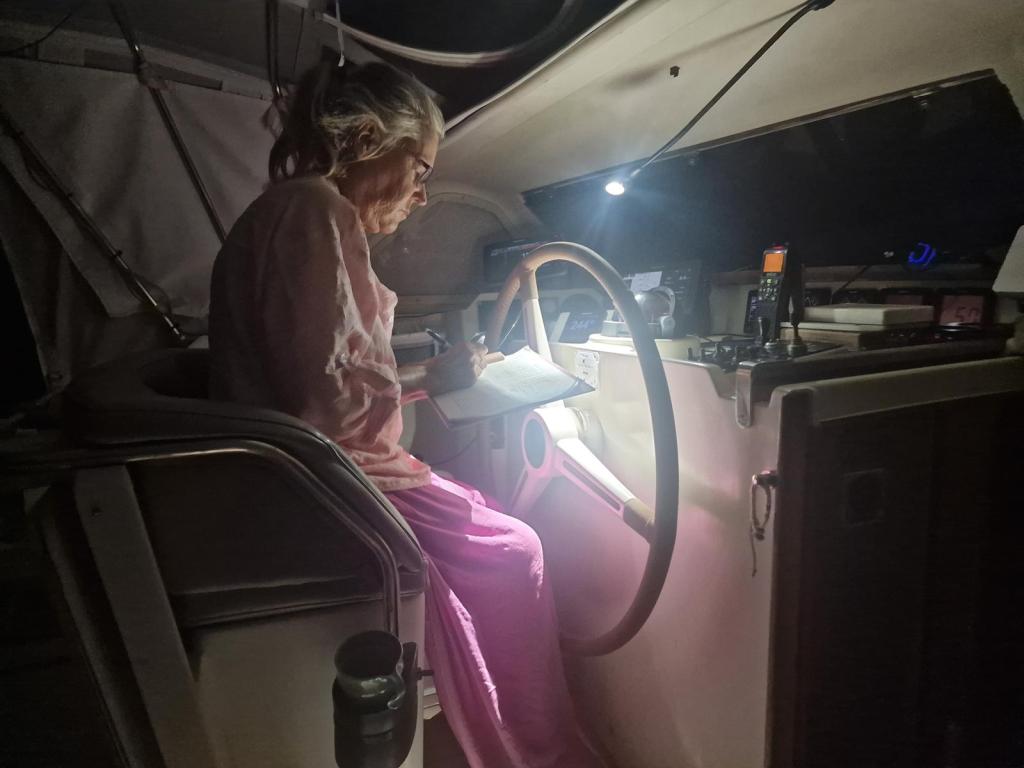
Every 4 hours we take not of position, speed, wind, distance etc, of two main reason, first if navigation breaks down, we have position not older than 4 hours, and if an accident happens we could show log for our journey. And fun to keep track of statistics, how fast we go, record distance in 24 h, and maybe less fun, our slowest 4 or 24 h distance.
Kerstin takes nots during her watch
Another question we get is how is your watch system?
During day-light time I’m responsible for the watch, and during the dark hours we share and take 2-4 hours, as no traffic, the one on watch take a 1 h nap/rest and then check around that everything is in order, a good lock out and checking the radar. During the whole trip we saw one fishing boat when we passed south of the Galapagos, else nothing, just a very few AIS targets from commercial vessels at very fare distance.
Day 2
Little wind slow progress with rather confused sea, making it a bit uncomfortable aboard
A free passenger can lighten up aboard now and then, but they leave a massive amount of droppings, not so fun to clean off, we had a few visitors, one evening we had a whole family sitting in the rig dropping all the time, our spray hood and bimini became full of droppings and we could feel the strong smell. We tried to chase them away, but not easy they are not afraid at all. Finally I took our portable fog-horn, but it was not one blast that was needed, but many I was afraid I run out of compressed air, but finally they left. N.B. the Bobbies do not need the boat for rest, I think they just sit there for fun and look at the strange creatures out on the ocean.
Day 3
What do we do?
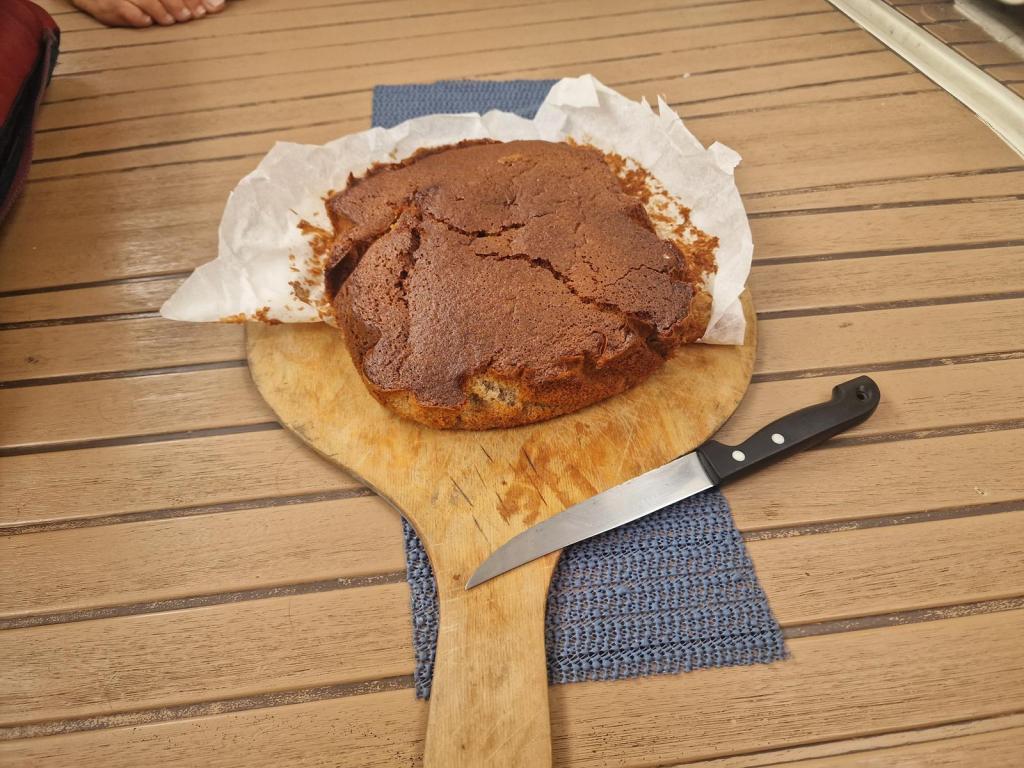
We regularly bake bread, this time a cake, but the baking soda was old (6-7 years) so result was not as expected, but taste not too bad.
There are plenty of beautiful evenings with sunsets in abundance
Note the free passenger on our pulpit
As well as amazing nights
The moon shines up the night, and when no moon, one can see the most wonderful starry sky. No light pollution at all. It was wonderful to just look at the sky for a long time and see stars I had not seen before and star constellations in a different orientation than we are used to, that due to being so close to the south hemisphere.
Day 4
Heavy rainy day cleaning away some of the bird droppings.
Day 5
Not much wind, motor sailing. We lost two lures as fishes to large for our fishing gears.
Day 6 passing the equator
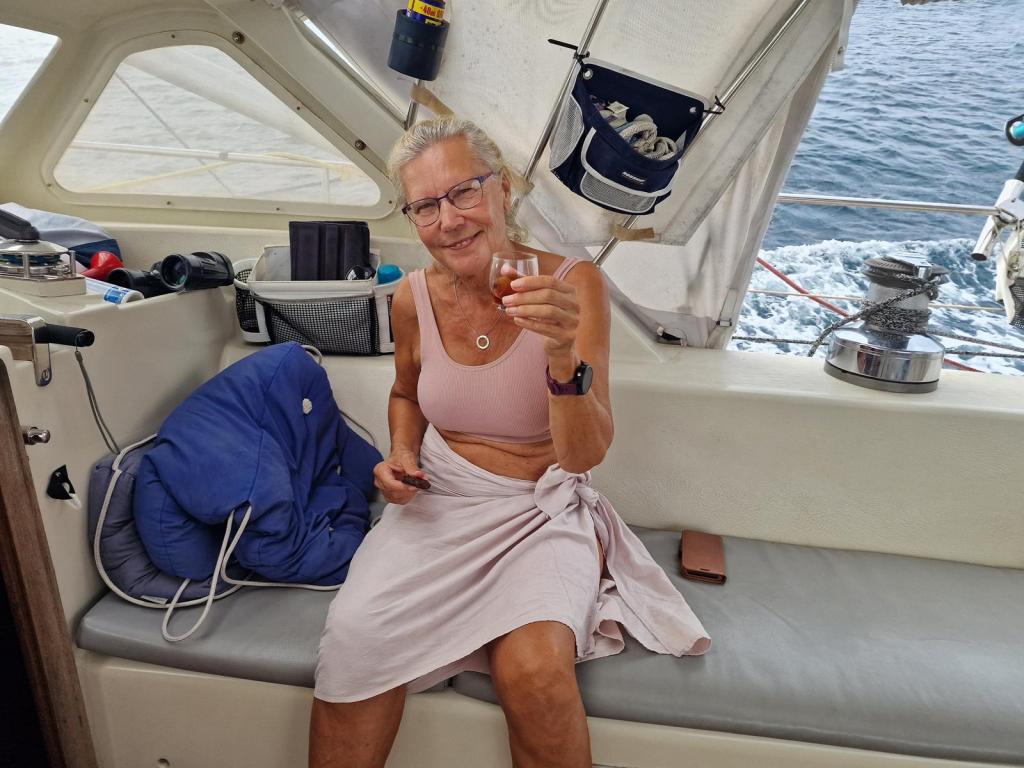
One is supposed to be baptised by Poseidon when passing the equator, but as only the two of us, we just celebrated it with a cognac, very modest
Day 7 rather bumpy and not so easy to make food
Day 8, a maintenance day
We have had light wind, causing flogging of the sails, that is a common problem on passage, light wind with old swell can cause sails to flog violently, not unusual to have speed even over 4 knots but the sails flog so violently as you have taken them in and motor.
The flogging causes a lot of strain of course on the sails, but also on the furling units.
I noticed that several of the screws holding the foil to the furler has fallen out and some of them had broken. The threads that hold the foil to the furler was severely damaged. When filming the damage, a big wave hit the boat and I had a close call to fall overboard as you can see on the clip
Some thinking and I fixed it in a Quick and Dirty (Q&D) manner
The solution worked great all the way.
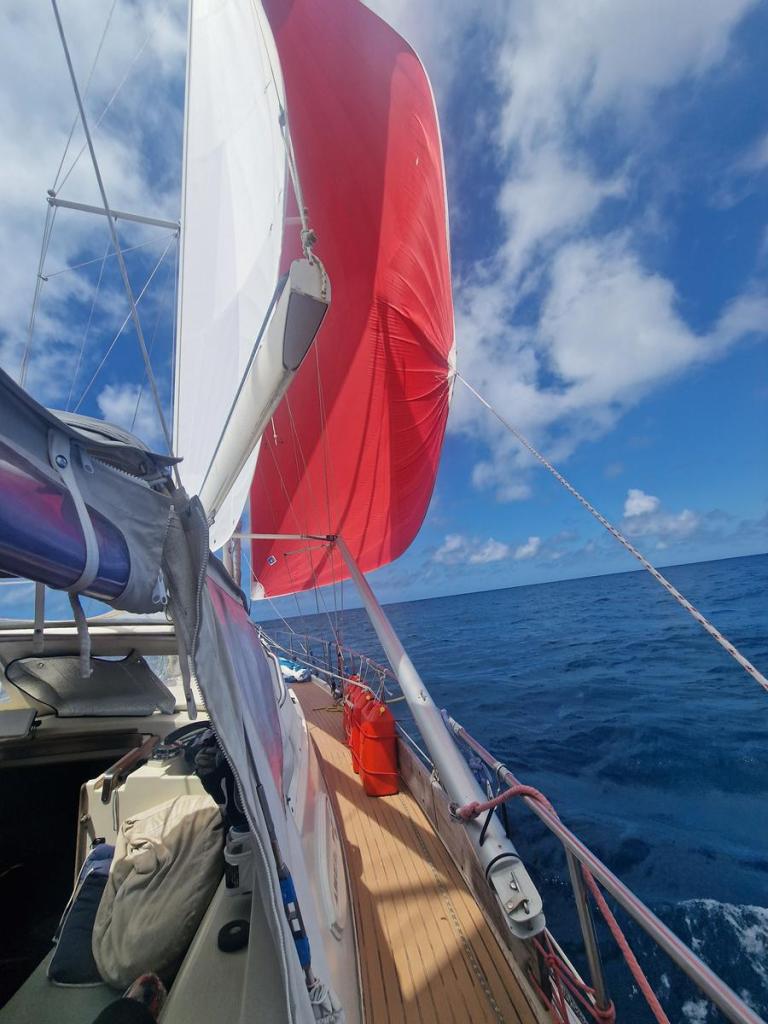
Later during the day, we sat the Code sail
Day 9 Maintenance again this time at night
Our hydrogenator that gives good contribution to the batteries suddenly gave strange noise, a quick inspection showed that one of the blades was broken off. It was a rather calm night, we furled our code to reduce speed and attended the hydrogenator.
It was a quick fix, but after replacing the propeller the hydrogenator only produced half of what it did before, even though the same pitch on the propeller!!??
Day 10 Fishing luck
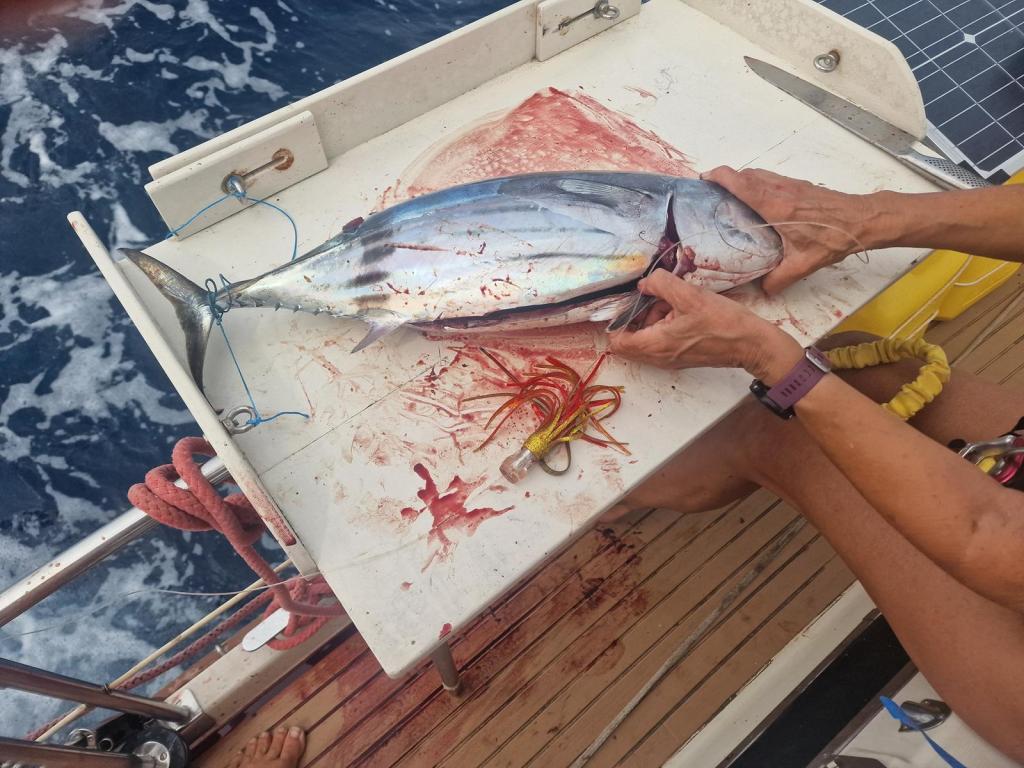
A skip jack of decent size, when cleaning the fish we found parasites in it, but Mr google say safe to eat if frozen 7 days at -18 C, so we had to wait one week before we could taste it.
Day 12
W spend a lot of time in the cockpit to be shaded from the sun, but sometimes I feel a bit trapped in there, I feel a bit shaded/screened off ( do not know the correct English expression, but hope you understand what I mean) from the sea and the fresh air. It also hinders you from discover the wildlife outside, I wonder how many whales and dolphins we missed during our passages due to that. I would like to spend more time on deck, but the sun is too strong, the UV index is always on extreme level. Anyhow one day, we were pooling out our head sail, and then Kerstin saw the blows from three large whales probably humpback whales not fare at all from Kerpa. No photo or clip of that unfortunately.
Outside the cockpit bubble
Day 13 Sundowner on deck
Day 14 Halfway
Halfway is an important milestone on passage it took us almost 14 days to reach.
Halfway celebration with Cava
Dinner, Pasta with Salmon, one of my favourites, excellent for celebrating the occasion
How is it to eat aboard on passage?
Well we do miss to sit at a table, we do eat from dog bowls, that is maybe one of the reson for that some choose to sail on catamaran?
Day 16
I get another favourite dish, meatballs
Day 18
Listening to Swedish radio, it is “The Melodifestivalen” a competition for which song that qualify for “The Eurovision Song contest”. This is quite a big thing in Sweden and the rest of Europe, a lot of people watch the competition on TV or listening to radio. When listening to the radio they asked people to take a photo from where they were listening to the program an to sent it in. We took a photo in the middle of the pacific and sent it in. about 15 minutes later they mentioned on radio that we were listening to the program from the Pacific.
default
This is the photo we sent in.
Day 19 just another day
Day 21
Another sundowner on deck admiring the sunset
Day 23
A bumpy lunch
Day 24 600 Nm left
Nice time on deck
Day 26
Almoast there
100 Nm to go
Day 27 arriving Hiva Oa
Finally, there after 26 days 10 h 45 minutes 3927 Nm in total where off 425 Nm 85 h by engine or motor sailing. Average daily distance was 148 Nm, which for us is not so good.
Of course, we wanted to take a bath in the water after arriving, looking at the bottom was a bit shocking the least
What we did about it, you have to wait to the next blog post.
Last blog, we left Turtle Cay Marina to go to Sweden to spend summer with friends and family.
During the summer we also looked for crew to be with us on the long voyage over the Pacific Ocean from Panama to the Marquesas. We got quite a few who were interested but most of them did not realize how fare it was, so usually the female part of the crew did not want to be that long time on an ocean. But one couple were really interested, she had a dream of transiting the Panama Canal and the husband, of a longer voyage over the Pacific. It was nice to have a face time call with them, and they claimed they were in good shape. I was a bit hesitant as they were a bit old, but not older than us, just in-between me and Kerstin, and they were keen out door people. Stephen had just sold a Kajak Adventure company that he has had for over 15 years. It looked good so we decided to go with them, another plus was that she was very interested in cooking and wanted to have an active part in provisioning, excellent as we too take food very seriously.
But before we get to the crew experience, a short recap of what we did in Sweden the whole summer.
We arrived in Sweden just before midsummer and left in October, so it was a long time we spent there. We had a few important things to address, some maintenance not for Kerpa but for us, the milage take some toll on us as well. Our youngest daughter was getting married, and a few other things.
We had the joy of sailing in the Stockholm archipelago a few days with our youngest daughter Linnea and future husband Jesper.
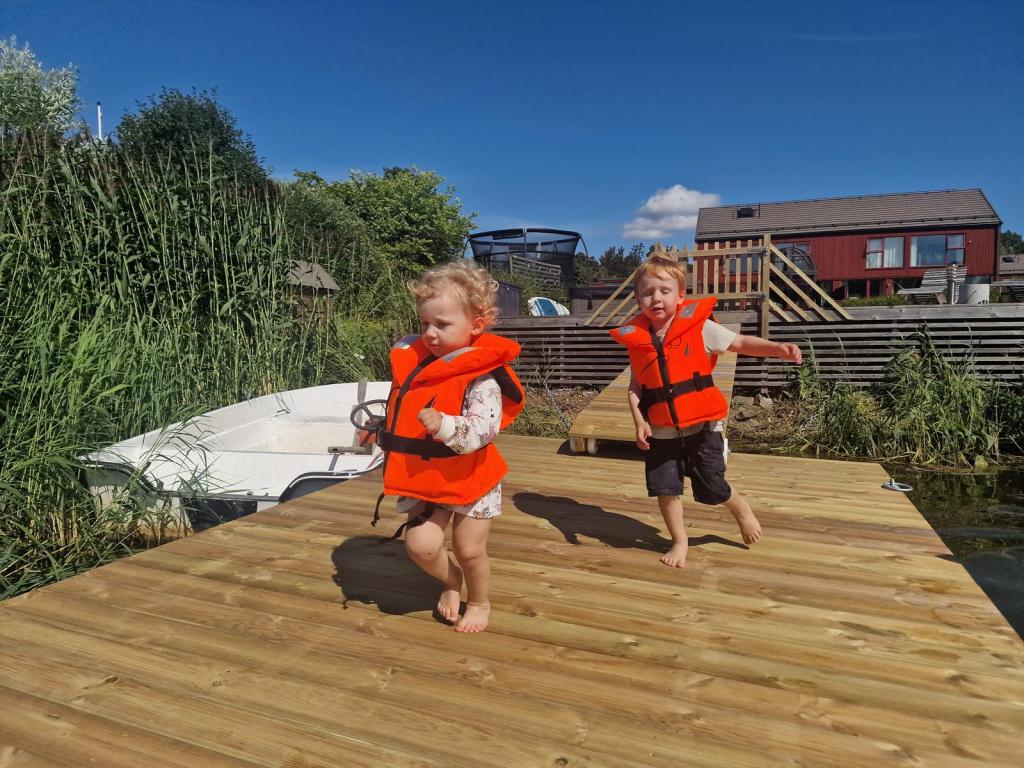
We spent a lot of time with our oldest daughter Emelies family, we lived most of the time with them, as pay back I helped to build a floating dock for them, which was very popular by the children
They liked to be on the floating dock, and I show them how I used to fish when I was a small child and luckily I manage to catch a few fishes.
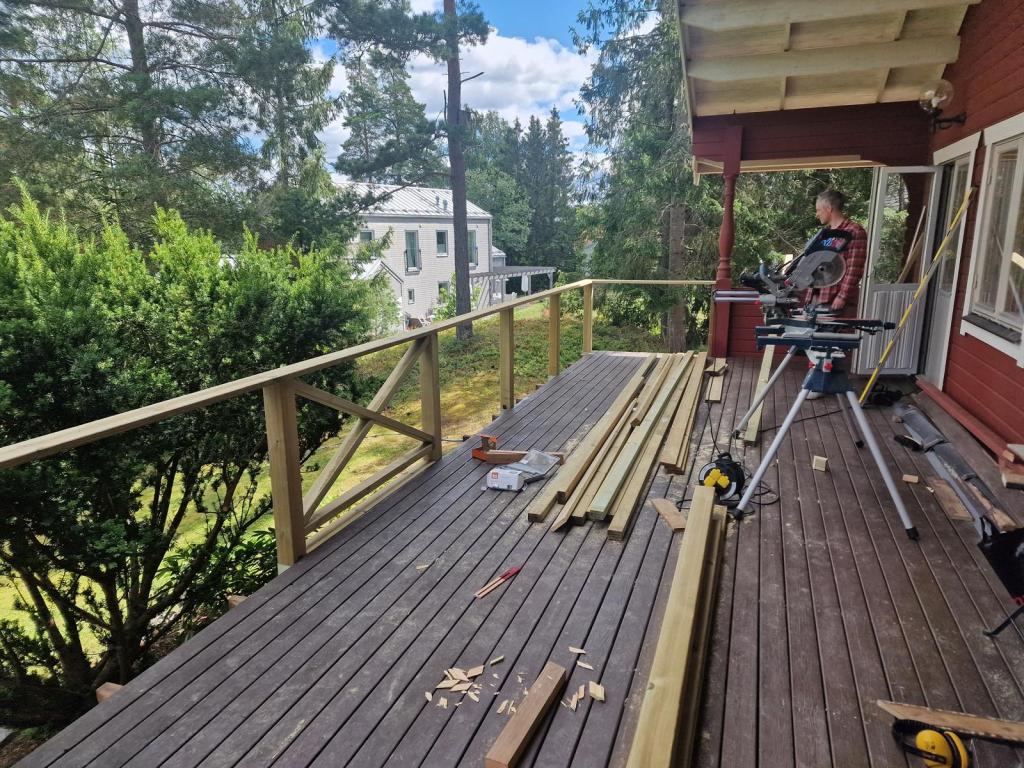
My son Kristoffer needed help to make a new fence on his terrass, so again I had to be a carpenter, it was very fun to work together with the kids and grandkids.
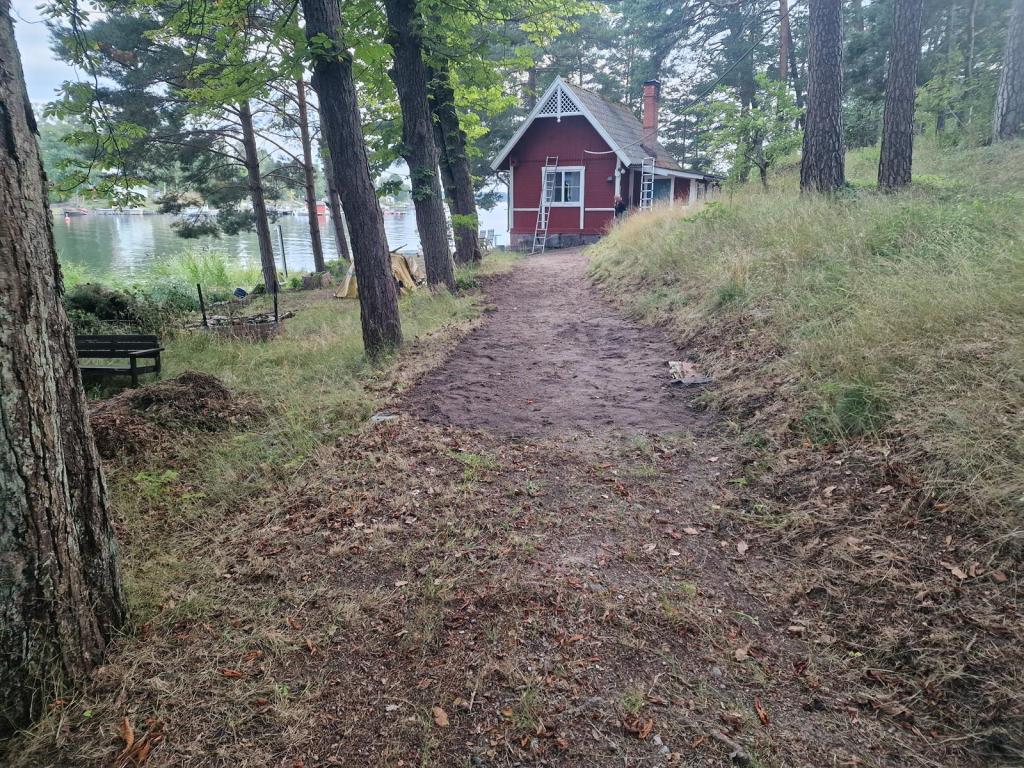
That was not the end of the hard work, our family summer house needed some TLC.
To just mentioning a few, a lot of weed here and there, the entrance was full of grass that needed to be removed.
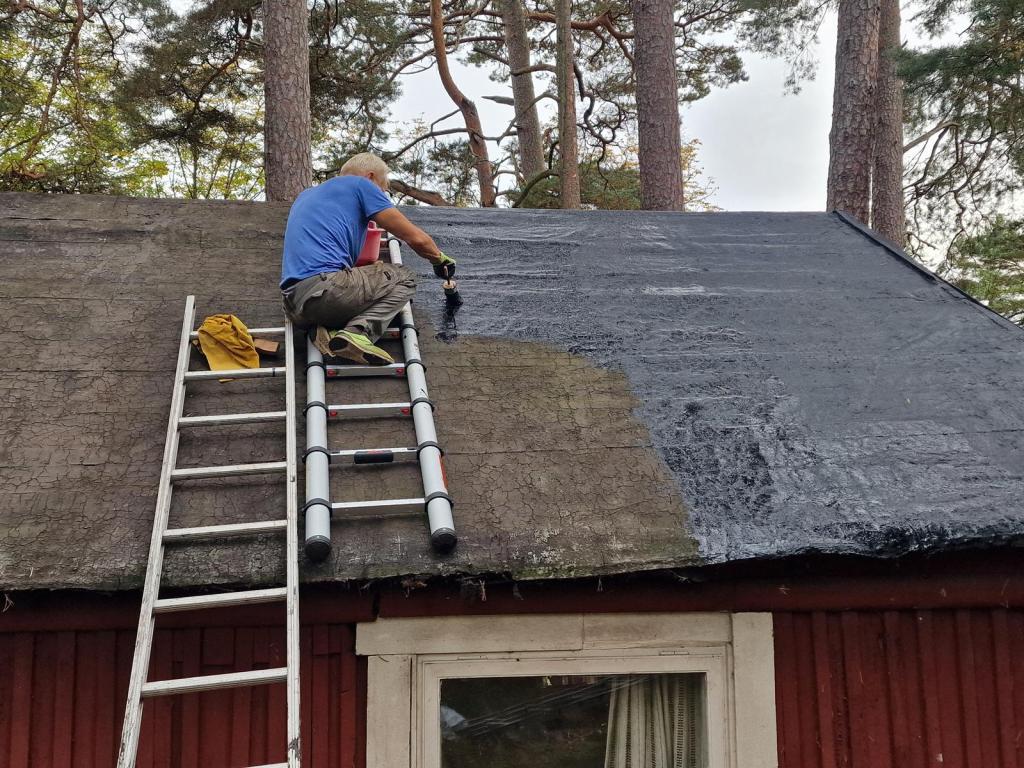
One of the small house’s roofs needed new tar. Luckily the hight was not very high, the ladder I used started to slide and I fell down from the roof, no major damage luckily but some tar ended up on me instead of the roof.
But it was not only hard work, we had some wonderful summer days out at the cottage.
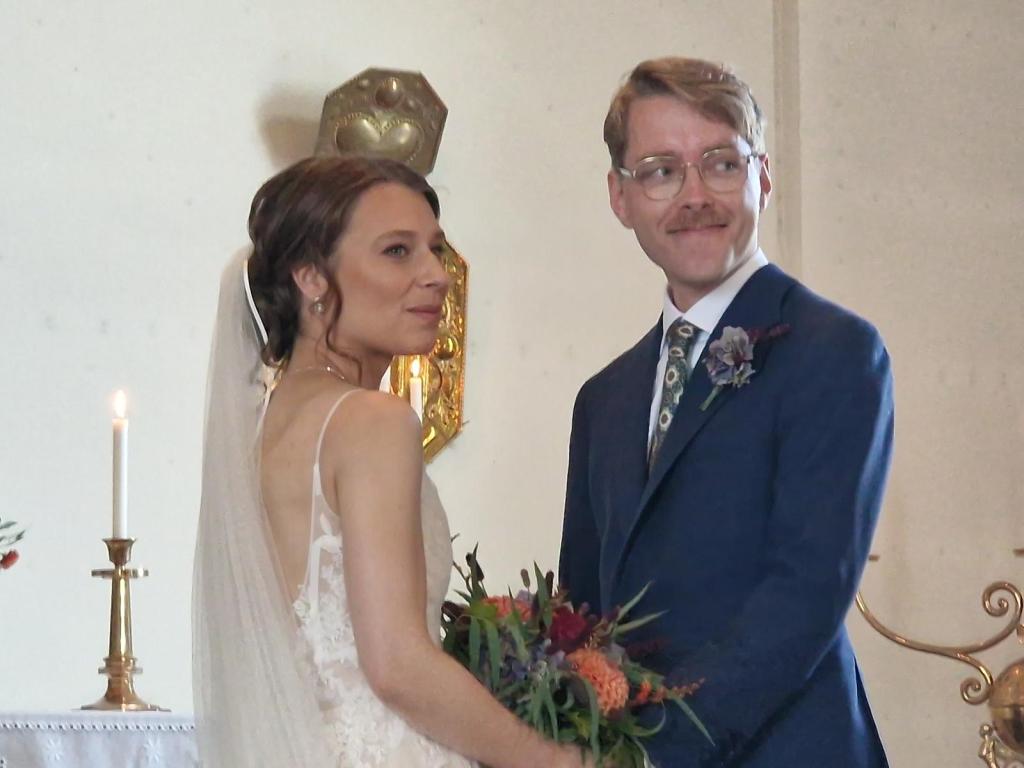
The main event was of course that Linnea got married.
We are so happy for them, they live in Gothenburg on the west coast of Sweden, the summer had been really poor, but the day they got married they had a fantastic weather, everything was so beautiful, a good omen fort a bright and happy future.
This is the boat they had their honeymoon trip on and the whole week they were out they had fantastic late summer weather.
Back to Kerpa
In November we flew back to Panama and to Kerpa at Turtle Cay Marina, there were a few things to fix, before our friends Hans and Sussane came for sailing with us.
Turtle Cay Marina is situated in the jungle and our friends where very happy just to be at the marina, as it was a lot to explore just around the corner. The Marin has a small restaurant with rather decent food, and drinks
We did not only had drinks it was a few things to fix. When we left St Marta; Columbia earlier last year our bow-thruster broke down, and now when we opened the thruster, we found all the gears just broken including the shaft. I had bought a spare kit including everything I thought. But the wedge for the cogwheel was also damage and not included in the kit. Just put it together and fix it later when I could get hold of a new wedge. In the men time we went to San Blas, and when we got back, we finalized the rebuilt of the bow thruster.
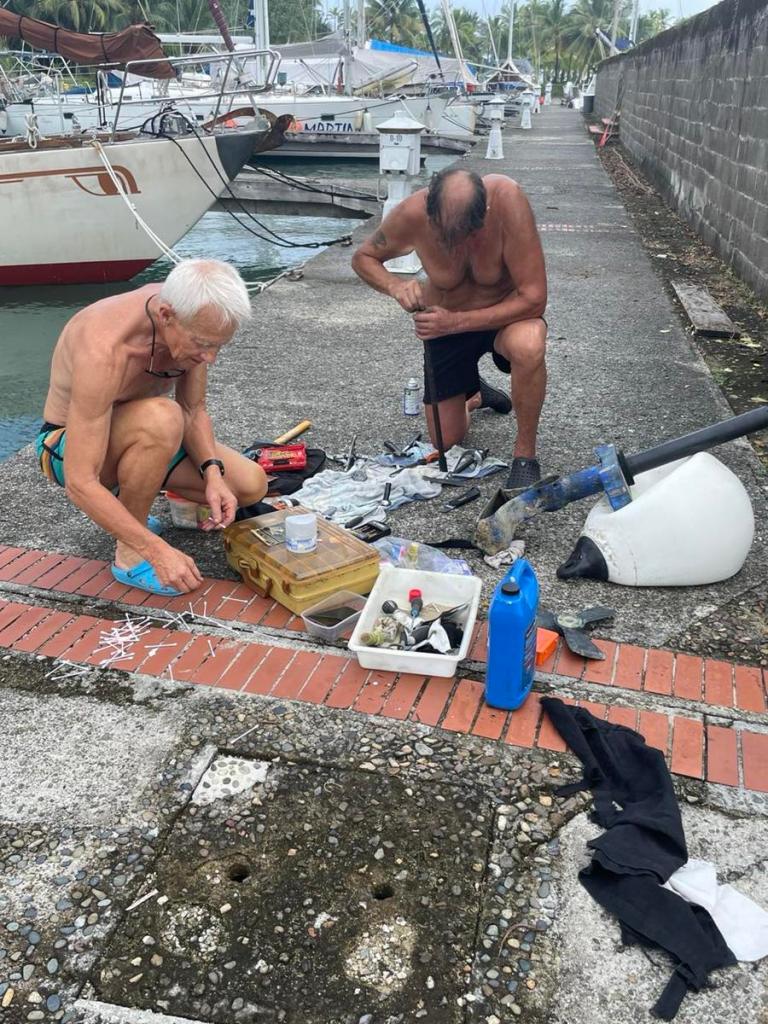
Lucky my toolbox is rather comprehensive, we had some threads that was damage, but we managed to “repair/fix” it.
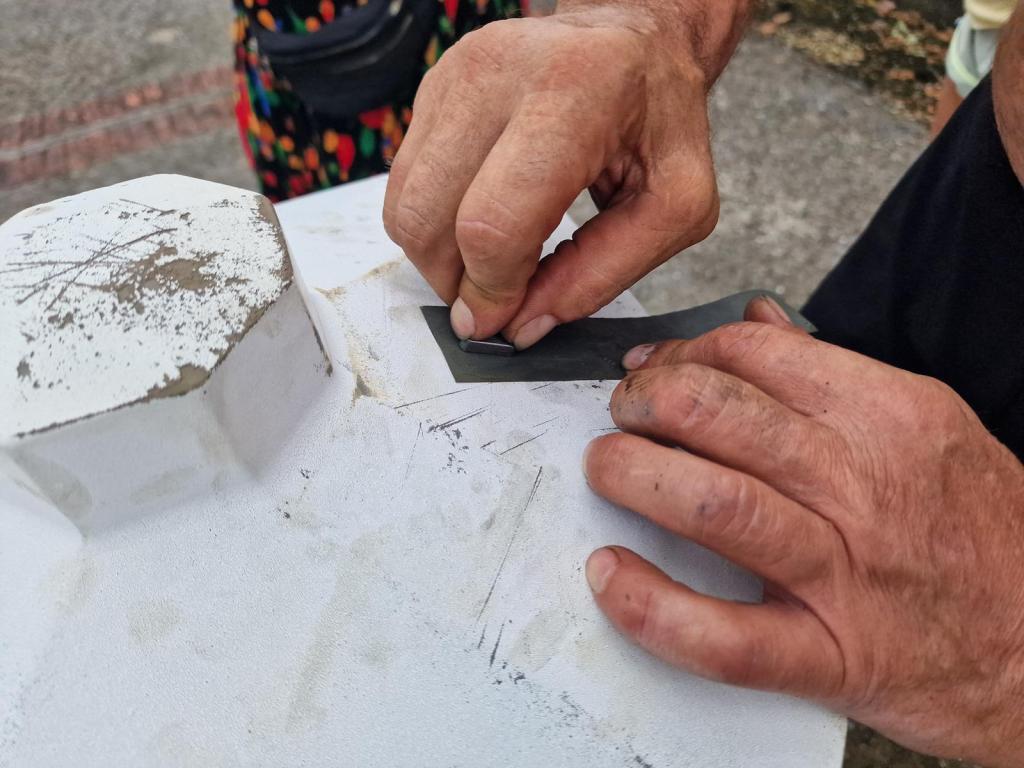
The wedge was a bit to large but was fixed with elbow grease and emerald cloth
Taking most of the jetty for repair, it was hot, humid and not the best ergonometric for “old” men, but we rewarded us after completion with a few drinks. Always nice to have professional help from a friend when doing boat job.
San Blas again
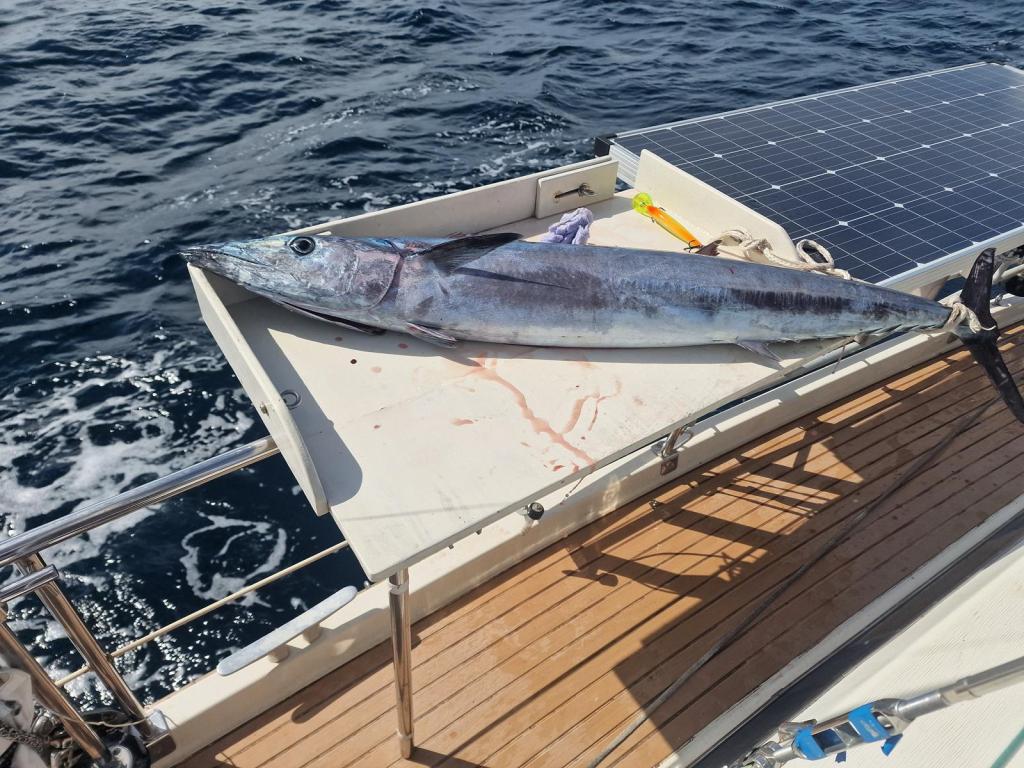
We took our friends to the nice places we had been to before flying to Sweden, and they liked it very much. It was less humid this time and a bit of more wind so more pleasant this time. As an extra bonus, we got a very nice Wahoo on the way to San Blas, Wahoo is a very tasty fish, one of my favourite fishes.
Hans is very good at cleaning fish, so he got the task.
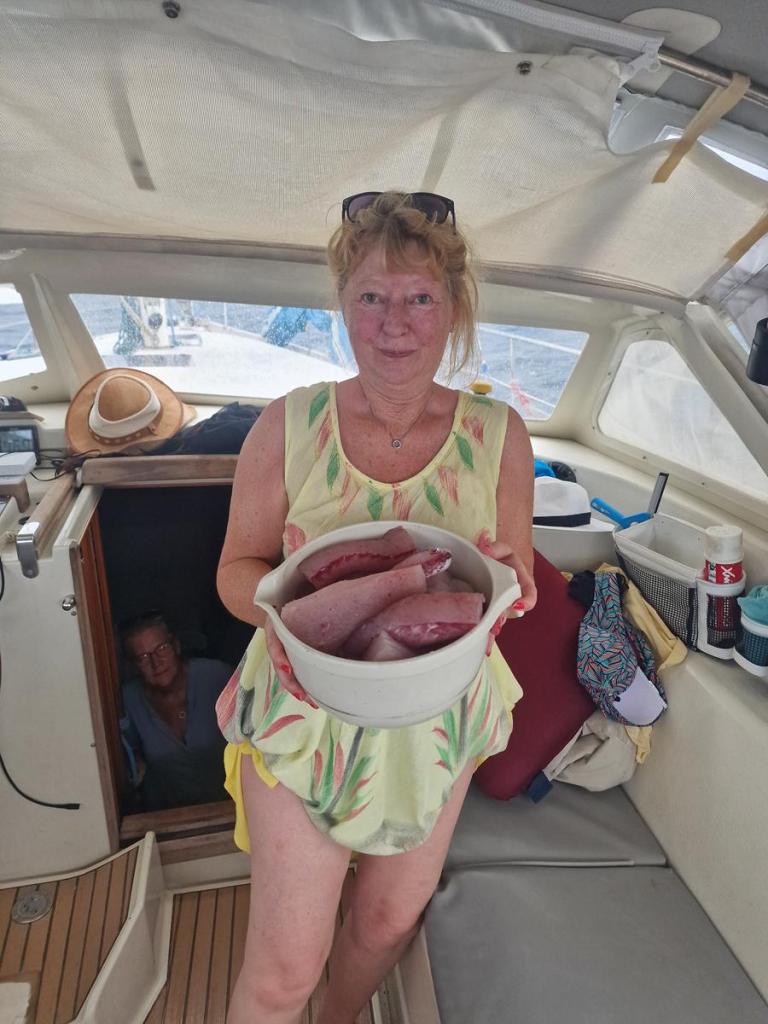
A whole pot full of fish, I think we got over 20 meals out of the fish.
Including some delicious sashimi, we just mixed the wasabi and soya sauce in a bowl and added the raw Wahoo, delicious
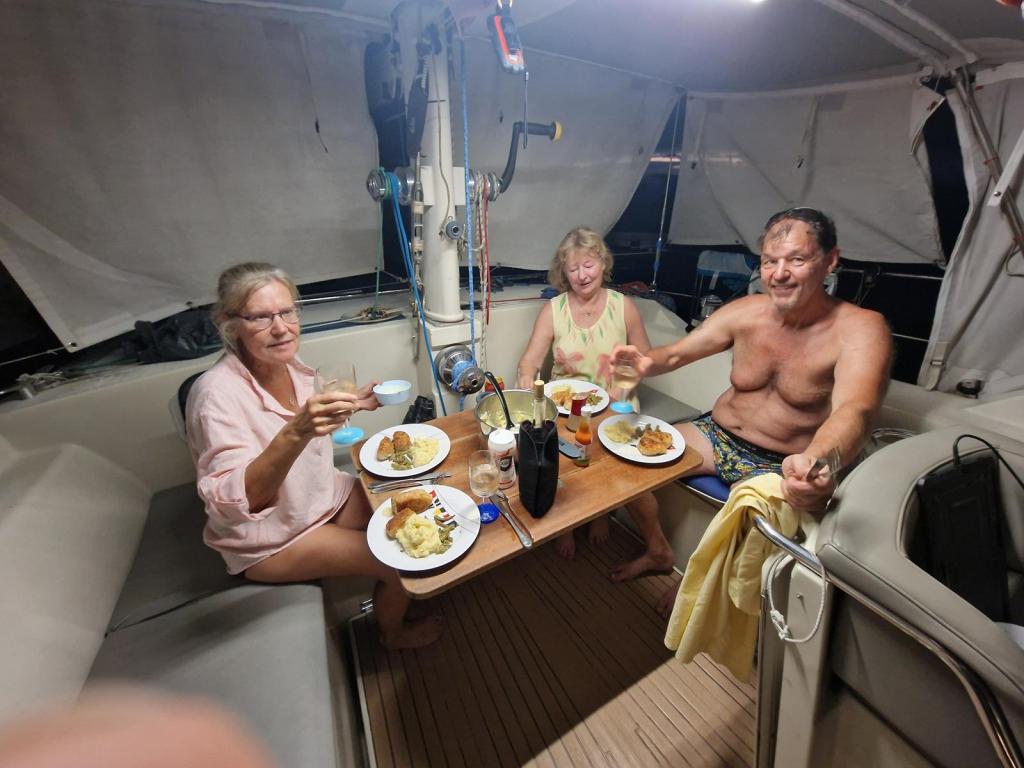
Life is good, together with good friends
They enjoyed San Blas very much
On one of the islands we found this very nice little restaurant which served plain but very nice food for only 20 USD including a beer, if one wanted wine one could bring own wine. We were three boats from last year’s Viking Explorer rally, nice to meet up again.
Even in paradise there is maintenance, this time we replaced the old membranes in the water maker with new ones.
It took some time to get things in order, but finally the water maker was almost good, I noticed that the new electric motor that drives the high pressure pump got very warm, had a lot of contact with the supplier Desalator, they were very helpful I tried all possible causes they could think of, but nothing helped, now we only run it for 30 minutes, and that is sufficient for us if we run more or less on a daily basis.
Time goes fast when fun and our friends went home, and we continue to Shelter bay to prepare for the canal transit and the long trip to the Marquesas.
Shelter Bay Marina
At Shelter Bay Marina, we arranged to get up on the hard the day after we arrived.
We wanted to have a forward seeing sonar installed, pressure wash the bottom and replace the wear out prop shaft bushing.
I must give credit to SBM they were very serious lifting and blocking Kerpa, they had a man in the water to make sure the lifting sling was correctly placed not do damage anything. Also pleased with the installation of the transducer, the cost was rather reasonable but some of the other services was very expensive.
Everything went smoothly, except that the forward sonar I brought from Sweden was faulty, what an anti-climax.
While on the hard we turned the anchor chain so we have the least used part of the chain towards the anchor and marked the chain and cleaned out the chain locker.
Lucky for me, Kerstin is small enough to reach into the chain locker.
When back in the water I inspected the rigg, nice view from up there
We have had a oil leak on a oil hose from the oil cooler, I tried to replace the hose myself, but was afraid I might damage a copper tube it was attached to, so ask SBM to do the job for me.
The mechanic had to crawl in behind the engine in a very cramp position in the hot and humid engine room to replace the hose. Replacing an oil hose is rather messy and one gets oil here and there, but they left everything nice and tidy, again good job.
Our water pump for cooling the AC did not work, it needed a new capacitor, of which I had spares aboard so a quick fix.
There were a few social gatherings at the Marina, so time went very fast,
waiting for our crew, Cathy and Stephen to arrive to Kerpa. They know Panama rather well after several trips to Panama, and it was since long on Cathys bucket list to transit the Panama Canal.
To make a long story short, they had rented a car to get to Shelter Bay Marina, and asked if they could do some provisioning while they had the car. They called me several times a day about different prices and available items and other nitty gritty things, so already at that time I got some bad vibes about them.
When they arrived to Kerpa, the car was full of food, over half of it, things that we never eat, such as a large variety of prefabricated sauces in glass bottles taking space and adding weight. Two gigantic bags of nacho ships, it was probably 8 litters ( 2gal) each, taking a lot of valuable storage space, they will get soggy just a day after opening the bag as well. The list can be made longer , but I stope there. Stephen then wanted to buy a chair to be able to sit on the deck on passage, I said you can use a cockpit cushions as I use, his replay was, easy for you to say! Then he wanted to get a mattress so he could sleep on deck also during passage, he did not either liked to make coffee in our presso coffee maker, he wanted filter coffee. I became a bit upset and said to him you need to adopt to the way we do things aboard and respect our home. Later we had a talk about the situation, and of being aboard another couples boat. We thought we found a good understanding and had a nice and pleasant evening meal after that. So we thought maybe they got the message and things will run smother after this discussion. But not, more about that later.
It was still a lot to do, especially provisioning, we made a few trips with them and the rental car, and also with the bus that SBM provide. Provisioning is a major undertaking on such a long voyage, especially as in French Polynesia there are very limited assortment and very expensive. So many loads was brought aboard fruit and vegetables was cleaned, labels removed from tins, etc. we manage to get ready in time.
The Canal Transit
Finaly it was time to transit the canal, we were lucky to do that together with our friends Peter and Catharina on the HR 46 Blue, we know them well from the Viking Explorer rally.
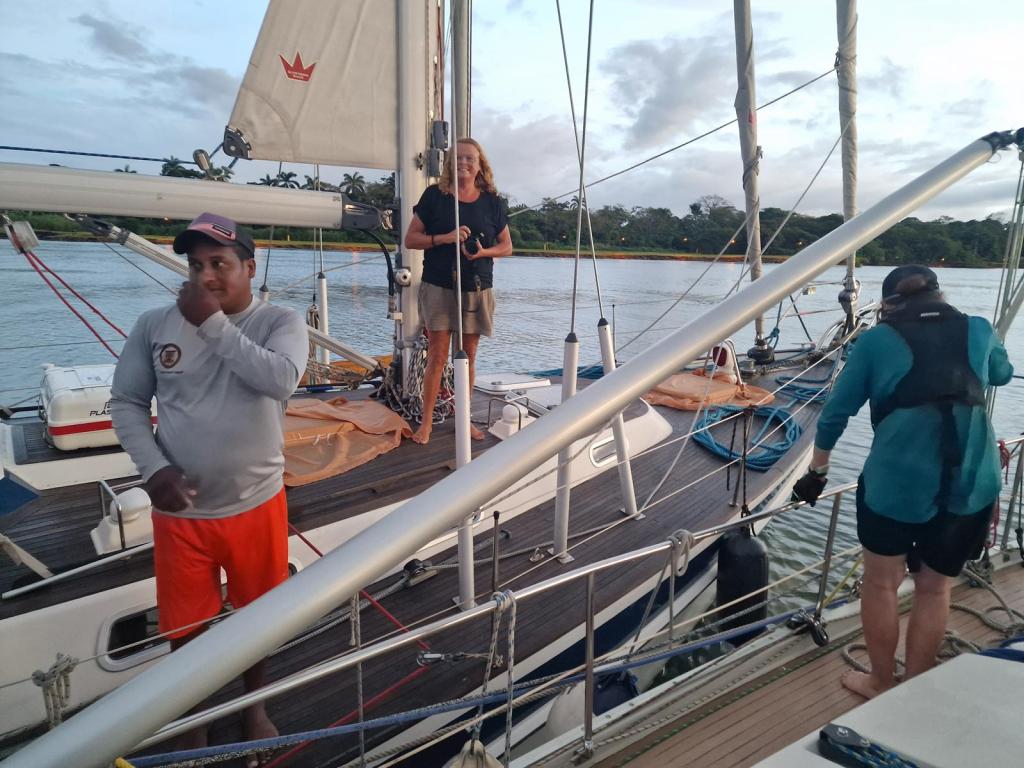
We went out from the SBM in the afternoon the 22 of December and anchored at the place we been instructed to anchor at, to wait for the Pilots to come aboard. We had one “professional” line handler to complement our crew aboard, as one need to have 4 line handlers aboard.
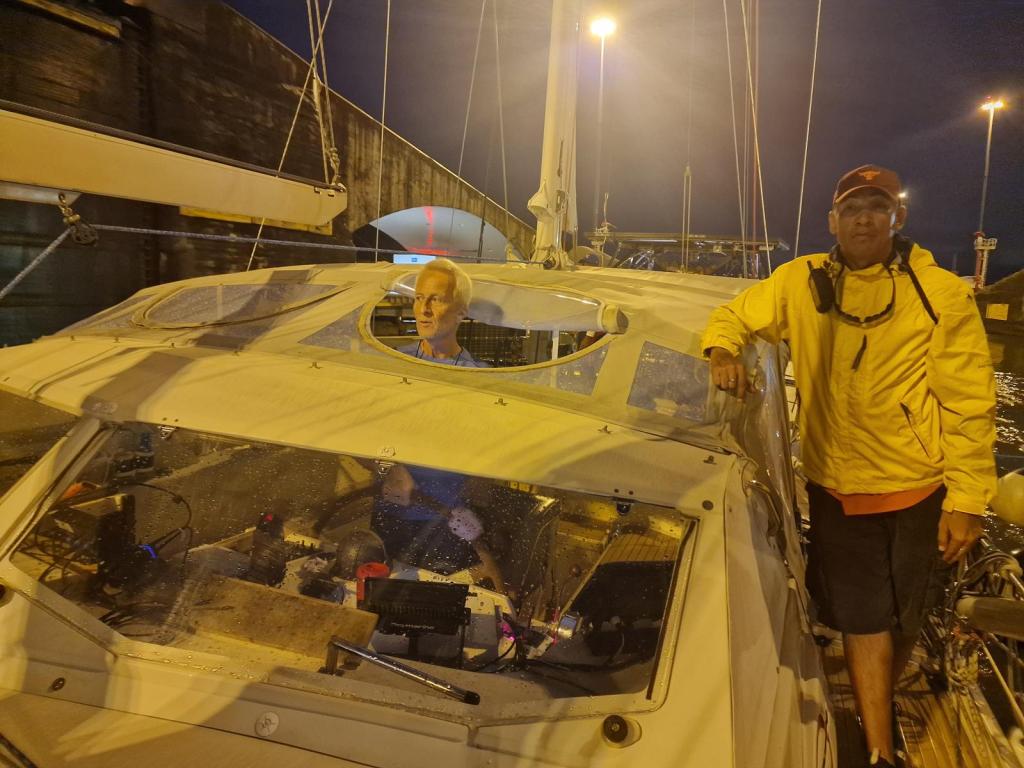
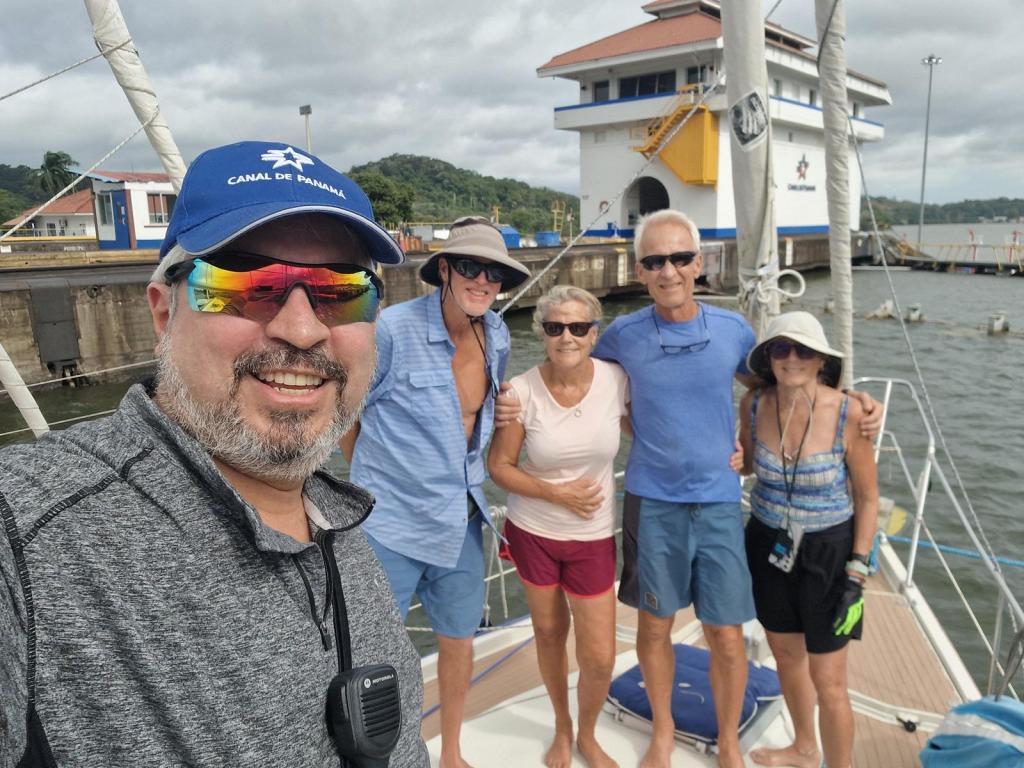
The pilots arrived maybe an hour or so before dark. I have heard and read many times about Pilots giving strange orders causing trouble and damaged to the boat. Both Blue and we were very pleased with our Pilots, very professional and friendly, the same goes for our line handler and the line handlers of Blue.
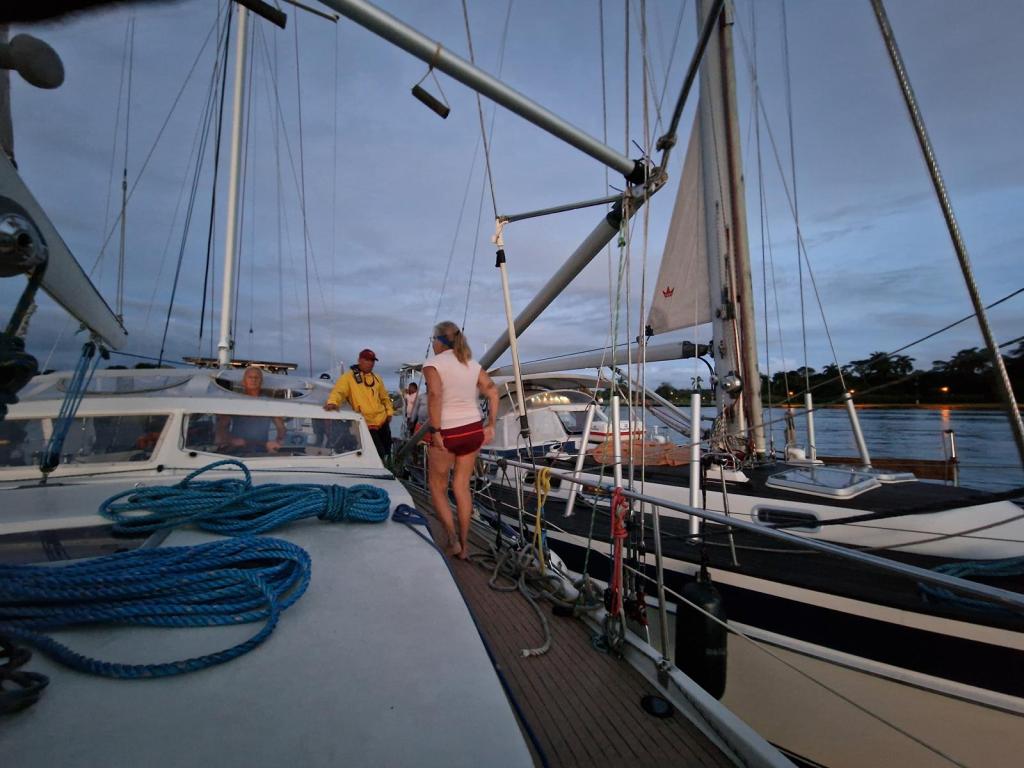
Just before dark we rafted up with Blue
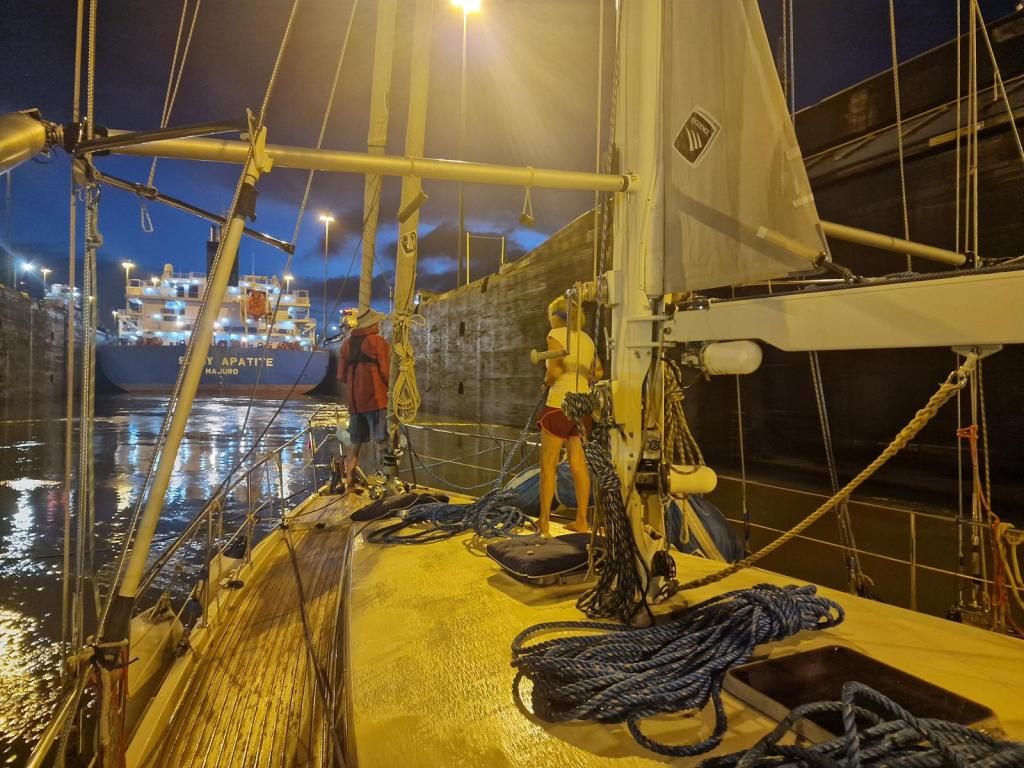
And then into the lock
A bit nervous and fully concentrated I enter the first lock.
Making sure all lines are attached, only two for us as the other two lines are deployed from Blue.
In the first lock and on our way up. Now our crew were to show that they could handle the lines and to be alert.
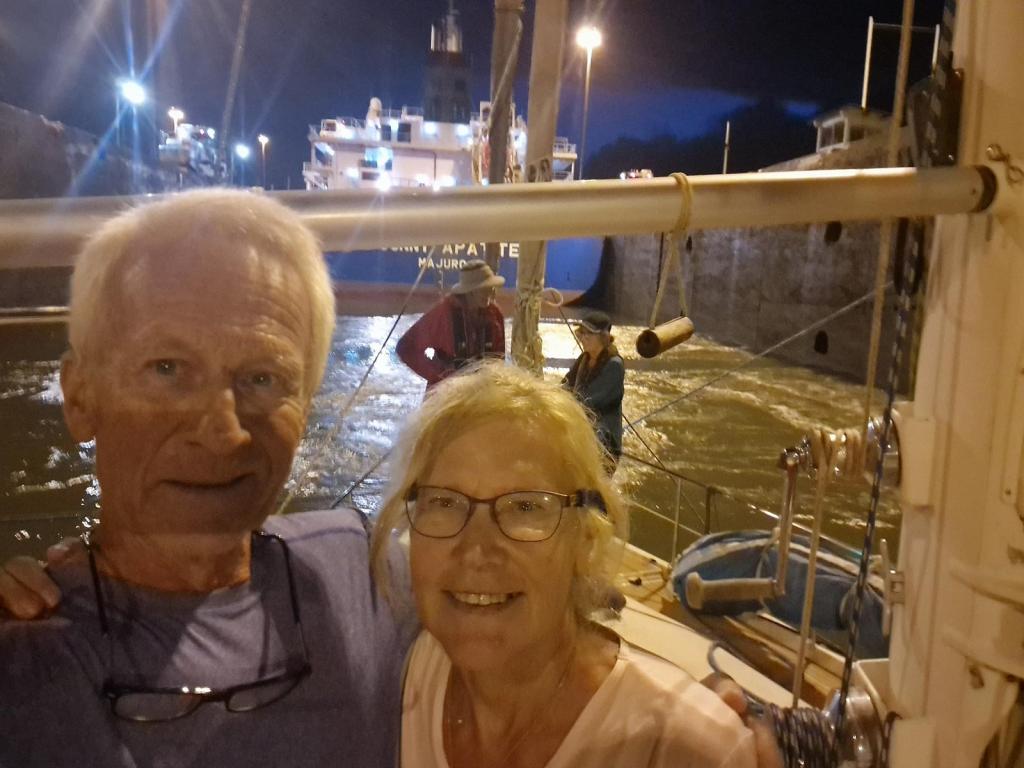
A big moment for us, but to be honest, there is no drama at all to transit the canal as long as you follow the instructions from the Pilot. The water when both going up and down is not very turbulent, not more complicated than normal locks in Sweden or in Holland. But in the first lock I was a bit nervus.
But still it was with some relief we exited the first lock.
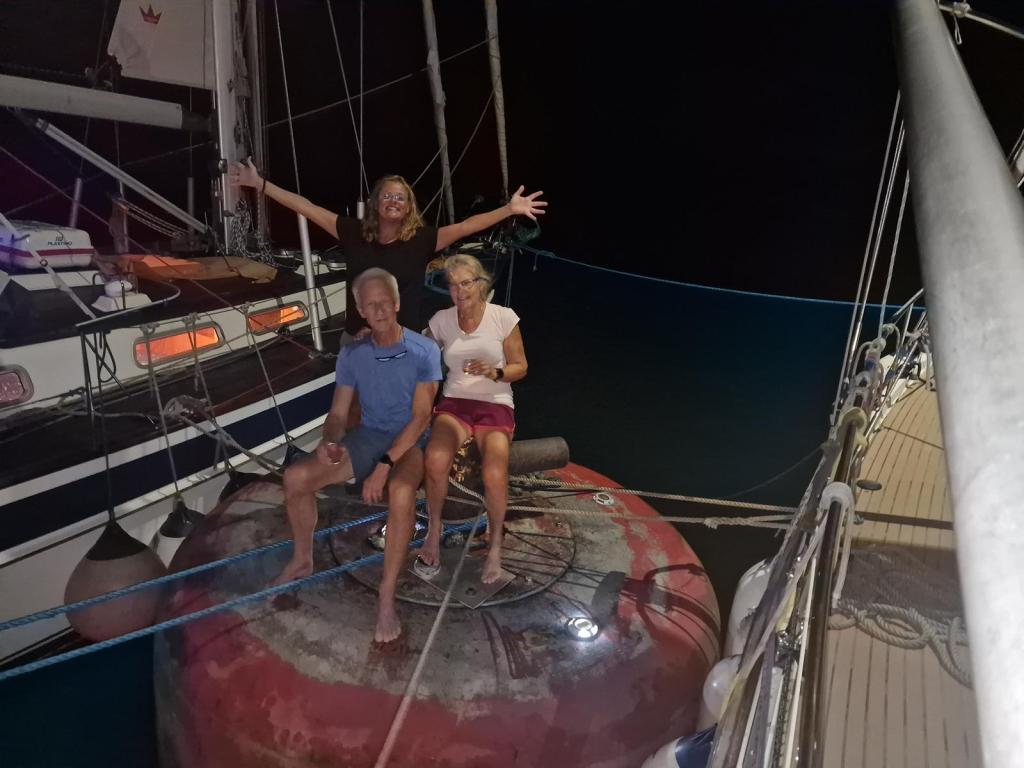
Rather late that night we reached the area in lake Gatun where we should sped the night, I have also heard about rough buoys that one should tie up to and wonder how that would be. No big deal at all, the Buoy we and Blue tied up to was not rough at all.
We end the evening with a whiskey on the buoy together with Blue
Next day we have a new pilot aboard before we left the buoy.
On our way to the last locks, we got a bit ahead of Blue and the Pilot ask if we wanted to go through the last locks together with a passenger boat it would save a few hours. He said is a bit more complicated but no big deal, we said lets go for that. He calls the planner and got permission to transit with the passenger boat. After that he gives instruction to our crew how to handle the lines etc when rafting outside the passenger boat.
He explains very thoroughly, but Stephen asks again and again what he should do. So after a while the Pilot call the planner again and said not safe to transit together with the passenger boat with this crew,!! so instead we waited for Blue top catch up and raft up with them before the last locks.
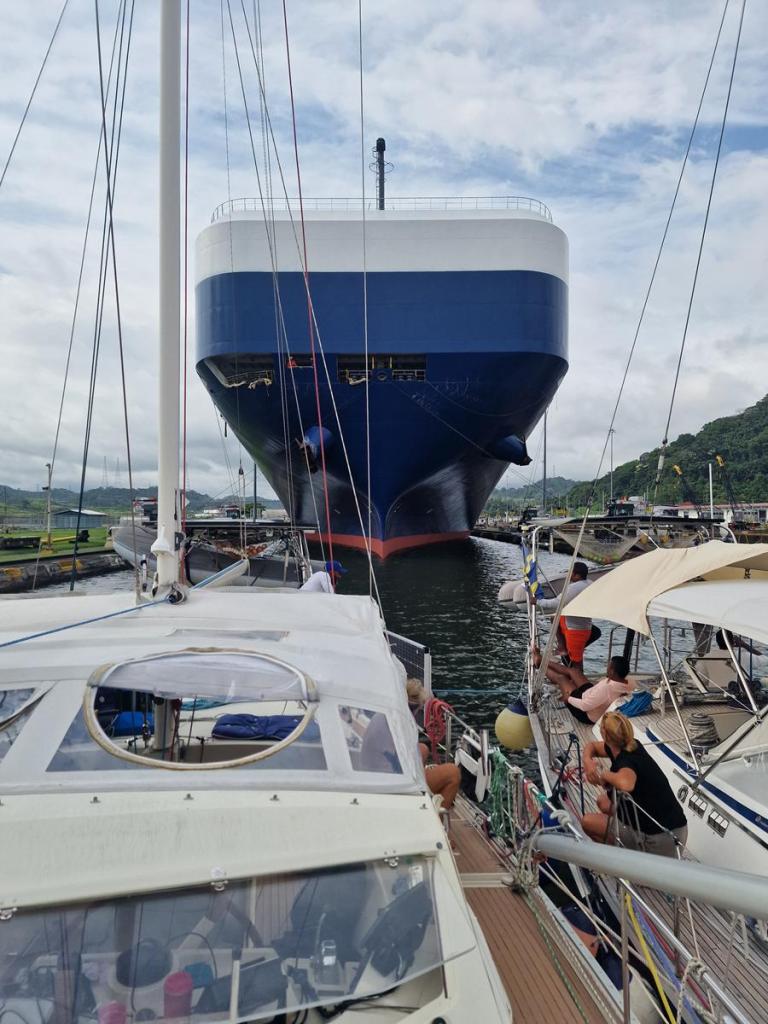
In the last lock we had a big freight vessel just behind us, and the Pilot instruct us that when we leave the lock there will be a push of water from the big vessel so be alert, and it was, one had to have a very firm grip on the steering wheel.
We felt rather small infront of the big vessel.
In the last lock our Pilot and crew
Finally the last locks opened, and we could get out of the lock and into the Pacific, it was not as expected, in my inner picture the horizon of the Pacific should be just outside the lock and one could see the vast ocean end the sun setting in the distance, but not, it was still some way out until one could see the horizon of the Pacific.
We motored to the Balboa yacht club where we took a buoy and the Pilot and our line handler left Kerpa, now it was only Kerstin and me with the crew.
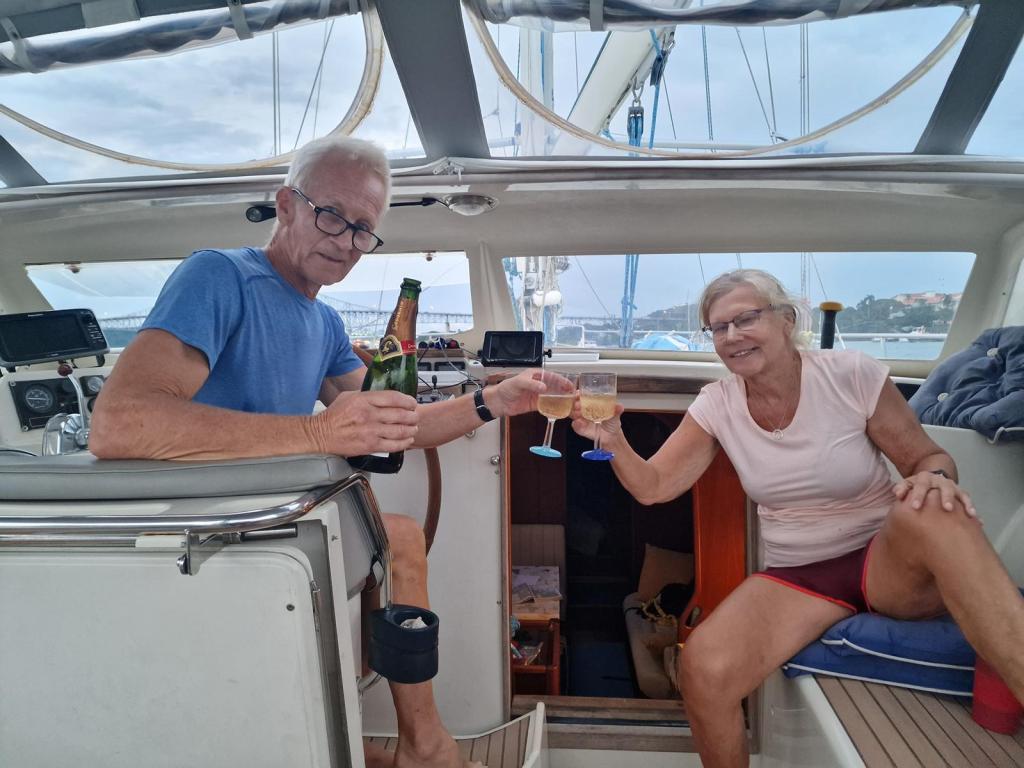
Time to celebrate with Cava
We had decided with Cathy and Stephen that we should evaluate the relation and decide if they should continue with us or leave Kerpa. Stephen was tiered and went to bed early so we had the discussion only with Cathy. Kerstin and I had decided during the transit to continue without them. Cathy understood and said that it was a pity, but agree the best for both parties. I will stress that it was no problem whatsoever with Cathy it was Stephen we had problem with both concerning competence, fitness and social skill.
The morning after, we made up the financial between us and Cathy, that went very smoot, we felt no hard feelings, even though we also said we did not wanted to pay for all strange sauces, Nacho chips, soda drinks etc, they had brought aboard, they could leave it or take it with them. They decided to take it with them, so they had a massive amount of bags to bring a shore. We hurry them a bit as it was Christmas eve, the day we celebrate Christmas, and we had decided to celebrate together with Blue at the Pearl Islands about 40 N m from the Balboa Yacht Club, we were in a bit hurry. We parted and I thought no major hard feelings between us. But was I wrong.
The Crew Stephen
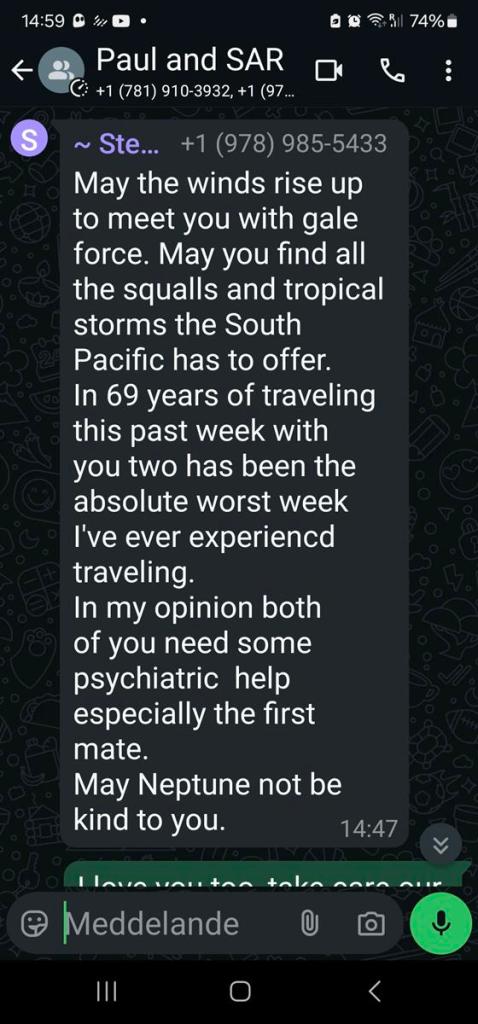
The day after we parted from our crew, I got this message on WhatsApp
During the following days we found out that Stephen had destroyed a lot of items aboard Kerpa.
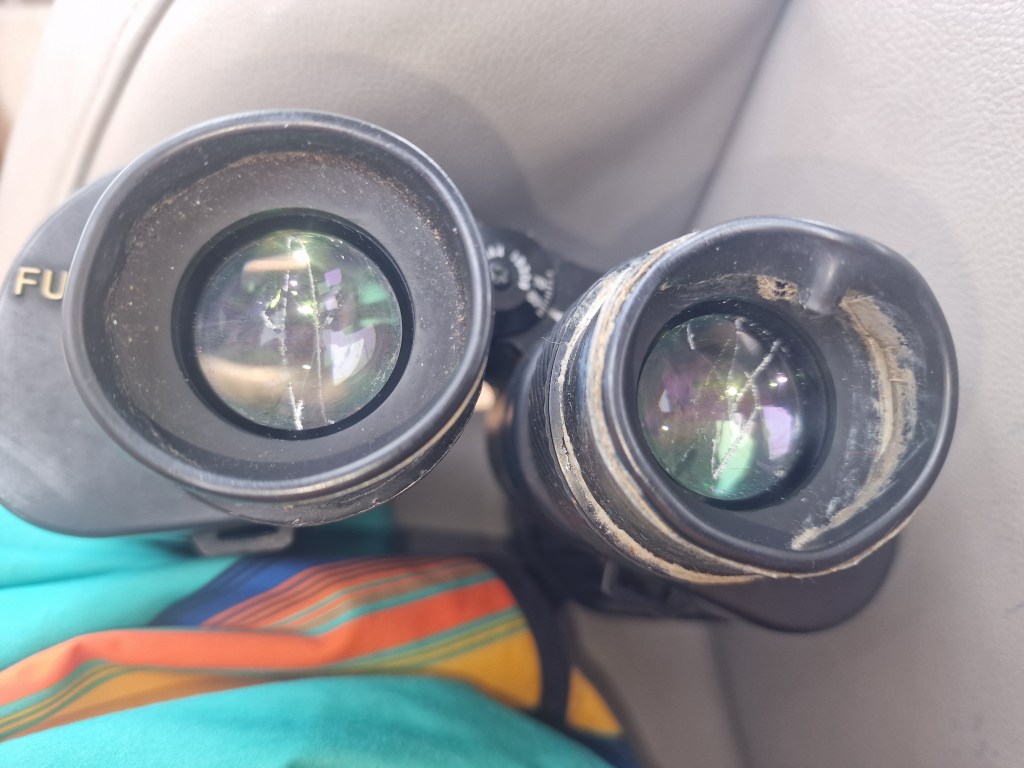
Scratched the binocular they had borrowed for bird spotting on the canal trip.
Stabbed a hole in my jacket
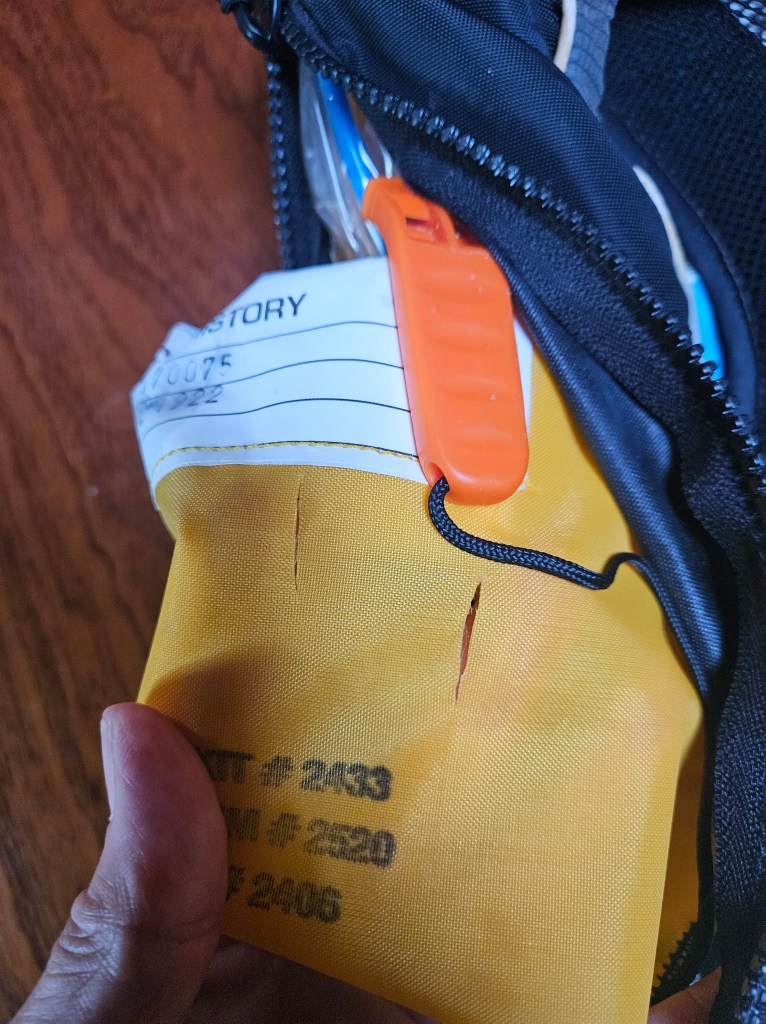
As well as in one of our inflatable life wests
First we thought it was only the out cover, but the bladder was punctured as well.
Later we found that he had stabbed hole in the cushions in the fore cabin as well, it was a few other minor items destroyed too.
We are very pleased that we decided not to sail further with them, no one knows what could have happened out there on the Pacific sea
Now we had the decision to make, sail on our own or try to find another crew? Kerstin was very clear we sail on our own. I was a bit surprised as I suggested that we should do the Atlantic crossing on our own, but Kerstin did not liked that idea at all, and for this very long journey I was a bit hesitant myself if we really should do the crossing of the Pacific on our self. After a cup of tea as we usually take before an important decision we both agree to sail away on our own.
Next blog will come soon, about Christmas New year and final provisioning





































































 S/Y Kerpa
You must be logged in to post a comment.